Josh Bersin :SuccessFactors Leapfrogs HCM Capabilities: AI, Skills, Talent Intelligence, And More本周,SuccessFactors 宣布了一系列重大更新,巩固其在人力资本管理(HCM)市场的领先地位。这些新功能包括 AI 驱动的工作推荐、文本分析、绩效评估和全球工资单升级等。SuccessFactors 还推出了开放的技能系统,并与 Lightcast、Degreed 等技能供应商合作,提供更全面的职业发展工具。此外,通过整合 WalkMe,SuccessFactors 改善了用户体验,使其在实施和使用方面更具优势。Dan Beck 的领导下,SuccessFactors 持续推动 HR 技术的创新与发展。
有兴趣进一步了解下
This week SuccessFactors announced a vast array of new features, focused on taking the lead in the red hot HCM war against Workday, Oracle, and others. These capabilities fall into four areas, each of which bring SAP into a leading position in many areas of the global HCM market. (Product details here.)
As I learned about the release I noticed the fingerprints of Dan Beck, the company’s new president and chief product officer. Dan has been at SAP for 11 months and has accelerated the company’s technology roadmap and focus on total solutions.
Let me summarize what’s new.
1. More And More AI Capabilities Built-In
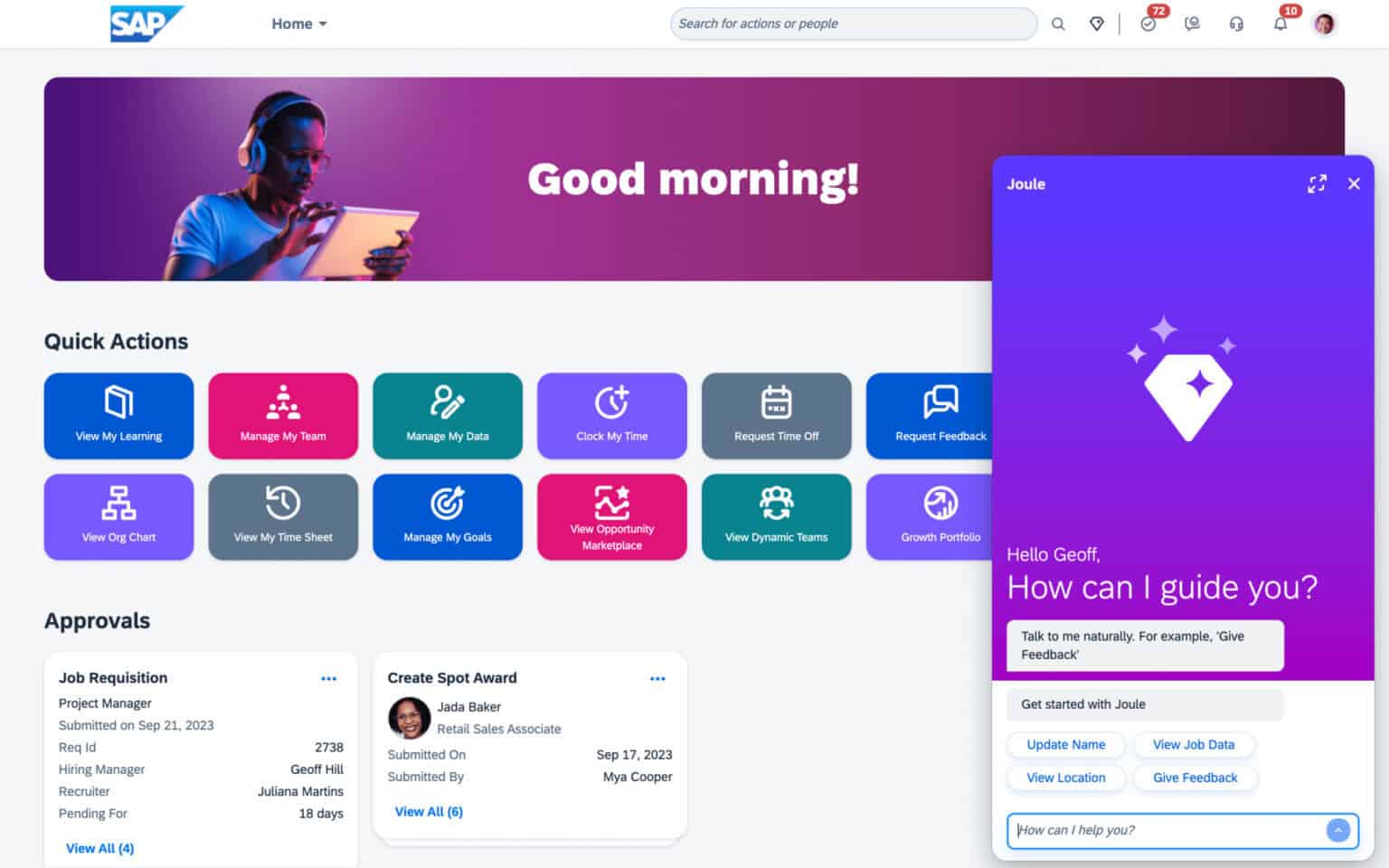
First, of course, is AI. Two years ago SAP announced its “Business AI” strategy, which describes how all SAP business applications are integrated and enhanced with AI. (Workday’s similar strategy Illuminate was launched a few months ago.) In the prior release SuccessFactors described 63 AI use-cases; this week they introduced 30 more. And all are integrated into Joule, SAP’s intelligent Agent.
Each “use-case” is essentially an AI application and many are quite complex: automatically developing job descriptions, analyzing performance reviews, setting and aligning goals, developing onboarding, creating growth plans, and evaluating pay inequities. In other words these AI “features” are really automation workflows that each eliminate hours of work for HR professionals. Since each is also integrated into Joule, you can use them through the conversational interface.
While many HR vendors are adding AI features, I find SAP’s particularly robust because they’re integrated into the entire lifecycle of an employee. SAP’s engineering focus really shows here.
Some of the new features include AI-based job recommendations to job seekers (and internal employees), text analysis and editing for performance reviews, and new mobile use-cases for Joule.
2. Upgrades to Global Payroll
The second set of announcements are a significant update to global payroll. SAP currently has the broadest global payroll solution in the market and now has a new UI, a Payroll Command Center, and a sophisticated AI offering called “Explain Pay Slip.” You will effectively be able to ask Joule “why has my pay changed from last month” and it will dig into all the details and explain the differences. This covers 70% or more of the questions employees ask HR service centers, so this feature has an enormous ROI.
Employee Central, the company’s core HR and payroll module, now has a more integrated view of all benefits and more integrations with Joule, making the 52-country payroll system the broadest in the market.
3. Open Skills System and Launch of Career and Talent Development
The third set of announcements will change the HR Tech market: SAP is formerly opening up its Talent Intelligence Hub to accommodate every skills and skillstech vendor. Providers like Lightcast, Korn Ferry, Techwolf (SAP invested in them), and Degreed can now feed the SuccessFactors skills system and SAP is going to build tools to normalize and harmonize skills.
This brings SAP to parity or beyond Workday Skills Cloud: the skills model is integrated into Opportunity Marketplace, Career and Talent Development (the new version of SuccessFactors learning), and SuccessFactors job architecture, team management, performance management, and recruiting.
The new Career and Talent Development offering also introduces AI-assisted career insights, leveraging skills and aspirations to find relevant jobs and career paths. The system lets managers create assignments, find and onboard internal candidates, and then use Work Zone (onboarding and enablement) to start their new internal position. This level of integration goes beyond tools from Gloat or Eightfold or others for internal talent marketplace.
Several years ago SuccessFactors introduced its comprehensive skills strategy and today it’s coming to fruition.
There are several major implications here. First, vendors like Eightfold, Gloat, Phenom, Beamery, and many others will have to decide how they partner or compete with SAP. Last month I met with both Delta Air Lines and Pepsi, both of which are using SuccessFactors Talent Intelligence hub as their new end-to-end platform. Each company told me that they no longer felt the need to use some of these other third party products.
Second, the SuccessFactors skills model is expansive. In addition to harmonizing and helping companies build technical and leadership models, the system itself has its “whole self” module which includes aspirations, styles, motivations, and preferences. Companies that use this can add subtle human needs to the model.
Other vendors have tried this (Cornerstone and Gloat both ask users to express career and personal work preferences) but SAP, with its enormous customer base, has the potential to leverage this across industries. Imagine an employee in IT who aspires to work in HR, for example – the system would find the HR Tech jobs within the company which leverage their architectural or technical skills.
SuccessFactors also includes a mature system for team-based work, which is missing in these other applications. This release adds AI-assisted 360 reviews, performance templates, and integration with Joule (employees and managers can share performance information through the agent.)
4. Integration of WalkMe into SuccessFactors.
The fourth major announcement is the bundling and integration of WalkMe. Given the vast and complex nature of SuccessFactors, there are many places to read documentation and learn how the system works. This forces customers to build large training programs for users. (All HCM platforms have this issue.)
WalkMe, which was acquired this year for $1.5 Billion, is the leading provider of “digital adoption platforms.” It is essentially an advanced AI system that watches a user’s interaction with a system to coach, train, and automate your work. Initially developed to help users learn how to use systems like SAP or Salesforce, WalkMe advanced into a highly intelligent real-time coach, similar to what we now expect out of an AI agent.
While I don’t know how this will be priced, this gives SuccessFactors an “ease of implementation” advantage. WalkMe is an open platform and does support many HCM applications, but now that it’s integrated and bundled into SAP customers will find SuccessFactors much easier to deploy and use.
(Just for your reference, the SuccessFactors and Workday “how to” manuals include nearly 1,000+ pages each.)
Bottom Line: SuccessFactors Leadership Emerges
SAP’s ambitious, long-term engineering approach to human capital management is clear. I’ve been watching SuccessFactors since it was a small independent company in California, now growing to a vast cloud business with 10,000+ customers and more than 150 million end users.
This release demonstrates how patience, engineering excellence, and relentless focus on customers pays off in enterprise software. Under the leadership of Dan Beck, SuccessFactors now offers industry-leading capabilities in most areas of HCM, giving customers an even deeper offering to consider as HR technology rapidly evolves.

 入职流程
入职流程
 入职流程
入职流程
 入职流程
入职流程




 扫一扫
添加客服
扫一扫
添加客服


