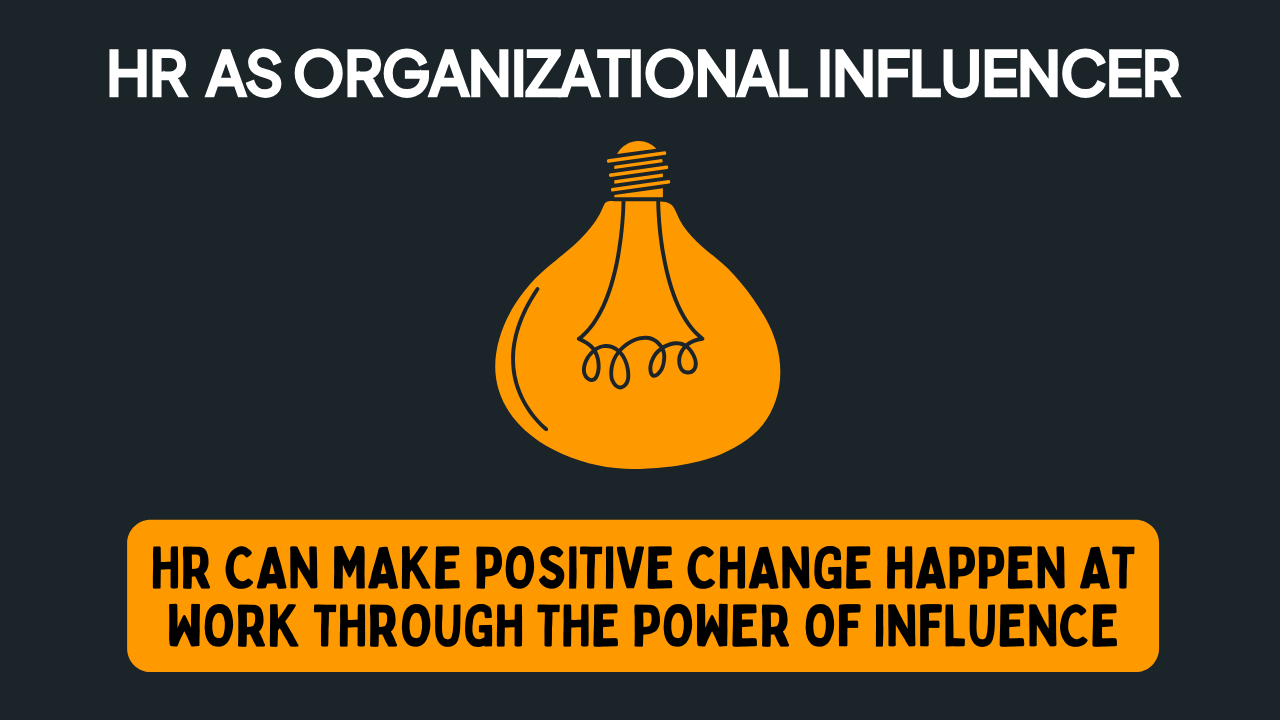
HR如何可以成为组织中的影响者 How HR Can Become an Organizational Influencer文章《HR如何成为组织的影响者》强调了HR在推动组织变革中的关键作用,通过战略影响而非正式权力来驱动变革。HR专业人员可以通过利用他们对人力动态的深入理解、战略思维和沟通技巧,成为关键的影响者。文章列出了HR需要掌握的八项核心能力,包括战略影响力、讲故事的能力、公共演讲、协作影响力、外交、信息传递、冲突解决和执行力。
通过发展这些技能,HR可以有效地驾驭变革,激励行动,并将人员战略与业务目标对齐。
变革不仅是不可避免的,而且是推动个人和组织成长与创新的动力。在工作中,变革可以推动一个组织向前发展并提升其水平,也可以摧毁它(包括其中的员工)。组织如何应对变革?是通过纯粹的角色权威?还是通过高层领导的强制命令?亦或是通过那些没有“正式权威”的人以更微妙的方式来推动和引导变革的方向?
在大多数组织中,人力资源(HR)没有像其他部门那样拥有正式的权力或影响力。通常,HR人员不足,资源匮乏。即使在过去几年中人力资源职能快速发展,HR在工作中仍在努力建立其战略价值。对于HR来说,推动或引导变革的力量不是正式的权力或“蛮力”,而是战略影响力(strategic influence)。
本质上,战略影响力不是关于权威,而是关于灵感、创新以及对工作中人类元素的深刻理解。讽刺的是,一些拥有强大职位的领导者除了他们头衔赋予的权力外,没有任何影响力。相反,一些在工作中没有头衔的普通人,却是通过利用他们的影响力来推动和引导变革的真正变革者。
有时HR确实有正式的权力,但更多时候没有。这就是为什么它必须更多地依赖影响力而不是正式的权威。
组织中的影响者 组织中的影响者是变革的催化剂,是能够理解业务战略与人类动态之间联系的愿景者。不同于源自层级权力的传统影响力,组织中的影响者的影响力来自于他们连接、理解和激励人的能力。
组织中的影响者具有一些基本特质,包括:
战略思考:看到更大的图景,并将努力与整体组织目标对齐。
以同理心领导:理解并重视他人的观点和需求。
有效沟通:通过清晰和信念表达想法并激励行动。
适应力强:拥抱变革并帮助他人应对变革。
用数据决策:利用数据洞察来决策和制定策略。
与他人合作并建立伙伴关系:建立伙伴关系并在组织各个层面促进团队合作。
创新:不断寻找和实施创造性的解决方案。
有韧性:在面对挫折时保持专注和积极。
伦理和诚信:坚持诚信并促进信任和尊重的文化。
让HR成为组织影响者的8种方式 以下是HR可以用来成为组织影响者的八种方法:
1 - 战略影响力 战略影响力是关于利用HR在人员领导和业务管理方面的独特见解来推动业务策略,确保人员与业务目标对齐并推动其前进。这个概念体现了HR领导者不仅是参与者,而且是董事会中的关键策略家,倡导促进组织成长和员工满意度的政策和实践。 这些是需要掌握的五项能力:
制定并执行与组织领导力对齐的有影响力的HR策略。
通过战略性HR举措影响高层管理和决策。
在整个组织中建立战略伙伴关系以增强HR的影响力。
使用HR洞察分析和解决复杂的组织挑战。
指导和发展HR团队以增强战略思维能力。
2 - 讲故事 讲故事是HR专业人士的一个强大工具,使他们能够将组织的价值观、文化和目标联系起来形成引人入胜的叙述。这种方法不仅增强了沟通,还建立了情感连接,使HR举措更易于理解和影响深远。通过讲故事,HR可以有效地倡导变革,庆祝成功,并阐明业务决策中的人性化一面,将抽象概念转化为在整个组织中产生共鸣的有意义的故事。 这些是需要掌握的五项能力:
创作引人入胜的叙述以传达HR的愿景和价值观。
使用有说服力的讲故事技巧吸引多样化的受众。
利用讲故事推动组织变革。
根据不同的沟通媒介调整讲故事的风格。
使用叙事智能增强HR的说服力。
3 - 出色的公众演讲 出色的公众演讲使HR领导者能够以权威和激情进行沟通,影响并激励他人。出色的公众演讲不仅仅是大声说话或喋喋不休,而是关于自信、同理心和理解。这项技能对于倡导HR举措、分享洞察和引导塑造组织未来的讨论至关重要。精通的公众演讲使HR领导者成为能够吸引听众的强大演说者,无论是在小型团队会议还是大型企业聚会上,都能有效传达HR的战略价值。 这些是需要掌握的五项能力:
掌握适用于HR背景的公众演讲技巧。
通过有效的演讲技巧吸引和激励受众。
利用公众演讲作为HR倡导和影响的工具。
根据不同类型的受众和组织层级调整演讲内容。
制作能够引起利益相关者共鸣的引人入胜的演讲内容。
4 - 协作影响力 协作影响力侧重于HR建立和维护推动组织成功的战略业务伙伴关系的能力。它突显了HR在弥合部门间差距、促进跨职能团队合作以及将HR策略与更广泛的业务目标对齐方面的作用。通过协作,HR可以打破孤岛,促进团结,并确保人员策略是实现公司目标的重要组成部分。 这些是需要掌握的五项能力:
建立和维持支持HR目标的有影响力的业务伙伴关系。
促进HR与其他业务单位之间的合作。
利用人际交往技能增强HR的协作影响力。
协商并对齐HR策略与更广泛的业务目标。
培养支持和倡导HR举措的盟友网络。
5 - 外交技巧 HR的外交技巧是关于以策略性智慧和策略性技巧驾驭复杂的组织政治网络。它涉及以尊重不同观点的方式倡导HR政策和举措,同时推动进步性变革。HR外交官善于建立共识、管理冲突,并将HR定位为组织决策中的中立但有影响力的参与者,确保在业务策略中始终考虑人员因素。 这些是需要掌握的五项能力:
利用外交技巧驾驭和影响组织政治。
使用策略性沟通技巧倡导HR驱动的变革。
通过外交解决复杂的组织问题。
在不同利益相关者群体中建立共识。
在所有HR举措中以诚信和伦理领导。
6 - 信息掌控 HR的信息掌控是关于编写和传达清晰表述HR策略价值和影响的信息。它是将沟通调整到不同受众的能力,确保清晰、参与和支持HR举措。通过有效的信息传达,HR专业人士可以解密HR政策,倡导组织变革,并巩固HR在组织内作为关键沟通者的角色。 这些是需要掌握的五项能力:
制定清晰有影响力的HR举措沟通策略。
调整HR信息以引起不同组织受众的共鸣。
以易于理解的方式传达复杂的HR概念。
有效利用各种沟通渠道传递HR信息。
测量和分析HR沟通策略的影响。
7 - 冲突解决和达成共识 冲突解决和达成共识在维护和谐和高效的工作环境中至关重要。这个概念围绕HR调解争议、促进谈判和培养合作与相互尊重环境的能力。通过为HR专业人士配备解决冲突的技能,组织可以确保更顺畅的运营、增强的团队合作以及一个重视建设性对话而非对抗的文化。 这些是需要掌握的五项能力:
有效调解和解决工作场所冲突。
促进合作和建设性的谈判过程。
在冲突各方之间建立共识以实现组织和谐。
实施预防和管理冲突的主动策略。
培训和指导团队冲突解决和达成共识的技能。
8 - 领导风范 HR影响者的领导风范和领导力是关于体现那些在组织各个层面上赢得尊重和激发信心的品质。这包括培养一种真实、权威和平易近人的领导风格,使HR领导者能够有效地倡导战略举措并以身作则。凭借强大的领导风范,HR专业人士可以更有效地影响结果、推动战略决策,并倡导以人为本的业务方法。 这些是需要掌握的五项能力:
培养权威且真实的领导风格。
提升高层沟通技巧。
建立战略关系。
以自信和愿景领导。
通过变革性领导实践激励团队和个人。
英文原来来自:https://www.linkedin.com/pulse/how-hr-can-become-organizational-influencer-hacking-hr-0xnlc/
作者:Hacking HR
Change is not just inevitable, but the driving force behind personal and organizational growth and innovation.
At work, change can either propel an organization forward and lift it up, or break it (including its people).
How can organizations navigate change? Is it through pure role-based authority? Is it through the brute force of senior leadership mandates? Or is there a more subtle way in which people, without “formal authority”, may drive and even steer the direction of change?
In most organizations, Human Resources (HR) does not have the formal authority or power that some of its counterparts have. Generally, HR is understaffed and under-resourced. And, even with the rapid advancement of the people function in the past few years, HR is still on the road to building its strategic value at work.
For HR, it is not formal authority or “brute force” that drives or steers change, it is the power of strategic influence.
In essence, strategic influence is not about authority, but inspiration, innovation, and a deep understanding of the human element at work.
Ironically, some leaders with a powerful position have no influence other than that given to them by their titles. In contrast, some ordinary people at work, without a title, are real change makers with potent network effects at work given how they leverage their influence to drive and steer change.
Sometimes HR does have the formal authority, but often it does not. That’s why it has to rely more on the power of influence than on the power of formal authority.
Organizational Influencers
An organizational influencer is a catalyst for change, a visionary who understands the connection business strategy and human dynamics. Unlike traditional notions of influence that stem from hierarchical power, organizational influencers derive their impact from their ability to connect, understand, and inspire people.
An organizational influencer has some foundational attributes, including:
Thinking strategically: Sees the bigger picture and aligns efforts with overarching organizational goals.
Leading with empathy: Understands and values the perspectives and needs of others.
Communicating effectively: Articulates ideas and inspires action through clarity and conviction.
Adapting: Embraces change and helps others navigate through it.
Informing decisions with data: Leverages insights from data to inform decisions and strategies.
Collaborating with others and building partnerships: Builds partnerships and fosters teamwork across all levels of the organization.
Innovating: Constantly seeks and implements creative solutions to challenges.
Being resilient: Maintains focus and positivity in the face of setbacks.
Behaving ethically and with integrity: Upholds integrity and promotes a culture of trust and respect.
8 Ways for HR to Becomes an Organizational Influencer
These are nine ways HR can use to become an organizational influencer.
1 - Strategic Influence
Strategic influence is about leveraging HR's unique insights into people leadership and business management to drive business strategies, ensuring that people align with and propels business objectives forward. This concept embodies the idea that HR leaders are not just participants but key strategists in the boardroom, advocating for policies and practices that foster both organizational growth and employee satisfaction.
These are five competencies to master:
Develop and execute impactful HR strategies aligned with organizational leadership.
Influence top-level management and decision-making through strategic HR initiatives.
Foster strategic partnerships across the organization to enhance HR's influence.
Analyze and address complex organizational challenges using HR insights.
Mentor and develop HR teams to strengthen strategic thinking skills.
2 - Storytelling
Storytelling is a powerful tool for HR professionals, enabling them to connect the dots between organization's values, culture, and goals into compelling narratives. This approach not only enhances communication but also builds emotional connections, making HR initiatives more relatable and impactful. Through storytelling, HR can effectively champion change, celebrate successes, and articulate the human side of business decisions, transforming abstract concepts into meaningful stories that resonate across the organization.
These are five competencies to master:
Craft compelling narratives to communicate HR vision and values.
Engage diverse audiences with persuasive storytelling techniques.
Leverage storytelling to drive organizational change.
Adapt storytelling styles to fit various communication mediums.
Use narrative intelligence to enhance HR's persuasive power.
3 - Public Speaking Excellence
Public speaking excellence empowers HR leaders to communicate with authority and passion, influencing and inspiring others at work. People speaking excellence is not about being loud or never shutting up, but about confidence, empathy and understanding. This skill is crucial for advocating HR initiatives, sharing insights, and leading discussions that shape the organization's future. Masterful public speaking turns HR leaders into powerful orators who can captivate their listeners, whether in small team meetings or large corporate gatherings, effectively conveying the strategic value of HR.
These are five competencies to master:
Master public speaking skills tailored for HR contexts.
Engage and motivate audiences through effective speech delivery techniques.
Utilize public speaking as a tool for HR advocacy and influence.
Adapt speeches to various audience types and organizational levels.
Develop compelling presentation content that resonates with stakeholders.
4 - Collaborative Influence
Collaborative influence focuses on HR’s capacity to forge and maintain strategic business partnerships that drive organizational success. It highlights HR’s role in bridging gaps between departments, facilitating cross-functional teams, and aligning HR strategies with broader business objectives. Through collaboration, HR can dismantle silos, encourage unity, and ensure that people strategies are integral to achieving corporate goals.
These are five competencies to master:
Build and sustain influential business partnerships that support HR goals.
Facilitate collaboration between HR and other business units.
Leverage interpersonal skills to enhance HR’s collaborative impact.
Negotiate and align HR strategies with broader business objectives.
Cultivate a network of allies to support and advocate for HR initiatives.
5 - Diplomacy
HR diplomacy is about navigating the complex web of organizational politics with tact and strategic acumen. It involves advocating for HR policies and initiatives in a way that respects differing viewpoints while pushing for progressive change. HR diplomats are adept at building consensus, managing conflicts, and positioning HR as a neutral yet influential player in organizational decisions, ensuring that the people aspect is always considered in business strategies.
These are five competencies to master:
Utilize diplomacy to navigate and influence organizational politics.
Advocate for HR-driven change using tactful and strategic communication.
Resolve complex organizational issues with diplomatic problem-solving.
Build consensus among diverse stakeholder groups.
Lead with integrity and ethical considerations in all HR initiatives.
6 - Message Mastery
Message mastery in HR is about crafting and delivering messages that clearly articulate the value and impact of HR strategies. It’s the ability to tailor communication to diverse audiences, ensuring clarity, engagement, and support for HR initiatives. Through effective messaging, HR professionals can demystify HR policies, champion organizational change, and solidify HR’s role as a key communicator within the organization.
These are five competencies to master:
Develop clear and impactful communication strategies for HR initiatives.
Tailor HR messaging to resonate with different organizational audiences.
Communicate complex HR concepts in an accessible manner.
Utilize various communication channels effectively for HR messaging.
Measure and analyze the impact of HR communication strategies.
7 - Conflict Resolution and Agreement Building
Conflict resolution and agreement building are fundamental in maintaining a harmonious and productive workplace. This concept revolves around HR's ability to mediate disputes, facilitate negotiations, and foster an environment of cooperation and mutual respect. By equipping HR professionals with the skills to navigate and resolve conflicts, organizations can ensure smoother operations, enhanced teamwork, and a culture that values constructive dialogue over confrontation.
These are five competencies to master:
Mediate and resolve workplace conflicts effectively.
Facilitate collaborative and constructive negotiation processes.
Build consensus among conflicting parties to achieve organizational harmony.
Implement proactive strategies to prevent and manage conflicts.
Train and guide teams in conflict resolution and agreement-building skills.
8 - Executive Presence
Executive presence and leadership for HR influencers are about embodying the qualities that command respect and inspire confidence at all levels of the organization. This includes cultivating a leadership style that is authentic, authoritative, and approachable, enabling HR leaders to effectively advocate for strategic initiatives and lead by example. With a strong executive presence, HR professionals can more effectively influence outcomes, drive strategic decisions, and champion a people-centric approach to business.
These are five competencies to master:
Cultivate an authoritative and authentic leadership style.
Enhance executive communication skills.
Build strategic relationships.
Lead with confidence and vision.
Inspire teams and individuals with transformative leadership practices.

 适应能力
适应能力
 适应能力
适应能力





 扫一扫
添加客服
扫一扫
添加客服


