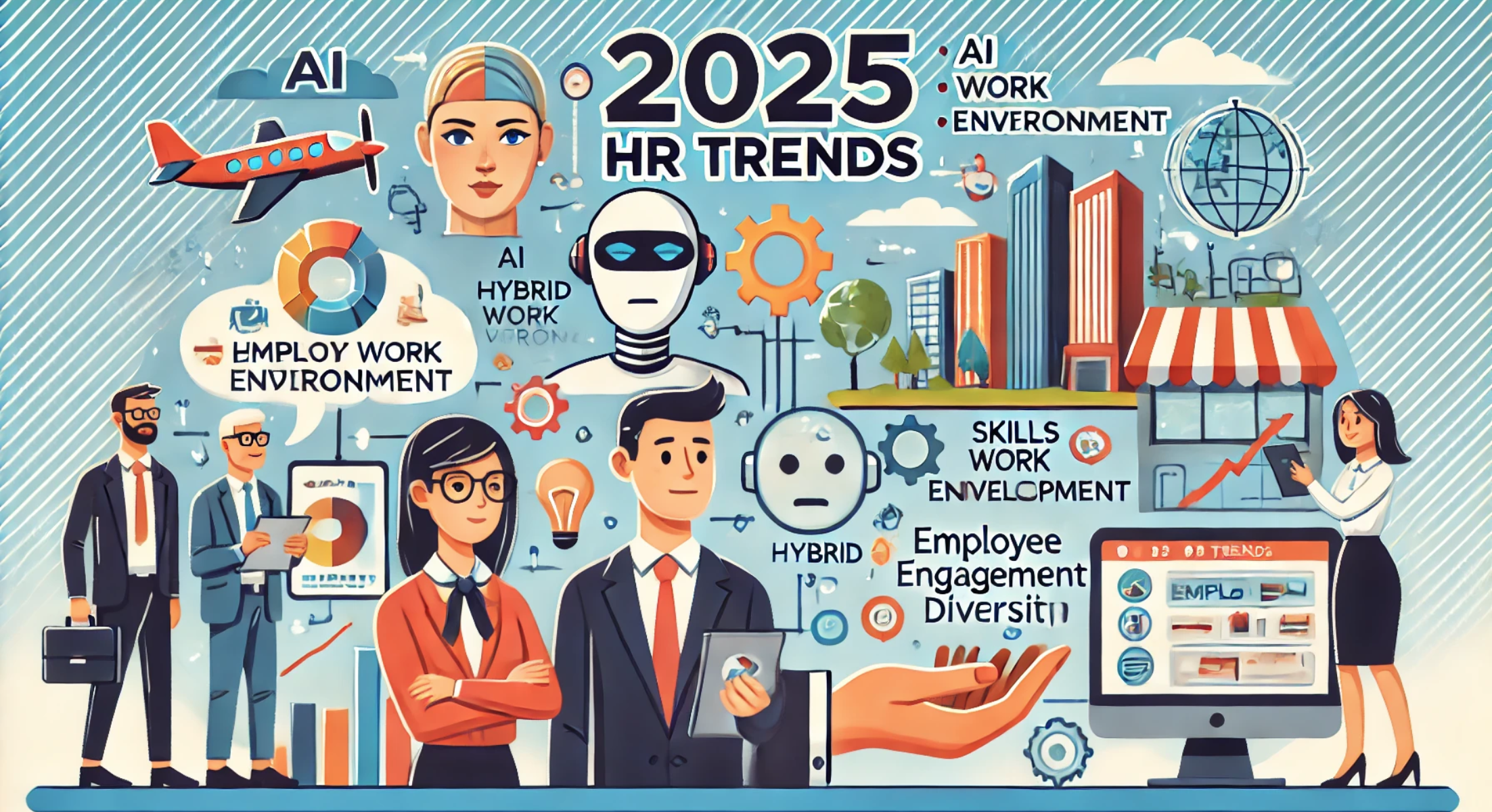
The top 5 HR trends today – and HR's guide to what's nextSAP SuccessFactors 每年都会深入研究全球 HR 趋势,以帮助企业制定更有效的人才战略。2025 年,他们分析了来自 40 家全球权威媒体的 254 项预测,归纳出 5 大核心“元趋势”,展现 HR 在企业中的双重角色:既是变革的“指挥者”,也是政策落地的“引航者”。
1️⃣ 重新连接员工: 由于经济压力、决策争议和信任危机,员工体验恶化,57% 的员工认为如果公司不采取措施,他们的倦怠问题不会改善。HR 需关注心理契约,增强员工信任。
2️⃣ AI 从炒作走向实际价值: AI 进入大规模落地阶段,企业需明确 ROI 并平衡员工和领导者对 AI 价值的不同预期。46% 的员工认为 AI 省下的时间属于自己,而非公司。
3️⃣ 技能转型的平衡策略: 由于 AI 发展迅猛,企业技能鸿沟加剧。除了关注技能,薪酬激励成为推动学习的重要因素,54% 的员工表示,如果公司实施基于技能的薪酬体系,他们会更愿意学习新技能。
4️⃣ DEI&B 的分歧: 企业对多元化、公平性和包容性(DEI&B)态度不一,26% 的员工认为公司对 DEI&B 关注过多,而 33% 认为关注太少。HR 需明确 DEI&B 战略,以促进长期文化变革。
5️⃣ 混合办公的未来: 组织已基本确定办公模式,2025 年将验证其成效。54% 的员工愿意牺牲部分薪酬,以换取更大的工作灵活性。
这些趋势展现了 HR 在塑造未来工作模式中的关键作用,企业需借助创新技术和数据驱动的洞察来优化人力资源管理。
Each year, the HR Research Scientists at SAP SuccessFactors conduct research to understand the top HR and workforce trends facing organizations and share our perspective on what HR teams should consider as they look to help their companies address these trends. This year we aggregated and synthesized data from 40 global and regional reputable business press sources that put forward 254 individual trends and predictions grounded in their own research and data. We then conducted a content analysis of the trends sample to derive the five key themes, or “meta-trends.” While our annual report always includes some pointed commentary and critique about each trend based on our expertise in psychology, new this year is calling upon our own body of original applied research to incorporate datapoints and insights, resulting in a more evidence-based point of view.
This year’s trends are in different stages of maturity and on different trajectories; therefore, the role that HR needs to play to help businesses tackle and capitalize on these trends is different. We’ve organized the trends into two sections aligned to the dual role HR will play in addressing them.
First, HR will need to act as a Conductor, leading the orchestration of a strategy and associated change management across the business to realize the opportunities these trends offer:
Trend #1: Reconnecting the disconnected employee: Contentious decisions, macroeconomic and sociopolitical stressors, and breached trust with leadership has led to employee stress and burnout – and consequently, a crisis of disconnect and counterproductivity. In the year ahead:
Leaders must ruthlessly prioritize fulfilling their end of the “psychological contract” by meeting employees’ basic needs.
People managers will be seen as a lifeline for employees drowning in disconnect.
STAT: 57% of employees feel unless their companies make some serious changes, their burnout will not get better.
Trend #2: Moving from AI hype to AI impact:Organizations are shifting from AI pilot projects to enterprise-wide rollouts, demanding proof of clear value and ROI. In the year ahead:
Organizations will home in on their key value drivers for AI, revealing their true priorities.
The body of research on the ROI of AI will be built this year.
Organizations will find friction between leaders’ and employees’ goals for using AI.
STAT: 46% of employees feel that the time that they save by using AI tools at work belongs to them, not their organization.
Trend #3: Striking a balance to steer skills forward: Organizations continue to face pervasive skills gaps, in part due to rapid AI advancements. A more balanced approach is needed to see tangible progress in skills-based transformations this year. In the year ahead:
“Skills-based” will no longer be the only goal.
Pay will prove itself the missing piece of the upskilling puzzle.
The human vs. technical skill debate will move from or to and.
STAT: 54% of employees would be more motivated to learn new skills if their company instituted skills-based pay.
Second, HR will need to act as a Navigator, leading the organization through precarious waters and circumventing obstacles to put policies into practice for the betterment of all stakeholders:
Trend #4: Divesting or doubling down on diversity, equity, inclusions, and belonging (DEI&B): Some organizations remain committed to DEI&B goals, continuing to ask “How are we going to do this?” Others plan to divest, instead now asking “Are we going to do this?” In the year ahead:
Some will shy away from DEI&B goals, but these approaches will vary.
Taking a stand on DEI&B will change company cultures in the long term, but it’s not clear exactly how.
STAT: 26% of employees say companies focus too much on DEI&B, 41% of employees say companies focus an appropriate amount on DEI&B, and 33% of employees say companies focus too little on DEI&B.
Trend #5: Plugging into or pulling the plug on hybrid work: Now that organizations have determined their position on where their employees will work, it’s time to see if they achieve the outcomes they intended. In the year ahead:
Those businesses choosing the return-to-office path will see whether their bets paid off this year.
Those choosing the hybrid or remote path will take it a step further, integrating autonomy as a core value in other aspects of work design.
STAT: 54% of employees would consider being paid less if they could have more flexibility in where and when they work.
Read the report to see what’s now and what’s next for each trend, along with some fast facts that uplevel the nerdiness of this year’s trends report. We also include a section on how SAP SuccessFactors solutions can help organizations address the 2025 HR trends.

 技能差距
技能差距
 技能差距
技能差距


 扫一扫
添加客服
扫一扫
添加客服


