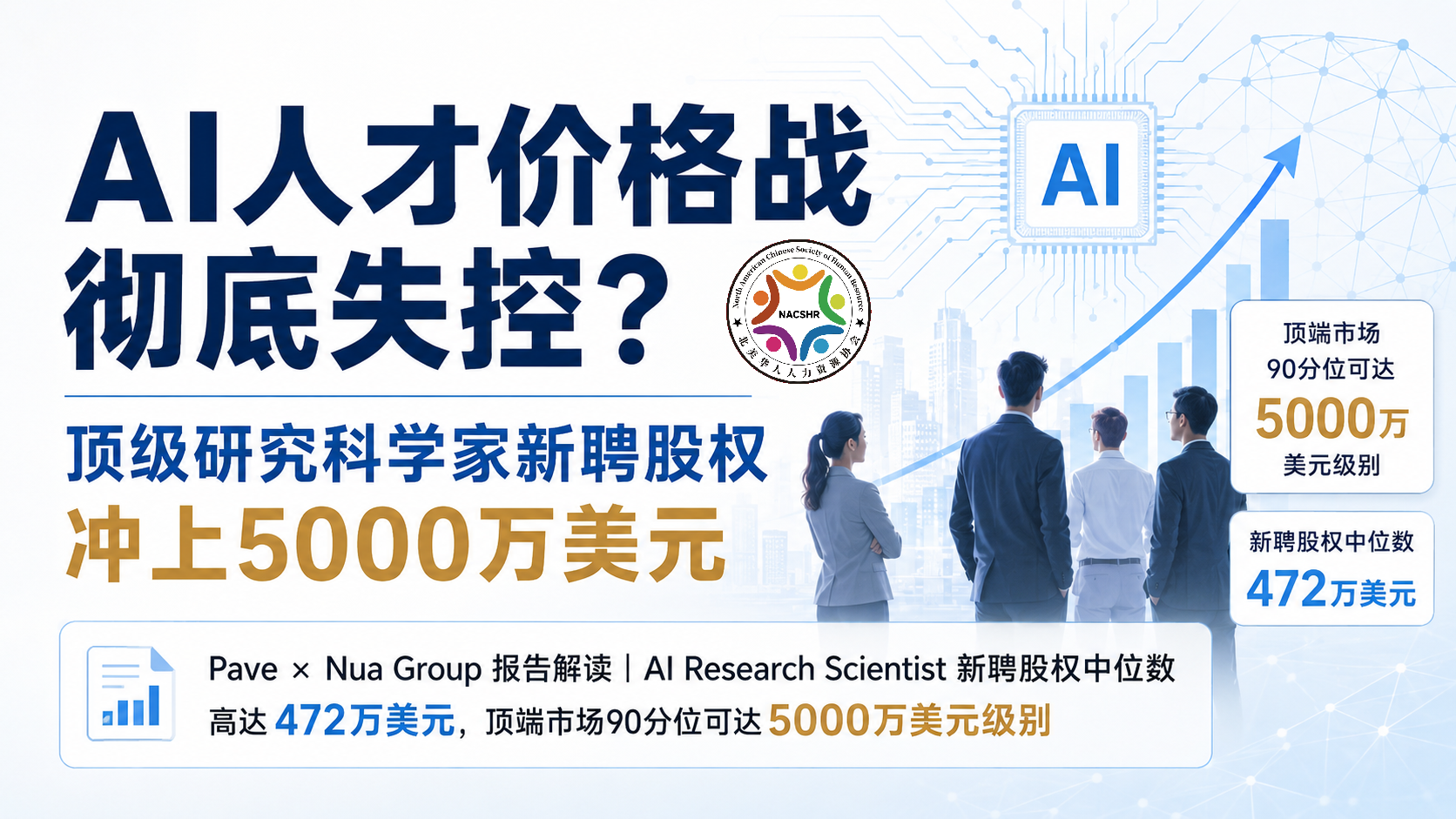
AI人才价格战彻底失控?顶级研究科学家新聘股权冲上5000万美元NACSHR核心摘要:AI人才真正贵在哪里?可能不是工资,而是股权。Pave × Nua Group 最新报告显示,AI Research Scientist 新聘股权中位数最高已达 472万美元,部分湾区顶级公司的高级人才 P90 股权包甚至达到 4500万–6000万美元。更重要的是,AI Engineer、ML Engineer、Research Scientist 已经形成完全不同的人才市场。做招聘、薪酬和组织设计的HR值得看看这组数据。
当企业还在讨论“AI Engineer到底应该比普通软件工程师多付多少工资”时,AI人才市场本身已经发生了更深层次的变化。
Pave 与 Nua Group 最新发布的《The State of AI Talent: A Compensation & Workforce Report》基于 Pave 覆盖 9,000+ 家企业的实时薪酬数据库,对 15,000+ 名映射至AI和机器学习岗位的员工进行分析。Pave的数据通过企业 HRIS、ATS 和 Equity Management Systems 持续连接,并结合企业融资、规模和上市状态等信息进行分析。
从 NACSHR 的角度看,这份报告最值得关注的并不是“某些AI人才拿到了数千万美元股权”这样吸引眼球的数字,而是一个更重要的变化:AI人才正在从一个笼统的技术标签,演变成多个拥有不同岗位定义、人才供给、薪酬曲线和股权策略的独立人才市场。
AI人才已经不能再放在一个“AI Engineer”岗位里管理
过去几年,很多企业招聘AI人才时,常见做法是在 Software Engineer 基础上增加“AI”标签,然后适当提高薪酬。但 Pave 和 Nua Group 认为,这种方式已经越来越难以准确反映市场。
报告将技术人才从传统软件开发到前沿AI研究划分为五个连续层次:Software Engineer、AI-Capable SWE、AI Engineer、ML Engineer 和 AI Researcher。其中最容易产生混淆的是 Software Engineer 与 AI Engineer 之间的 AI-Capable SWE,这并不是一个已经高度标准化的独立岗位,因此在职位名称和 Level 判断上最容易产生混乱。
AI Engineer 与 ML Engineer 的差异则更加明确。AI Engineer 主要工作在 application layer,将现有模型和算法嵌入产品、API、基础设施和生产系统;ML Engineer 更靠近 model lifecycle,负责模型开发、优化、统计方法以及支撑模型运行的数据和工程管道。
实际人才结构也已经出现明显分层。在 Pave 数据库的AI/ML员工中,ML Engineering 占56.2%,AI Research Scientist占23.4%,AI Engineering占17.0%,Computer Vision Engineering占2.2%,MLOps Engineering占1.2%。
这意味着,对于企业HR而言,“我们要招聘AI人才”已经不是一个足够明确的人才需求。真正的问题应该是:企业究竟需要开发模型的人、优化模型的人,还是把模型转化为产品和业务能力的人?
基本工资并没有失控,真正拉开差距的是股权
AI人才薪酬市场最值得注意的一个现象,是基本工资和股权正在呈现完全不同的走势。
从 Base Salary 看,三个核心AI岗位族之间实际上相对接近。P6级别的中位基本工资中,ML Engineering为 $321K,AI Research Scientist为 $311K,AI Engineering为 $294K;到了M6管理级别,三者分别为 $347K、$340K和$304K。也就是说,在高级岗位上,ML Engineering的基本工资甚至高于AI Research Scientist。
真正出现巨大分化的是 Equity。
AI Research Scientist 的 P6 中位新聘股权达到 $4.09M,M6达到 $4.72M。相同P6级别,AI Engineering为 $1.48M,ML Engineering为 $1.60M;M6则分别约为 $1.12M和$2.02M。AI Research Scientist的股权价值已经超过另外两个岗位族两倍。
需要特别说明的是,这里的数字不是“年薪”。报告定义的是 New Hire Equity(Gross, Intended, Annualized),即新员工股权奖励的预期毛值年化价值。把“$4.72M”直接描述成“AI科学家年薪472万美元”是不准确的。
但这个数据仍然揭示了一个非常重要的趋势:企业争夺顶尖AI人才的主要竞争工具,正在从现金工资转向股权。
5000万美元级别的股权不是普遍行情,但顶端市场确实已经被重新定价
更加惊人的数字出现在报告第18页。
Pave针对一个非常具体的市场进行了筛选:AI Research Scientist、San Francisco Bay Area、私营企业、累计融资$1B–$5B+。在这个高度竞争的人才市场中,P6和M6级别90分位的新聘股权已经进入 $45M–$60M 区间,其中报告特别展示了 $51.4M 的90分位股权价值。
这个数字需要正确理解。
它不是“美国AI Research Scientist普遍可以拿5000万美元”,而是代表在旧金山湾区、融资规模达到数十亿美元、争夺最顶尖AI研究人才的少数私营科技企业中,企业为了赢得某个关键候选人,已经愿意突破传统薪酬体系的边界。
这也是为什么现在市场上不断出现顶级AI研究人员获得巨额 package 的新闻。这些案例不是普通市场价格,却已经成为顶端人才市场的真实价格信号。
人才越高级,AI Research Scientist的溢价越明显
另一个容易被忽略的问题,是三个AI岗位族本身的人才结构并不相同。
AI Engineering明显更加年轻,P1–P2初级人才占 23.97%;ML Engineering这一比例只有 9.13%,AI Research Scientist为 11.26%。相反,AI Research Scientist中P5–P6高级人才占比达到 22.76%,是三个岗位族中最高的。
这意味着AI Research Scientist薪酬更高并不仅仅是因为“Research Scientist”这个Title更值钱,而是因为这个岗位市场本身更集中于高级、稀缺并能够直接影响模型能力的专业人才。
而且股权差异随着Level提升迅速扩大。AI Research Scientist从P4开始明显拉开差距,到P6中位新聘股权达到 $4.09M,大约是其P1水平的20倍。
因此,对企业而言,AI人才成本真正危险的地方往往不是招聘一个普通AI Engineer,而是当业务突然决定需要一位能够改变产品、模型或技术路线的高级AI研究人才时,传统薪酬Band可能瞬间失去参考价值。
企业规模越大,AI岗位体系越开始专业化
AI人才的组织成熟度同样存在明显差异。
只有 12% 的1–99人企业拥有至少一名AI/ML人才,而在3,000人以上企业中,这一比例达到 91%。
管理体系的差距更加明显。在已经拥有AI/ML Individual Contributor的公司中,1–99人企业只有 17% 配备专门的AI/ML Manager,而3,000人以上企业达到 72%。很多中小企业的AI人才仍然由普通Engineering或Data Science负责人管理。
更值得关注的是大型企业正在快速拆分AI岗位。3,001人以上企业中,只拥有一种AI/ML Job Type的比例从2024年的 52.4%下降到2026年的19.0%;同期拥有三种及以上AI/ML Job Types的比例则从 14.3%提高到50.0%。
这反映出的不仅仅是招聘需求增长,而是 AI Job Architecture正在成熟。
过去企业可能只有一个“AI Team”,未来则会逐渐形成 Research、ML Engineering、AI Engineering、MLOps、Computer Vision等不同岗位体系,对应不同Level、Career Path、Compensation Band和Manager结构。
AI人才不仅贵,也更难留
企业面临的第二个挑战是Retention。
Pave数据显示,过去12个月AI/ML Individual Contributor的Turnover为 21.8%,而同一批企业Software Engineering为 16.8%;Manager层面,AI/ML为 22.6%,Software Engineering为 18.9%。报告中的Turnover同时包含主动和非主动离职。
这说明AI人才市场正在形成一个典型循环:外部市场价格快速上涨,新员工以更高价格进入,现有员工发现自己的市场价值变化,随后带来Retention、内部公平和薪酬压缩问题。
对于HR和Total Rewards团队而言,仅仅解决“Offer能不能发出去”已经不够,还需要同时考虑 New Hire Equity、Refresh Grant、Internal Equity以及关键人才Retention。
AI人才竞争仍然高度集中在美国,尤其是California
AI人才市场的另一个现实是地域高度集中。
在Pave样本中,California集中了美国49.3%的AI/ML人才,其中大部分位于San Francisco Bay Area。
从全球看,美国拥有 57.3%的AI/ML人才,明显高于美国在全球Software Engineering人才中的44.8%占比。United Kingdom分别为6.3%和4.5%;India的情况正好相反,拥有全球13.2%的Software Engineering人才,却只有5.6%的AI/ML人才。
对于北美企业尤其是希望在湾区之外建立AI团队的公司,这意味着“Remote”并不会自动解决人才供给问题。真正成熟的AI人才池依然高度集中,地域竞争仍然会直接影响招聘周期和薪酬价格。
不是所有企业都应该和OpenAI式公司争夺Research Scientist
Nua Group在报告最后提出了一个非常值得企业管理层关注的框架:Know Your AI Lane。
它把企业分成三种类型。
第一类是 AI Innovators。这类企业自己建设基础模型和核心AI基础设施,需要AI Research Scientist、ML Engineer和AI-Capable SWE。对于这类企业,现金薪酬可能直接脱离传统Band,而股权成为争夺核心人才的主要工具。
第二类是 AI Integrators。这类企业不是开发基础模型,而是把AI嵌入自己的产品中。核心岗位通常是AI Engineer,只有在需要深度模型定制时才大量使用ML Engineer,AI Research Scientist通常并不是必要岗位。
第三类是 AI Implementers。这类企业主要利用现有AI提高内部运营效率,往往需要AI Engineer和AI-Capable SWE,把现成模型接入企业流程和系统,而不是自己重新训练基础模型。
对应的薪酬策略也完全不同:AI Innovators往往需要突破标准薪酬Band,并使用大额新聘股权;AI Integrators可以采用标准薪酬Band加结构性AI Premium,并适度提高股权;AI Implementers则更多保持标准Band,只对少数关键岗位给予溢价和股权。
这可能是整份报告对大多数企业最有价值的提醒:不要因为AI很重要,就误以为每家公司都需要最昂贵的AI人才。
NACSHR观察:AI时代,HR首先要解决的不是“付多少钱”,而是“究竟在买什么能力”
过去企业面对人才短缺时,最常见的问题是:“市场P50是多少?我们需要付到P75还是P90?”
AI正在改变这个逻辑。
企业首先需要完成Job Architecture:明确AI Engineer、ML Engineer和AI Research Scientist分别承担什么任务,什么情况下需要AI-Capable SWE,什么情况下才真正需要Research Scientist。岗位没有定义清楚,再精准的薪酬Benchmark也没有意义。
其次,HR需要把Cash和Equity作为两套不同的竞争机制管理。Pave的数据已经证明,Base Salary并不是顶级AI人才价格分化最大的部分,真正能够突破传统市场曲线的是Equity。
第三,AI人才Benchmark的更新速度必须高于传统岗位。报告最后建议Compensation Team把AI/ML Pay和Equity Band视为一个“moving target”,保持足够宽度,并比其他Engineering岗位更加频繁地重新审视。
最后,企业必须先回答一个战略问题:我们究竟是一家AI Innovator、AI Integrator,还是AI Implementer?
如果企业只是希望用AI改善客服、销售、HR、财务或内部运营,却按照顶级AI实验室的方式招聘Research Scientist,不仅会大幅增加人才成本,也可能出现“花了最贵的钱,却买错了能力”的情况。
AI人才市场正在进入新的阶段。下一轮企业之间真正的差距,不只是“谁愿意给更高的工资”,而是谁能够更准确地定义工作、识别关键能力、设计岗位体系,并把现金、股权和人才战略放在同一个框架中管理。
对于HR来说,这也意味着AI带来的变化已经从“如何招聘AI人才”,进一步进入了 Job Architecture、Compensation Design、Equity Strategy和Workforce Planning 的核心领域。
来源:Pave + Nua Group,《The State of AI Talent: A Compensation & Workforce Report》,2026年8月。
AI engineering
2026年08月24日
AI engineering
Workday收购HiredScore的意义,这可能颠覆人力资源科技领域Workday计划收购HiredScore,这是人力资源技术领域的一次重大变革。HiredScore是一家领先的基于AI的招聘匹配工具提供商,此举将大大增强Workday在人才智能和招聘方面的能力。这次收购预计将整合HiredScore的专长到Workday的系统中,显著改善其应聘者追踪系统(ATS)、技能云和整体人才智能产品。此战略性收购可能会重塑人力资源软件市场,迫使其他供应商加速他们的AI计划,可能激发一轮新的收购热潮。
以下是原文:
This week Workday announced intent to acquire HiredScore, a leading provider of AI-based matching tools for recruiting (called “talent orchestration”). While it wasn’t discussed much in the earnings call, this deal is a big positive for Workday and could have many implications for the HR Tech market.
Let me explain. (I have not been briefed by Workday yet, so more information will come as I learn more.)
Right now there is a massive marketplace war for high-powered AI-based recruiting tools (estimated at $30.1 billion). Historically dominated by applicant tracking systems (ATS), this market provides essential technology to help every company grow.
The ATS market, which is more than 25 years old, has been rapidly transformed with high-powered AI tools that help with candidate matching, search, skills inference, and sourcing. And now that AI tools are readily available, these systems are becoming big data platforms loaded with billions of employee profiles, running complex AI models to help match people to jobs, projects, and gigs.
Most ATS vendors (including Workday) have slowly extended into this space through matching. The original idea of a resume parser (software that reads a resume and scores it against a job description) has evolved into complex text analysis and AI-powered inference technology, forcing ATS vendors to invest.
As the ATS vendors enhance their AI capabilities, a parallel universe of AI-first Talent Intelligence vendors emerged. These vendors, like Eightfold, Gloat, Beamery, Phenom, Seekout, Skyhive, Retrain, and Techwolf are building skills-centric big data platforms to match people to jobs, gigs, and mentors. These systems do much more than rate matches: they identify skills, find adjacent skills, match people to careers, find mentors, and more. They are essentially open big-data AI platforms built on vector databases that can be used for many enterprise apps (job architecture design, skills planning, internal mobility, pay equity analysis, etc.). In many ways they represent the future of HR Tech.
(Read our Talent Intelligence Primer for more.)
As the Talent Intelligence vendors grow, they start to deliver “HCM-threatening” platforms that impinge on the HCM “System of Record” idea. If you have all your employees, candidates, alumni, and prospects in Eightfold, Phenom, Seekout, or Gloat, for example, Workday or SAP look like a tactical payroll and workflow management system. (ServiceNow also understands this, and is building talent intelligence into its workflow platform.)
Up until now the big HCM vendors like Workday, Oracle, and SAP have struggled to build these new systems, largely because their original architectures were not AI-based. So they’ve attracted customers with offerings like the Workday Skills Cloud or SAP Opportunity Marketplace that aren’t fully completed yet. We have talked with dozens of Workday Skills Cloud customers, for example, and they see it as an important “skills system of record,” but its real AI matching and inference capabilities have been limited.
Along comes HiredScore, a well respected AI-based matching system with 150 employees and 40+ seasoned AI engineers in Israel. These folks are experts at candidate matching (quite a complex problem), and they’ve built a very innovative “orchestration” system to help line managers coordinate activities with HR business partners and recruiters (more on this later). While I’m sure they’ll continue to build out HiredScore, they can also contribute to Workday’s overall talent intelligence offering, improving the entire system – including the Skills Cloud, Workday Learning, Workday’s Talent Marketplace.
As large as the recruiting software market is, the market for internal career tools, talent mobility, skills inference, and corporate learning is five times bigger. This acquisition gives Workday a shot in the arm to accelerate its entire AI platform strategy. (As the Identified acquisition did back in 2014. Identified was the roots of the Workday Skills Cloud.)
Market Implications Of This Move
This move could change the market for HR software in a few significant ways.
First, Workday Recruiting customers will be thrilled. Workday’s ATS now benefits from a first class matching and candidate scoring solution. This helps Workday compete with the bigger ATS players and gives Workday a new revenue source as they sell HiredScore to the existing 4,000+ Workday ATS customers. (Similar to the Peakon acquisition in Employee Experience.) And the talent orchestration features (kind of like a “staffing copilot”) gives Workday a very unique feature set.
Second, this forces Workday’s talent intelligence partners to step up their game. Remember when Apple acquired Dark Sky, the most compelling micro-weather app on the market? Once they integrated it into Apple’s other apps, the market for third party weather apps went away. Workday could limit its partner network to avoid letting HiredScore competitors into the ecosystem.
Third, this forces HCM vendors to accelerate their AI. Since HiredScore is such a well-respected product (every client we talk with adores it), it will become part of Workday demos and sales proposals quickly. Workday’s HCM competitors will start scratching around to find a similarly mature AI vendor to acquire. And that could kick off another round of acquisitions, similar to the frenzy that took place in the mid 2010s.
Finally, there’s one more scenario, and I give this good odds. Not to be outdone by Workday, the Talent Intelligence vendors may just expand their ATS capability and decide to go “full stack.” I wouldn’t be surprised to see this happen.
Why Is AI-Based Candidate Matching So Important
Why is this technology so important? Well if you’ve ever tried to recruit on Indeed or LinkedIn, you know why. The quality and reliability of “candidate matching technology” is a lynchpin of a talent platform. Just as Google Search crushed Yahoo, Excite, and Inktomi, a powerful next-gen matching tool adds an enormous amount of value. Not only does it speed talent acquisition, it fuels all the internal mobility, career portals, skills, and eventually learning and pay systems.
Why do I say this? A “match” is a sophisticated problem. Unlike a Google search which looks at text and traffic, when you search for a person to fill a role you have to think about dozens of complex relationships. What are this person’s skills and capabilities? What are their credentials or certifications? Who else are they connected with? How likely will they fit into the job, role, and company? What is the impact of their industry experience? What tools and technologies do they understand?
And it gets much more complex. The Heidrick Navigator platform (built on Eightfold), uses AI to assess functional skills for management and leadership, identifies a person’s “ability to drive results,” and more. This important application of AI powers many of the most important decisions we make in business.
That’s why the Talent Intelligence space is growing so fast. As of this week there are more than 1,800 Director or VPs of “Talent Intelligence” in LinkedIn, and that number is up almost six-fold from one year ago.
Can Workday take the lead in this emerging space? It’s impossible to tell at this point, but the horses have left the gate and the race is on. This deal sets the players in the right lanes and feels like the earthquake to shake things up.

 AI engineering
 AI engineering




 扫一扫
添加客服
扫一扫
添加客服


