利用组织网络分析(ONA) - 衡量员工绩效并优化战略作者: Maya Bodan, Don Miller, Sue Cantrell, Gary Parilis, 和 Carissa Kilgour
在快速变化的工作环境中,传统的办公室、工作时间和组织结构已逐渐失效,组织需要新的洞察力来理解、衡量和评估员工的绩效。特别是现在,了解人们如何互动、互动模式如何影响业务结果以及如何调整行为以改善这些结果变得更加重要。数据分析和人工智能 (AI) 的创新使这一切成为可能。
组织网络分析利用网络科学和特定指标来分析和可视化组织内部的沟通和信息流动。通过收集和分析调查和工作应用中的数据,组织可以利用数据、分析和 AI 的力量。组织网络分析揭示了传统组织结构图中没有的洞察力,例如人们如何协作、谁在决策中起到关键作用或者独立工作,以及关于信任和影响的情感。组织网络分析可以帮助领导者理解人际关系、可视化关系并找出成功的潜在障碍(图1)。
图1: 组织网络分析可以帮助发现组织内部的协作
衡量员工绩效
业务结果可以通过多种方式衡量。有时具体的定量指标是适用的;例如,一个专注于生产力的网络营销团队可能会强调点击次数、下载次数或发布的社交媒体帖子数量。改进指标,如“将网络流量增加X%”,使团队能够创新实现这一目标的方法。其他业务结果包括质量率和客户保留率的衡量。
然而,仅靠容易衡量的关键绩效指标并不能完整地呈现员工的生产力和业务影响。推动关系、发展和其他非量化人类结果的软性目标的结果对业务至关重要,尽管难以衡量。
雇主需要创造员工重视的工作场所。德勤研究显示,79%的领导者认识到他们有责任为员工创造价值,但只有27%的员工认为他们的雇主正在取得有意义的进展。在当前质疑面对面工作价值的环境中,量化人类结果带来了挑战。组织网络分析为领导者提供了分析洞察,优先考虑以人为本的指标,优化工作场所策略以提升整体员工体验。
理解个人员工绩效
组织网络分析 (ONA) 的洞察力在结合评估个人和团队绩效时尤其有用,这些绩效衡量会影响业务结果或生产力。
组织网络分析通过衡量与生产力相关的行为模式来评估生产力(需要对不同团队、职能和业务的生产力进行客观定义)。这些定义可以通过专家判断、焦点小组和访谈确定,或者通过数据分析进行量化。哪种模式是最优的取决于业务情况和需求。例如,有时,广泛的网络互动(与团队外部合作)是必要的,而在其他情况下,这可能会分散注意力——与直接同事合作是最好的(孤立的团队也可以是好的)。
非正式影响者通常不同于组织的正式领导者,他们可以提供关于如何独立于正式层级结构高效工作的宝贵视角。这些洞察力展示了员工人口在整个网络中的分布,以及职能、业务单元或地理位置等因素如何影响团队动态和生产力。在一个无边界的组织中,员工绩效超越了传统指标,突出了对非正式协作可见性的重要性。组织网络分析可以揭示隐藏的洞察力,展示信息在组织内部的真实流动方式,给领导者提供做出明智决策和优化员工绩效的洞察。
利用 ONA 优化工作场所策略
组织在平衡面对面和虚拟互动方面面临挑战。尽管许多组织鼓励员工返回办公室,期望面对面的互动能提升员工绩效和创新,但需要对人们如何实际工作的细致理解。高管希望办公室工作能激发创造力和联系,但往往面临昂贵的长期房地产承诺未得到充分利用的压力,这增加了定义办公室目的和价值的难度。通勤也会增加环境足迹,员工可能不愿失去灵活性。
通过组织网络分析,领导者可以回答一些关键问题:
有多少团队成员是共址的?
在什么情况下以及为什么需要共址?
什么工作可以或最好独立完成?
哪些工具和应用程序最能支持不同地点的工作?
一个重要因素是现场密度,它衡量一个人在办公室内近距离合作者网络的比例。更高的现场密度与更高的面对面工作的认可度相关。领导者可以利用组织网络分析的洞察来了解谁应该在一起工作以及何时在一起工作。理解这些非正式网络和影响范围可以为领导者解锁巨大的价值,以确定哪些团队应该共址以及共址时如何组织空间。通过虚拟方式沟通的独立工作者可能在办公室工作中看到的收益有限。有趣的是,新的数据显示“在松散联系网络中更可能产生创意”,这意味着与自己的直接网络外的合作可以促进创新。
结论
组织应负责任地使用数据、分析和 AI,以实时洞察员工在当今工作环境中的操作、协作和战略。这种改进的理解可以在多个组织层面支持价值创造和决策。组织网络分析提供了有关员工如何在混合工作模式和远程工作模式中跨职能和地理“边界”协作的绩效洞察,可以帮助领导层制定工作场所策略和政策。
作者
Maya Bodan
Don Miller
Sue Cantrell
Gary Parilis
Carissa Kilgour
贡献者
Yuki Iwase
Shruti Kalaiselvan
Ramyasri T M
Brennan Conway
Katherine Arriola
尾注
1 Deloitte, “Using network analysis to build an agile organization: Create organizational collaboration in a remote workplace,” 2020年10月27日。 2 Stephen Lancaster-Hall 等人, Humanizing productivity and performance: Productivity and performance in times of disruption, Deloitte, 2020; Deloitte, Beyond productivity: The journey to the quantified organization, 2023年5月。 3 Deloitte, Beyond Productivity: The journey to the quantified organization, 2023年5月。 4 Sue Cantrell 和 Corrie Commisso, “Outcomes over outputs: Why productivity is no longer the metric that matters most,” Deloitte Insights, 2023年7月19日。 5 Steve Hatfield, “Rethinking the ways we look at productivity in a Work from Anywhere world: How to evaluate remote worker productivity post-pandemic,” Deloitte’s Capital H blog, 2021年8月24日。 6 Worklytics, “12 metrics for more effective meetings,” 访问时间 2024年1月4日。 7 Deloitte Insights, New fundamentals for a boundaryless world: 2023 Global Human Capital Trends Report, 2023, 第80页。
来源:https://www2.deloitte.com/us/en/blog/human-capital-blog/2024/harnessing-organization-network-analysis.html
Hybrid Work
2024年06月19日
Hybrid Work
推荐:The best HR & People Analytics articles of March 2024024年3月,David Green带领我们深入了解了人力资源和人力分析的最新趋势。在欧洲和美国的几场关键活动中,他强调了人力分析在提升员工体验、AI在工作场所的角色、以及四天工作周趋势的增长中的转型作用。此外,Culture Amp对Orgnostic的收购和在Culture First Leaders Forum上的见解,突出了培养适宜的组织文化对于未来工作的战略重要性。Green的观点强调了HR需要采用数据驱动策略,以实现有效的劳动力规划、技能发展和组织增长。
2024 HR TRENDS AND PREDICTIONS
KATE BRAVERY, JOANA SILVA, AND JENS PETERSON - Workforce 2.0: Unlocking human potential in a machine-augmented world – Mercer Global Talent Trends 2024
The world of work is in full metamorphosis, forever changed by the seismic shifts of the past few years and accelerated by the imminent human-machine teaming revolution. Just as organizations were settling into a new normal — with a focus on hybrid working, comprehensive health and well-being, digitalization, and upskilling — Generative AI (Gen AI) burst onto the scene.
Those are the opening words from the Mercer Global Talent Trends 2024 report, which has recently been published. As ever, the study, which is based on a survey of more than 12,000 executives, HR leaders, employees, and investors, and is authored by Kate Bravery Joana Silva and Jens Peterson is an absolute must-read. The study highlights a disconnect between what HR is prioritising for the 2024 people agenda and the initiatives that executives believe will have the most impact on business growth (see FIG 1). The study highlights four priorities that firms that outpace their competitors are focusing on: (1) Driving human-centric productivity. (2) Anchoring to trust and equity. (3) Boosting the corporate immune system. (4) Cultivating a digital-first culture. My tip to enjoy the study: find a couple of hours, make yourself a cup of tea and have a pen and paper to hand.
FIG 1: HR priorities for the 2024 people agenda (Source: Mercer Global Talent Trends 2024)
FIG 2: Drivers and drainers of employee productivity(Source: Mercer Global Talent Trends 2024)
HYBRID, GENERATIVE AI AND THE FUTURE OF WORK
BRIAN ELLIOTT - Return-to-Office Mandates: How to Lose Your Best Performers
There is mounting evidence that mandates don’t improve financial performance. Instead, they damage employee engagement and increase attrition, especially among high-performing employees and particularly those with caregiving responsibilities.
That’s according to Brian Elliott in his latest column in MIT Sloan Management Review, which highlights that the workers most likely to be turned off by return-to-office mandates are the company’s highest performers. Elliott highlights the link between factors such as pressure from investors and the CEO echo chamber with RTO pronouncements, as well as how only one in three executives believe that RTO has had even a slight impact on productivity. He recommends instead focusing on productivity rather than physical presence (see FIG 3) and how this can inspire a boom loop in engagement as opposed to a doom loop in trust. Finally, Elliott presents findings from the Future Forum and i4CP, highlighting the negative impact of RTO mandates, before offering guidance on how to build an outcomes-driven organisation: “The bottom line is that when trust is balanced with accountability, people and organizations will thrive.”
FIG 3: Focus on Productivity, Not Physical Presence (Sources: Future Forum, Centre for Transformative Work Design, and Slack)
AARON DE SMET, SANDRA DURTH, BRYAN HANCOCK, MARINO MUGAYAR-BALDOCCHI, AND ANGELIKA REICH - The human side of generative AI: Creating a path to productivity
As teams start using gen AI to help free up their capacity, the middle manager’s job will evolve to managing both people and the use of this technology to enhance their output.
A fascinating new study from McKinsey, which provides analysis on workers who are at the forefront of gen AI usage (which as FIG 4 shows is dominated by those in non-technical roles) and dives into the job factors and skills these workers say they need. The authors emphasise how firms can enhance productivity by crafting jobs that put people before tech – rather than the other way around. They conclude that companies that set a people-centric talent strategy will give themselves a competitive edge as more workers and jobs are affected by the changes gen AI brings. The article is rich with data and powerful visualisations – kudos to the authors: Aaron De Smet Sandra Durth Bryan Hancock Marino Mugayar-Baldocchi and Angelika Reich ).
FIG 4: Workers who use generative AI as part of their jobs comprise a much larger group than those who hold traditionally technical roles (Source: McKinsey)
PETER CAPPELLI, PRASANNA (SONNY) TAMBE, AND VALERY YAKUBOVICH - Will Large Language Models Really Change How Work Is Done?
LLMs are much more complicated to use effectively in an organizational context than is typically acknowledged, and they have yet to demonstrate that they can satisfactorily perform all of the tasks that knowledge workers execute in any given job.
In their article, Peter Cappelli Prasanna Tambe and Valery Yakubovich look at the use and challenges of integrating Large Language Models (LLMs) in organisations, and present practical recommendations on how to work with LLMs successfully. The five challenges outlined in the article are: (1) The Knowledge Capture Problem. (2) The Output Verification Problem. (3) The Output Adjudication Problem. (4) The Cost-Benefit Problem. (5) The Job Transformation Problem – How will LLMs work with workers? Guidance includes developing and circulating standards for the use of LLMs in organisations, establishing a central office to produce important LLM output, and providing training to users.
NICK BLOOM – Why WFH is a win-win-win | WFH research update (March 2024)
Nick Bloom’s recent post on LinkedIn highlighting his research on why remote working is a win for firms (due to increased productivity of $20,000 a year for each remote day a week), employees, and society is extremely compelling. I also recommend reading Nick’s latest monthly data for March, which includes numerous insights such as that workers in their 50s and 60s are fully onsite more often than younger workers. For more from Nick, please tune in to his discussion with me on the Digital HR Leaders podcast: Unmasking Common Myths Around Remote Work.
FIG 5: Workers in their 50s and 60s are fully onsite more often than younger workers (Source: WFH Research)
PEOPLE ANALYTICS
PIETRO MAZZOLENI - Transforming HR: How IBM measures the success of its people data platform investments
For those of you who haven’t already subscribed to Pietro Mazzoleni’s People Data Platform newsletter, where he unpacks insights from transforming IBM's internal data platform for people analytics, I highly recommend you do. In this edition, Pietro walks through the three tiers of Key Performance Indicators (KPIs) IBM uses to evaluate investments in Workforce 360, its people data platform (see FIG 6). Watch out for an upcoming episode of the Digital HR Leaders podcast, where I discuss with CHRO Nickle LaMoreaux how IBM is augmenting HR programs with AI. The episode will air from April 9.
FIG 6: Three tiers of KPIs to evaluate investments in a people data platform (Source: Pietro Mazzoleni)
NAOMI VERGHESE - Influencing C-Suite and Board Decisions with People Analytics Insights
Naomi Verghese shares key learnings from the recent Peer Meeting for member companies of the Insight222 People Analytics Program, hosted by HSBC in their global headquarters in London. The Peer Meeting, which was attended by over 60 people analytics leaders and practitioners from more than 40 companies focused on two of the key findings from the Insight222 People Analytics Trends study for 2023: influencing senior stakeholders and measuring value. In her article, Naomi covers four topics: (1) how to implement a people analytics operating model that drives business outcomes (based on insights shared at the Peer Meeting by Rob Etheridge and Bec Aoude). (2) how to use AI to democratise insights from people data, using an example of work Andrew Elston has led at HSBC. (3) how Microsoft’s employee listening ecosystem (see FIG 7) helped the firm identify the moments that matter for in-person collaboration (insights from a session led by Dawn Klinghoffer), and (4) how to influence the board of directors, with insights from Justine Thompson. If you would like to learn more about our People Analytics Program, contact us today.
FIG 7: Microsoft’s employee listening ecosystem (Source: Dawn Klinghoffer, Microsoft)
BRENT DYKES - The Future Of Data Storytelling Is Augmented, Not Automated
Brent Dykes continues his rich vein of writing with an article exploring whether AI tools should be used to automate data storytelling. He provides reasons why data storytelling can’t or shouldn’t be automated including for reasons of oversimplification, transparency and trust, and the fact that storytelling is essentially a human skill. Instead, Brent advocates that the path forward should be augmented data storytelling, and lays out a powerful illustration of how this would work (see FIG 8)
The most powerful person in the world is the storyteller. The storyteller sets the vision, values, and agenda of an entire generation that is to come.
FIG 8: Data storytelling comparisons: Humans vs. AI (Source: Brent Dykes)
HALLIE BREGMAN – Where should People Analytics sit in an Organisation? Part 1 & Part 2 | WILLIS JENSEN – Can Data Cleaning be Automated? | COLE NAPPER - Universal Models & People Analytics | ALEXANDER LOCHER - How to harness the value of people data and operational HR insights | ANGELA LE MATHON, STACIA GARR, AND DANI JOHNSON - Generating Value from People Data
In recent editions of the Data Driven HR Monthly, I’ve been featuring a collection of articles by current and recent people analytics leaders. These act as a spur and inspiration to the field. Five are highlighted here. (1) If you don’t already follow Hallie Bregman, PhD on LinkedIn, you really should. Hallie regularly publishes thoughtful and insightful posts on topics important to the field. The two I’ve included here look at the pros and cons of situating people analytics in or outside HR. (2) Willis Jensen analyses whether AI will reduce the amount of data cleaning undertaken by people analysts given that much of this work involves judgement without hard, fast or consistent rules. (3) Cole Napper, who I’m looking forward to co-chairing People Analytics World with in London in April – also with Michael M. Moon, PhD – explains how many of the models we use in people analytics are borrowed from other disciplines. (4) Alexander S. Locher highlights some of the current trends in people analytics (see FIG 9) and offers guidance on how to harness value from your people data. (5) Angela LE MATHON, VP People Data and Analytics, shares how GSK generates value with their people data, how they’re using AI to gather information, and how skills verification ties in with Stacia Sherman Garr and Dani Johnson of RedThread Research.
FIG 9: Current trends in people analytics (Source: Alexander Locher, EY)
THE EVOLUTION OF HR, LEARNING, AND DATA DRIVEN CULTURE
JO IWASAKI, KAREN EDELMAN, AND YASMINE CHAHED - Time to rethink talent in the boardroom
Just over a third of board and c-level executives believe their workforce related discussions are adequate to meet their organisation’s needs. That’s the standout finding from a new global survey by Jo Iwasaki Karen Edelman and Dr Yasmine Chahed for Deloitte of 500 board members and C-suite executives in more than 50 countries on corporate governance and talent. The three top insights from the study were: (1) Many boards could be focusing more on talent-related issues. (2) Most organisations are just starting to think about their AI strategies. (3) Amplifying the talent experience will require boards to adopt a broader perspective.
FIG 10: Workplace related topics that are top board priorities (Source: Deloitte)
DAVE ULRICH - Pre-flections on GenAI and HR: Where to Go and How to Get There
GenAI will help shape HR’s future by offering both information symmetry to synthesize and optimize the past and present and information asymmetry to create and guide the future.
Dave Ulrich offers some initial reflections on what the journey could look like for applying GenAI to HR work, as well as some possible actions to drive progress (see example in FIG 11 for ‘Talent’). Dave also highlights four important considerations to manage the risk and realise the opportunity of GenAI in HR. (1) Who should champion, sponsor, participate in, and be accountable for this journey? (2) What individual skills and organisation capabilities will be required to make GenAI in HR happen? (3) What will be the regulatory and legal policies and risks associated with the effort? (4) What metrics of value-added GenAI for HR will be most useful and tracked?
FIG 11: Examples of GenAI/HR initiatives in the Talent domain (Source: Dave Ulrich)
HEIN KNAPPEN - How HR Adds to Enterprise Value
Hein J.M. Knaapen, a former chief people officer himself, shares his perspectives on the crucial role HR plays in driving business value, and offers practical advice to CHROs on how to make this a reality. Hein highlights the four people priorities that connect to value: (1) Performance management, (2) Succession management, (3) Leadership development, and (4) Capability building, providing guidance on each.
Value creation should be the focus. Nothing else. And only four people priorities connect to value: performance management, succession management, leadership development and capability building.
WORKFORCE PLANNING, ORG DESIGN, AND SKILLS-BASED ORGANISATIONS
STEFAN HIERL - Identifying the AI Potential in Your Organization: A Strategic Approach
Leveraging Generative AI to assess the AI Potential in a workforce helps businesses go beyond just talking about how AI might change jobs.
As Stefan Hierl astutely observes in his excellent article, in the rush to jump on the AI bandwagon, many companies fall into the trap of overlooking a critical preliminary step: conducting a systematic evaluation of where AI can deliver transformative value. In his article, Stefan outlines a five-step approach to quantify the potential of AI to support organisations identify opportunities for automating and augmenting work activities. The five steps (see FIG 12), which Stefan outlines in detail are: (1) Decomposing roles by breaking down each role into its main activities and respective time shares. (2) AI potential assessment – estimating the potential of AI at the activity level. (3) Expert validation – cross-verifying the generative AI findings with domain experts. (4) Identify high-value areas – creating an overview where AI can significantly enhance workforce productivity (see example in FIG 13). (5) Use case development – exploring specific AI applications to capitalise on identified potential.
FIG 12: Five steps to perform an activity based AI potential assessment (Source: Stefan Hierl)
FIG 13: AI potential by role – example (Source: Stefan Hierl)
MATT SIGELMAN, JOSEPH FULLER, AND ALEX MARTIN - Skills-Based Hiring: The Long Road from Pronouncements to Practice
For all its fanfare, the increased opportunity promised by Skills- Based Hiring was borne out in not even 1 in 700 hires last year (2023).
This is one of the standout findings from a new study by Matt Sigelman and Alex Martin of The Burning Glass Institute and Joseph Fuller from Harvard Business School. Their analysis reveals three categories of firms, who have publicly stated they have removed degree requirements in hiring, based on their actual hiring outcomes: (1) Skills-based hiring leaders (e.g. Cigna) – who have increased their share of non-degree hires in the roles analysed by nearly 20%. (2) In name only (e.g. Bank of America) – 45% of firms studied have made the shift in name only with no meaningful difference in actual skills-based hiring. (3) Backsliders e.g. Uber) – 20% of the firms analysed had made short-term gains by dropping degree requirements, but the change doesn’t stick. The report also highlights the roles best positioned for skills-based hiring (see FIG 14).
FIG 14: The roles best positioned for skills-based hiring (Source: Sigelman et al)
JORDAN PETTMAN - How to Accelerate the Impact of Strategic Workforce Planning (SWP) through the Organisation Strategy Ecosystem
Jordan Pettman, one of my colleagues at Insight222, knows a thing or two about workforce planning. In his recent article for myHRfuture, Jordan explores how strategic design can be brought to life through an integrated ecosystem (see FIG 15) encompassing four components: (1) Organisation strategy, (2) Operating model, (3) Organisation design and strategic workforce planning, and (4) Organisation effectiveness.
FIG 15: The Organisation Strategy Ecosystem (Source: Jordan Pettman, Insight222)
EMPLOYEE LISTENING, EMPLOYEE EXPERIENCE, AND EMPLOYEE WELLBEING
JACQUELINE BRASSEY, LARS HARTENSTEIN, BARBARA JEFFERY, AND PATRICK SIMON – Working nine to thrive
One of the few positives to emerge through and since the pandemic has been a stronger focus on employee health and wellbeing. According to new research by Jacqui Brassey, PhD, MA, MAfN (née Schouten) Lars Hartenstein Barbara Jeffery and Dr. Patrick Simon, on behalf of the McKinsey Health Institute, improving employee health and wellbeing doesn’t just benefit workers and organisations, it could generate between $3.7 to $11.7 trillion in global economic value (see FIG 16). Their article focuses on six drivers of health that employers can influence - social interaction, mindsets and beliefs, productive activity, stress, economic security, and sleep – and provides guidance on how organisations can move the dial on each.
FIG 16: Improving global employee health and wellbeing could create up to $11.7 trillion in economic value (Source: McKinsey Health Institute)
LEADERSHIP, CULTURE AND LEARNING
LINKEDIN LEARNING – Workplace Learning Report 2024: L&D powers the AI future
As AI reshapes how people learn, work, and chart their careers, L&D sits at the center of organizational agility, delivering business innovation and critical skills.
Aligning learning programs to business goals emerges as the top L&D focus area for 2024 in LinkedIn Learning’s annual report on the L&D field, which is based on analysis of LinkedIn behavioural data and focus interviews with L&D professionals around the globe. The report is structured into three chapters: (1) The State of L&D (the study finds that a strong learning culture derives retention, mobility, and promotion. – see FIG 17), (2) Skills agility (the study finds that only 33% of organisations have internal mobility programs), and (3) How L&D succeeds) with priorities #1 and #2 being to lean into analytics and build the right metrics – see FIG 18). The report features contributions from the likes of: Amanda Nolen (who asks: “What if Chief Learning Officers become Chief Skills Officers”), Chris Louie Geraldine Murphy Terri Horton, EdD, MBA, MA, SHRM-CP, PHR Alexandra Halem Ekpedeme "Pamay" M. Bassey Shruti Bharadwaj and Dani Johnson.
FIG 17: Business outcomes and learning culture (Source: LinkedIn Learning)
FIG 18: How L&D tracks business impact (Source: LinkedIn Learning)
AYSE KARAEVLI AND SERDEN ÖZCAN - Make Better Allies of Your Workforce
When the board takes the recommendations of employee advisory groups seriously and incorporates them into decisions, employees become more empowered, and their perspectives become embedded into their company’s long-term objectives.
In their article for MIT Sloan Management Review, Ayse Karaevli and Serden Ozcan present findings from their interviews with board directors, CEOs, CFOs, and employee representatives to understand how to manage conflict and engage workers. From their analysis, Ayse and Serden identified three strategies effective leaders use to include employees (see FIG 19): (1) Identify mutual goals and interests, (2) Foster inclusive decision processes, and (3) Give employees strategic responsibilities. The article then describes each of these in detail with examples from the likes of ThyssenKrupp, Allianz, Siemens, and Bayer before highlighting the importance of employee advisory groups, engagement with board members and the role of committees and task forces to imbue governance and participation.
FIG 19: Three Strategies to Avert Workforce Controversies (Source: Ayse Karaevli and Serden Özcan)
DIVERSITY, EQUITY, INCLUSION, AND BELONGING
SUNDIATU DIXON-FYLE, MASSIMO GIORDANO, TANIA HOLT, TUNDE OLANREWAJU, DARA OLUFON, AND SANDRA SANCIER-SULTAN - Ethnocultural minorities in Europe: A potential triple win
Greater inclusion of ethnocultural minorities could fill talent gaps and spur company growth, increase economic empowerment of these groups, and generate benefits for the economy and broader society.
Despite the anti-immigration policies of many current European governments (that includes you, Rishi Sunak), stagnant economies, tight labour markets, and shrinking working populations mean that immigration is key to unlocking economic growth. In their superb analysis for McKinsey, Sundiatu Dixon-Fyle Massimo Giordano Tania Zulu Holt Tunde Olanrewaju Dara Olufon and Sandra Sancier-Sultan provide data insights on what they classify as ethnocultural minorities in Europe, and their (mostly challenging) experiences. The authors also provide guidance for companies on ethnocultural minority employee inclusion across five dimensions (see FIG 20).
FIG 20: Companies can consider ethnocultural minority employee inclusion across five dimensions (Source: McKinsey)
HR TECH VOICES
Much of the innovation in the field continues to be driven by the vendor community, and I’ve picked out a few resources from March that I recommend readers delve into:
ANDREA DERLER, PETER BAMBERGER, MANDA WINLAW, AND CUTHBERT CHOW - When New Hires Get Paid More, Top Performers Resign First - To attract talent to the organisation, employers often pay new hires more than they pay equivalent workers in the same role. Analysis by the Visier Inc. team of Andrea Derler, Ph.D. Peter Bamberger Manda Winlaw and Cuthbert Chow shows that in these times of increasing pay transparency, this strategy risks your high-performers resigning.
ANDREW PITTS AND CHAD MITCHELL - Exploring a few largely untapped sources of data for passive Organizational Network Analysis – This article by Andrew Pitts and Chad Mitchell of Polinode looks at a number of data sources that are typically overlooked for ONA including: 360 reviews, peer to peer recognition tools, opportunity marketplaces, and talent intelligence data.
FRANCISCO MARIN - Key Considerations for Defining the Scope of an ONA Pilot – Francisco Marin of Cognitive Talent Solutions provides a helpful guide to defining the scope of an ONA pilot including tips on clarifying the objective, data privacy and securing executive sponsorship.
HAKKI OZDENOREN AND JOHN BOUDREAU – Is the Future of Work Lost in Translation – John Boudreau joins forces with Hakki Ozdenoren of Revelio Labs to conduct analysis on resumes and jobs mentioning the ‘future of work’, with HR featuring prominently (see FIG 21).
FIG 21: A diverse set of roles contribute to the Future of Work (Source: Revelio Labs)
PODCASTS OF THE MONTH
In another month of high-quality podcasts, I’ve selected five gems for your aural pleasure: (you can also check out the latest episodes of the Digital HR Leaders Podcast – see ‘From My Desk’ below):
JAMIL ZAKI, BRYAN HANCOCK, BROOKE WEDDLE, AND LUCIA RAHILLY - It’s cool to be kind: The value of empathy at work – In this episode of McKinsey Talks Talent, Jamil Zaki (author of The War for Kindness) joins Bryan Hancock Brooke Weddle and Lucia Rahilly to make the case for investing in empathic behaviour—for reasons including higher productivity, a stronger workplace culture, and better organisational health—as well as to discuss how to go about cultivating kindness at work.
CAL NEWPORT AND ADAM GRANT – How to be productive without burning out – Cal Newport discusses insights from his new book, Slow Productivity: The Lost Art of Accomplishment Without Burnout, with Adam Grant on WorkLife. They dig into the data on productivity, debate the benefits and drawbacks of doing fewer things (and spending less time on email and social media), and discuss individual habits and organisational practices for preventing burnout and promoting worthwhile work.
JOSH BERSIN - Why “Talent Density” Is So Critical In Business Today – Fresh from discussing his Dynamic Organizations research at Gloat Live, Josh Bersin discusses why ‘Talent Density’ is becoming one of the key strategies for growth.
DONNA MORRIS AND LARS SCHMIDT - Inside Walmart’s Bold Strategy to Transform Retail Work – Walmart’s chief people officer, Donna Morris, joins Lars Schmidt on his Redefining Work podcast to discuss how Walmart is not just navigating but leading the revolution in workplace technology—with people firmly at its core. This was an especially insightful listen as only two days before I had seen Marty Autrey speaking at the Wharton People Analytics conference on how Walmart provides data-based nudges to its store managers to help them drive business outcomes and enhance employee experience.
RYAN HAMMOND, COLE NAPPER AND SCOTT HINES - Turnover Prediction, ML Ethics, & The HiQ Story – Ryan Hammond shares the epic story of HiQ Labs with Directionally Correct hosts Cole Napper and Scott Hines, PhD, as well as insights from his practitioner and academic backgrounds including how to ethically use internal and external data to do turnover prediction.
VIDEO OF THE MONTH
TANUJ KAPILASHRAMI, MICHAEL FRACCARO, TAMLA OATES-FARNEY, AND DAVID GREEN – CHRO Panel: Delivering against the transformation imperative
March’s Video of the Month proved to be a highlight for me as it features me moderating the CHRO Panel at the recent Gloat Live event in New York. The panel was comprised of Tanuj Kapilashrami Michael Fraccaro and Tamla Oates-Forney, and featured discussion on the increasingly pivotal role of the CHRO in business transformation, lessons learnt and successes from transitioning to a skills-based organisation, and how technology can enable a culture of inclusivity and opportunity.
BOOKS OF THE MONTH
With a lot of travelling back and forth from the US in March, I found time to dig into two new books, which I recommend to readers of this newsletter:
MARC SOKOL AND BEVERLY TARULLI – Strategic Workforce Planning: Best Practices and Emerging Directions
Strategic workforce planning – the process of looking forward, assessing how to compete and win in your chosen market or business arena, and linking those insights to your existing and potential future workforce – is core to any institution that aspires to sustain itself over time.
Those are the opening words of Marc Sokol and Beverly Tarulli, Ph.D., the editors of an indispensable new volume of SIOP’s Professional Practice Series. It provides an overview of SWP, covering best practices, methodologies and new directions in the field as well as featuring contributions and case studies from a stellar list of contributors. These include: Sheri Feinzig Alexis Fink Adam Gibson Brian Heger Adam McKinnon, PhD. Kanella Salapatas and Dave Ulrich. Grab yourself a copy!
SALVATORE V. FALLETTA – Creepy Analytics: Avoid Crossing the Line and Establish Ethical HR Analytics for Smarter Workforce Decisions
In Creepy Analytics, Dr. Salvatore Falletta provides a thoughtful approach to HR Analytics that is both evidence-based and ethical – ensuring that organisations get the insights they need while respecting employee privacy. The book is built around the author’s seven-step HR Analytics Cycle (see FIG 22) and is well-researched. Thanks to Salvatore too for referencing Excellence in People Analytics several times, particularly in relation to the guidance Jonathan Ferrar and I offer around governance and the development of an ethics charter. As Alec Levenson opines in his endorsement of the book: “Falletta has done a masterful job addressing some of the most important ethical issues for workforce analytics.”
FIG 22: The HR Analytics Cycle (Salvatore V. Falletta)
RESEARCH REPORT OF THE MONTH
MAX BLUMBERG, ALEC LEVENSON, AND DAVE MILLNER - A Strategically Aligned HR Operating Model
In their recently published paper, three eminent and progressive thinkers in our field – Max Blumberg (JA) ?? Alec Levenson and Dave Millner – set out a pivot in how HR is structured and works in order to more closely align the function to the capabilities required for successful strategy execution. They present a new HR structure (see FIG 23) designed around four key pillars, before describing each pillar in detail and providing some diagnostic steps to implement this new operating model.
FIG 23: A new HR structure (Source: Blumberg, Levenson, and Millner)
FROM MY DESK
March saw four episodes from Series 37 of the Digital HR Leaders podcast, sponsored by our friends at Culture Amp - thank you to Ellisa Packer and Jodie Evans, a round-up of series 36 and a guest appearance by yours truly on the Future Work/Life podcast:
DAVID GREEN AND OLLIE HENDERSON - Driving growth in people and businesses using data – In a role reversal, it was my turn in the hotseat as I joined Ollie Henderson on his Future Work/Life podcast to talk people analytics, talent marketplaces, AI, hybrid work models and the future skills required by HR professionals.
DORIE CLARK - How to Embrace Long-Term Thinking in HR Leadership – Dorie Clark and I discuss how to pivot to long-term thinking, how to prioritise effectively, and why embracing failure can drive innovation and creativity.
DIDIER ELZINGA - How to Prove the ROI of a Positive Company Culture – Didier Elzinga joins me to discuss ways of engaging the board on culture topics, the relationship between a healthy culture and business performance, and how to demonstrate the ROI of culture and engagement initiatives.
ROB BRINER - What is Evidence Based HR and Why is it Important? – Rob Briner shares the principles of evidence-based HR, how it differs from people analytics, and offers recommendations to chief people officers on how they can incorporate EBHR into their work.
LOUISE MILLAR AND OLIVIA EDWARDS - Actionable People Analytics Strategies to Influence Senior Leadership – In a powerful example of people analytics in practice at a SME, Louise Millar and Olivia Edwards share insights from the people analytics journey at Chetwood.
DAVID GREEN – How will AI transform the role of HR? – A round-up of series 36 of the Digital HR Leaders podcast, with insights from episodes featuring Dawn Klinghoffer Jeremy Shapiro Thomas Hedegaard Rasmussen Serena H. Huang, Ph.D. Luke Farrugia Kaz Hassan Eric Siegel and Bernard Marr.
THANK YOU
Thomas Kohler for including the February edition of Data Driven HR in his round-up of HR resources.
Reb Rebele for referencing me in his post about the Wharton People Analytics Conference – you were missed, Reb.
Olimpiusz Papiez for providing a great set of takeaways on the Digital HR Leaders podcast episode with Dawn Klinghoffer, Jeremy Shapiro, and Thomas Rasmussen on People Analytics, AI and ML.
Peter Johnson for including me in his list of HR thought leaders.
Mokkup.ai for including my article on How Will AI Impact People Analytics in 2024 and Beyond? in their collection of Top 14 reads for Data Professionals.
Thinkers360 for including me in their list of the Top 50 B2B Thought Leaders, Analysts & Influencers You Should Work With In 2024 (EMEA)
Joveo for including me in their list of Top 9 Twitter Influencers Every Talent Acquisition Specialist Should Follow
To the following people who sharing the February edition of Data Driven HR Monthly. It's much appreciated: Allison Ardianto Eakkasit Toratana Jillian Meade David Balls (FCIPD) Kingsley Taylor Military Veterans of LinkedIn Robin Carlin Amy C. Lewis, PhD Russ Fatum Kouros Behzad Emily Klein Madison Clary Robert Rogowski Phillip M. Randall, PhD, CPG Gord Johnston MA, BHJ, BA, CHRP ANDRES CAMPOVERDE Aravind Warrier Francisca Solano Beneitez Satya Prakash Pandey Malgorzata (GOSIA) LANGLOIS Dr. Zohaib Azhar (PhD-HR) Jane Datta David McLean John Lawson Alice Damonte Martha Curioni Vipul M. Mali ↗️ Jens Keuter Phil Inskip Andrew Smith MBA Ekta Vyas Ph.D Oswaldo Machado Bill Brown Barry Marshall Paola Carranco Murthy Nibhanipudi VS Jaana Saramies ? Robert Houghton Aysegul Tigli Indre Radzeviciute Radha Jeevan Melissa Hopper Fritz Tina Peeters, PhD Morten Hartvig Berg Pedro Pereira Gavin Wiseman
UNLOCK THE POTENTIAL OF YOUR PEOPLE ANALYTICS FUNCTION THROUGH THE INSIGHT222 PEOPLE ANALYTICS PROGRAM
At Insight222, our mission is to make organisations better by putting people analytics at the centre of business and upskilling the HR profession The Insight222 People Analytics Program® is your gateway to a world of knowledge, networking, and growth. Developed exclusively for people analytics leaders and their teams, the program equips you with the frameworks, guidance, learnings, and connections you need to create greater impact.
As the landscape of people analytics becomes increasingly complex, with data, technology, and ethical considerations at the forefront, our program brings together over one hundred organisations to collectively address these shared challenges.
Insight222 Peer Meetings, like this event in London, are a core component of the Insight222 People Analytics Program®. They allow participants to learn, network and co-create solutions together with the purpose of ultimately growing the business value that people analytics can deliver to their organisations. If you would like to learn more, contact us today.
ABOUT THE AUTHOR
David Green ?? is a globally respected author, speaker, conference chair, and executive consultant on people analytics, data-driven HR and the future of work. As Managing Partner and Executive Director at Insight222, he has overall responsibility for the delivery of the Insight222 People Analytics Program, which supports the advancement of people analytics in over 90 global organisations. Prior to co-founding Insight222, David accumulated over 20 years experience in the human resources and people analytics fields, including as Global Director of People Analytics Solutions at IBM. As such, David has extensive experience in helping organisations increase value, impact and focus from the wise and ethical use of people analytics. David also hosts the Digital HR Leaders Podcast and is an instructor for Insight222's myHRfuture Academy. His book, co-authored with Jonathan Ferrar, Excellence in People Analytics: How to use Workforce Data to Create Business Value was published in the summer of 2021.
Hybrid Work
2024年03月31日
Hybrid Work
The best HR & People Analytics articles of February 2024
I’m writing the introduction to this month’s compendium in New York, ahead of two events this week in the Big Apple.
Firstly, I’m attending Gloat Live (thank you Ruslan Tovbulatov and the Gloat team), where I’ll be hosting a panel of three chief people officers – Michael Fraccaro Tanuj Kapilashrami and Tamla Oates-Forney– as well as sharing Insight222 research on building a data driven culture in HR. Also taking place this week is the Winter Peer Meeting for North American member companies of the Insight222 People Analytics Program, which is being hosted by Sally Masseyand Courtney McMahon at Colgate-Palmolive’s headquarters on Park Avenue.
After a weekend back in the UK for my birthday, I’ll be heading back to the US for the Wharton People AnalyticsConference on March 14 and 15. If you’re going to Gloat Live or Wharton PAC, then please do come and say hello. I was also in Switzerland a few days ago for People Analytics WorldZürich (thanks to Barry Swales Ralf Buechsenschuss), and just a fortnight ago, Rob Etheridgeand his team kindly hosted the European Peer Meeting of the Insight222People Analytics Program at HSBC’s headquarters in London – you can read some of takeaways from London here. It’s certainly a busy period of travel - and lots of vapour trail!
Attendees at the Insight222 Q1 European Peer Meeting for members of the People Analytics Program, hosted by HSBC in London
Some of you have written to me to advise that you weren't able to join the recent Insight222 webinar on Turning Insight into Impact with People Analytics. You can find out more by scolling down to the Video of the Month below or access the recording by clicking on the image below.
Looking for a new role in people analytics or HR tech?
Before we get to this month’s collection of resources, I’d like to highlight once again the wonderful resource created by Richard Rosenowand the One Model team of open roles in people analytics and HR technology, which now numbers close to 500 roles.
Share the love!
Enjoy reading the collection of resources for February and, if you do, please share some data driven HR love with your colleagues and networks. Thanks to the many of you who liked, shared and/or commented on January’s compendium (including those in the Comments below).
If you enjoy a weekly dose of curated learning (and the Digital HR Leaders podcast), the Insight222 newsletter: Digital HR Leaders newsletter is published every Tuesday – subscribe here.
2024 HR TRENDS AND PREDICTIONS
DELOITTE – 2024 Global Human Capital Trends: Thriving beyond boundaries – Human performance in a boundaryless world
The opening words of Deloitte’s 2024 Global Human Capital Trends perfectly capture the opportunity and challenge for HR today: “We’re operating in a world where work is no longer defined by jobs, the workplace is no longer a specific place, many workers are no longer traditional employees, and human resources is no longer a siloed function.” The seven trends covered in the report, each with its own chapter, are: (1) Embracing human sustainability, (2) Moving beyond productivity to measure human performance, (3) Balancing privacy with transparency to build trust, (4) Overcoming the imagination deficit, (5) Creating digital playgrounds to explore, experiment and play, (6) Cultivating workplace microcultures, and (7) Making the shift to a boundaryless HR. The report, which has 122 pages, is packed full of thought-provoking insights, visualisations and data – including FIG 1 and FIG 2 below. Kudos to the authors: Susan Cantrell Corrie Commisso Julie Duda Kraig Eaton Jason Flynn John Forsythe Michael Griffiths John Guziak Lauren Kirby David Mallon Mari Marcotte Shannon Poynton Nicole Scoble-Williams GAICD Yves Van Durme and Matteo Zanza.
We’re operating in a world where work is no longer defined by jobs, the workplace is no longer a specific place, many workers are no longer traditional employees, and human resources is no longer a siloed function.
FIG 1: In the era of human performance, business and human outcomes are mutually reinforcing (Source: Deloitte 2024 Global Human Capital Trends)
FIG 2: Source: Deloitte 2024 Global Human Capital Trends
ERNEST NG - What are the most Important things HR will need to focus on in 2024? | ALLISON BAUM GATES - Six predictions for the future of health, wealth, and work in 2024 | LYNDA GRATTON - Predictions for the Workplace of 2025, Revisited
Continuing with the prediction vibe, here are two more thoughtful reflections on what lies ahead and one reflection, 15 years on, from Lynda Gratton on her previous predictions about the future of work. (1) Ernest Ng, PhD, now at HiredScore– who Workdayhas just announced their intent to acquire, highlights a number of predictions for the year ahead combining a focus on efficiency, incorporating AI into the way we work and supporting employees to navigate change. (2) Allison Baum Gates, General Partner at SemperVirens Venture Capital combines the future of health, wealth and work into her predictions including: “AI’s primary impact in 2024 will be accelerating a shift to skills-based organizations.” (3) Lynda Gratton reflects on her Predictions for the Workforce of 2025, which she originally made in 2010 covering what she got right, where she misjudged, and what she learned about experimenting.
It will be wise to expect the unexpected. And when it comes, be prepared to observe closely, pivot quickly, and experiment widely.
HYBRID, GENERATIVE AI AND THE FUTURE OF WORK
ALEX CAMP, PHIL KIRSCHNER, LAURA PINEAULT, AND PATRICK SIMON - Hybrid can be healthy for your organization—when done right
Research from McKinsey suggesting that a fully remote organisation can demonstrate a level of organisational health that rivals, if not exceeds, the performance of most traditional companies. In the article, Alexandra Camp Phil Kirschner Laura Pineault and Dr. Patrick Simon highlight six priorities for companies aspiring to sustain a flexible or highly distributed workplace in parallel with top organisational health: (1) Remove ambiguity about working practices. (2) Reset performance expectations. (3) Be transparent. (4) Be purposeful about where people work. (5) Foster trust and a sense of support. (6) Test and learn.
Fully remote organizations can demonstrate a level of health that rivals, if not exceeds, the performance of most traditional companies.
FIG 3: Six priorities to sustain a flexible or highly distributed workplace (Source: McKinsey)
KELLY JONES - Unlocking the Power of Hybrid Work: 5 Guiding Principles from Cisco's 3-Year Study Article | White Paper | Executive Summary
Kelly Jones, Cisco's Chief People Officer, unveils the findings of a three year Future of Work study by Cisco’s People Intelligence Team, which was designed to explore the employee experience prior to the global pandemic, through the pandemic, to office re-opening and beyond. Kelly's article summarises five guiding principles for hybrid work including reimagining the office to create meaningful moments and encouraging leaders to be intentional with their attention. The executive summary also outlines five key findings and recommendations (see FIG 4): (1) People may be choosing to work from home, but in person touchpoints are still essential. (2) Effective collaboration is a balancing act. (3) Flexibility and choice positively influence engagement. (4) Leaders might be struggling the most. (5) Leader attention is the #1 predictor of engagement. Thanks to Roxanne Bisby Davis for highlighting.
Make the office a magnet, not a mandate
FIG 4: Source - Choice is Critical in the Future of Work (Cisco, 2024)
MICHAEL ARENA AND PHIL ARKCOLL - Enabling High-Velocity Teams
As Michael Arena and Philip Arkcoll outline, the significance of teams has never been greater, yet their effectiveness depends on being able to operate with both speed and focus. The article presents the findings of their research as to why focused teams outperform, and then provides five practices designed for teams to imbue more intentional collaboration: (1) Leverage collaboration phases. (2) Focused team structure. (3) Minimise frequent team shifts. (4) Actively manage dependencies and distractions. (5) Formation of integration teams.
With the rapid advancements in technology today, optimal team performance and speed matter disproportionately in ensuring market success.
FIG 5: Internally and externally focused agile teams (Source: Michael Arena and Philip Arkcoll)
GAD LEVANON | SHRM & THE BURNING GLASS INSTITUTE - Generative Artificial Intelligence and the Workforce
The Burning Glass Institute continues to publish fascinatingly insightful reports about the world of work. In their latest report, in collaboration with SHRM, Gad Levanon investigates how GenAI will impact industries, companies, and jobs, and reshape the economy. It reinforces that GenAI will have the greatest impact on high-skilled, professional work, provides indications of how GenAI will impact the economy (see FIG 6) and provides four actions for CHROs to: (1) Evaluate your organisation’s composition, (2) Evaluate the roles within your organisation, (3) Consider your current talent pipeline, and (4) Develop a game plan.
In the coming years, GenAI will both drive massive boosts in productivity and necessitate layoffs. Begin planning ways to leverage GenAI’s productivity benefits and prepare for the disruptions to your workforce through a combination of upskilling investments to give workers the skills to remain relevant and reskilling programs to reposition workers in areas of more stable demand.
FIG 6: Sequence of economic disruptions caused by GenAI (Source: SHRM and The Burning Glass Institute)
FIG 7: Implications of GenAI for HR functions (Source: SHRM and The Burning Glass Institute)
ANA KREACIC, AMY LASATER-WILLE, LUCIA URIBE, RAVIN JESUTHASAN, JOHN ROMEO, AND SIMON LUONG - How Generative AI Is Changing The Future Of Work | TED LIU, CARINA DENG, AND KELLY MONAHAN - How Generative AI Adds Value to the Future of Work
Two studies analysing the impact of GenAI on the world of work. The first by Ana Kreacic Amy Lasater-Wille Lucia Uribe Ravin Jesuthasan, CFA, FRSA John Romeo and Simon Luong for the Oliver Wyman Forum finds that GenAI could add up to $20 trillion to global GDP by 2030 and save 300 billion work hours a year. It also finds that while 96% of employees believe AI can help them in their current job, 60% are afraid it will eventually automate them out of work. There are numerous other insights and visualisations in the 100 page report including a projection of the likely productivity gains at work from GenAI in the next decade (see FIG 8). The second study, by Ted Liu Carina Deng and Kelly Monahan, Ph.D.for the UpworkResearch Institute, provides a comprehensive analysis of the initial impact of GenAI on the Upwork marketplace for independent talent. It finds that the impacts may already being felt with reductions in demand for work such as writing and translation and a surge in demand for skills associated with GenAI such as data science and analytics.
Generative AI could add up to $20 trillion to global GDP by 2030 and save 300 billion work hours a year.
FIG 8: Phases of generative AI’s impact on productivity at work (Source: Oliver Wyman Forum)
GEORGE WESTERMAN, SAM RANSBOTHAM, AND CHIARA FARRONATO - Find the AI Approach That Fits the Problem You’re Trying to Solve | TOMAS CHAMORRO-PREMUZIC - 7 Strategies to Get Your Employees On Board with GenAI | ANDY BALDWIN - 3 Ways to Embed DEI Into Your Company’s AI Strategy | MARTHA CURIONI – Why is Explainable AI Important for HR? | BRETT DYKES - Why AI Isn’t Going To Solve All Your Data Culture Problems
There may be a far degree of hype around GenAI, but it does seem to be accelerating the engagement of HR leaders and professionals with AI, and is also leading to an increasing number of thoughtful studies and articles on AI, including these five resources: (1) George Westerman Sam Ransbotham and Chiara Farronatooutline four categories of advanced analytics – GenAI, traditional deep learning, econometrics, and rule-based automation, and offer five questions to ask about AI’s constraints including: What is the cost of being wrong? (2) As Dr Tomas Chamorro-Premuzic observes: “the human factor — people and culture — will drive the adoption of AI, or lack thereof.” Tomas then presents seven strategies to get employees on board including i) focusing on the problem that GenAI can solve, and ii) being proactive about ethical concerns. (3) In his article for Harvard Business Review, Andy Baldwin outlines three ways to incorporate DEI into AI strategy through: i) embedding DEI into the design of your AI systems; ii) incorporating DEI into any AI-related upskilling programs; and iii) using AI as an opportunity to boost DEI. (4) Martha Curioni defines explainable AI and explains why it is critical to HR so it can provide transparency, build trust, mitigate bias and enable data driven decision making. (5) Finally, Brent Dykes cautions that while a recent study found that GenAI had catalysed a dramatic rise in the number of companies that reported they had ‘created a data-driven organization’ (from 23.9 percent in 2023 to 48.1 percent in 2024), AI is not a silver bullet for data culture. He illustrates this (see FIG 9) by referencing a study a European bank did to assess its own data culture, before highlighting two proven ways to build a data culture: executive sponsorship and role-modelling, and talent.
As with any aspect of digital transformation, the effective deployment of generative AI will depend less on technological capability than on human adaptability
FIG 9: Source: Brent Dykes, Analytics Hero
PEOPLE ANALYTICS
MARIËLLE SONNENBERG, FEDERICO BECHINI, SIETSE SCHRÖDER, AND CAITLIN VAN MIL - Our Real-Life Journey with GenAI in Skills and Talent Management (with code!!) | ADAM MCKINNON – Introducing Lex – Australian Employment Law Support AI | ALEC LEVENSON - A killer app with huge upsides and dangerous downsides: Applying AI to People Analytics
Two examples of GenAI in People Analytics in practice – and an article by Alec Levenson on AI in people analytics. (1) the Wolters Kluwer talent analytics team of Mariëlle Sonnenberg, PhD Federico Bechini Sietse Schröder and Caitlin van Mil share a case study of using GenAI to provide the foundation of their work to transition to a skills-based organisation. The article shares learnings from their journey (and the code!) including tips around data security, prompts, and system testing. (2) Adam McKinnon, PhD. presents Lex – an AI chatbot that has been trained on Australian workplace legislation. As Adam explains, Lex has been trained not to make up answers, and it should refuse to answer any question that cannot be answered using the legal documents it has been trained on. (3) Alec Levenson addresses the potential upsides and risks of applying AI to PA before providing a roadmap for ethical and effective application.
A human- and science-based perspective on any People Analytics model’s predictions is always needed, whether AI is applied or not.
PIETRO MAZZOLENI - Unlocking People Data: Lessons from Transforming IBM's Data Platform to Elevate People Analytics - The Why and the What | JON LESTER - Creating the future of human resources
Pietro Mazzoleni presents the first edition of what promises to be an interesting and insightful new LinkedIn newsletter, People Data Platform, which will explore the evolution of IBM's internal people data platform and its role in fostering data democratisation and people analytics. The first instalment covers the what and the why, and also provides an overview of Workforce 360 (W360 – see FIG 10), IBM’s internal people data platform. Pietro explains that the initial focus for W360 was (1) to digitalise People Scorecard, IBM´s main talent dashboard that measures the health of the workforce, and (2) to scale IBM’s advanced AI solutions like Job Recommendation, Attrition Risk Analysis, and Compensation Advisor. I recommend reading Pietro’s article alongside the second article, featuring Jon Lester on how in an initial pilot in IBM Consulting, a digital AI assistant (HiRo) saved 12,000 hours in one quarter, and halved the quarterly promotion process from 10 to 5 weeks.
FIG 10: Benefits of Workforce 360 (Source: IBM, Pietro Mazzoleni)
WILLIS JENSEN - Why Is It So Hard to Get Finance and HR Aligned? | JACKSON ROATCH - The Behavioral Economics of Return to Office | LYDIA WU - The Problem with “I Don’t Disagree” in People Analytics | JARED VALDRON - An FAQ on Generative AI in People Analytics | ANSHUL SHEOPURI - People Operations As A Critical Differentiator For Employee Experience | JUSTIN PURL - The People Analytics Method: Why TikTok's Head of Global People Analytics prioritizes context not control
As has also been the case in recent months, February saw a number of articles from current and recent people analytics leaders. These act as a spur and inspiration to the field. Six are highlighted here. (1) Willis Jensenboils down the traditional disconnect between HR and Finance teams on headcount: “There are some fundamental differences in counting the number of people (headcount) versus counting the amount of worker productivity (FTE) and both are necessary for different goals.” (2) Jackson Roatchanalyses the return to office topic through the lens of behavioural economics. (3) Lydia Wubreaks down why hearing “I don’t disagree” is a problem for people analytics, and in doing so highlights the importance of building trust with key stakeholders. (4) Jared Valdronprovides a set of answers to 18 frequently asked questions about GenAI in people analytics including i)) Is generative AI a good co-pilot for programming? ii) How will generative AI change the People Analytics job market? (5) Anshul Sheopurihighlights five areas where providing a frictionless experience is key to a successful EX program including i) Design with the user in mind and build for scale, and ii) Trusted data enables a solid foundation and responsible AI delivers personalised experiences. (6) Justin Purl Head of Global People Analytics of TikTok, introduces The People Analytics Method (see FIG 11) as a scientific approach for accumulating context that delivers impactful insights and supports HR decision-making
While it can be challenging to measure the financial impact of HR projects, that shouldn’t stop HR from trying to build those business cases.
FIG 11: The People Analytics Method (Source: Justin Purl)
Two key parts of The People Analytics Method are understanding context and engaging employees.
THE EVOLUTION OF HR, LEARNING, AND DATA DRIVEN CULTURE
J. PUCKETT, VINCIANE BEAUCHENE, PATRICK ERKER, AND ZHDAN SHAKIROV – Is Your Upskilling Program Paying Off
Measuring the Return on Learning Investment is arguably the Holy Grail of upskilling programs, but according to this article by BCG it is in fact possible. In their article, J. Puckett Vinciane Beauchene C. Patrick G. E. and Ƶhdan Shakirovpresent a three-step approach: (1) Identify the desired business impact upfront. (2) Define the metrics for holding the program accountable to that impact and measuring progress. (3) Determine whether the targeted impact has been achieved.
Before embarking on any upskilling program, organizations first need to establish the business impact they will measure after the program is over.
FIG 12: Metrics for assessing the impact of learning programs (Source: BCG)
DAVE ULRICH AND HARRISON JAMES - How to Ensure that Human Capability Investments Deliver Stakeholder Value
As Dave Ulrich and Harrison James explain in their article, organisations typically rely on benchmarking and best practices to evaluate the return from human capital investments. They argue that these methods are often limited and do not provide the specific guidance to impact the business results of individual companies. Their article sets out an alternative: an Organization Guidance System (OGS), which begins by identifying the stakeholder outcomes relevant in your company as a precursor to then determining through providing an opportunity score (see FIG 13) for which human capability initiatives best deliver those outcomes.
FIG 13: Source: Dave Ulrich, The RBL Group
WORKFORCE PLANNING, ORG DESIGN, AND SKILLS-BASED ORGANISATIONS
MARC EFFRON - Is the Juice Worth the Squeeze? Questions About Becoming a Skills-based Organization
As Marc Effron of The Talent Strategy Group highlights in his remarkable must-read article, there have been many claims made by consulting firms and technology providers about the case for shifting to being a skills-based organisation. In the article, Marc examines these claims, asking and answering 17 questions about skills-based organisations. The questions include: (1) If a skills-based approach is needed, why is it needed? (2) What changes will my organisation have to make to become a skill-based organisation? (3) Is there any proof that a skills-based approach delivers results? (4) Will AI and technology solutions better enable companies to track, manage and match skills? (5) How predictively accurate are skills in determining performance? Whatever side of the skills-based organisation debate you are on, I highly recommend reading Marc’s article.
At best, shifting to a skills-based environment can help some people in some situations at a large cost. It is likely best suited to industries where there is financial largess including pharmaceutical, banking, and larger consumer products firms. At worst, it reflects HR’s continued pursuit of novelty with the giddy support of technology and consulting firms that are all-too willing to promote and enable this questionable solution.
SCOTT REIDA - Draft priority role competency needs over time using ChatGPT4 and Tableau
A practical and technical guide from Scott Reida a workforce strategist at AWS, as he demonstrates how to use ChatGPT to drive talent intelligence by identifying current and future developments for key roles within an organisation. Scott visualises the outputs from ChatGPT in Tableau over a time horizon of ten years using the example of competencies for a data scientist.
FIG 14: Source – Scott Reida (access here)
EMPLOYEE LISTENING, EMPLOYEE EXPERIENCE, AND EMPLOYEE WELLBEING
ALICE DAMONTE, DANIEL MORALES, AND SARAH TOBEY - Employee listening programs and how to keep employees talking | IT SURVEY GROUP - What’s on the Horizon? Three Trends That Will Shape Employee Listening in 2024
Alice Damonte Daniel Morales and Sarah Tobeyfrom McKinsey’s internal people analytics and measurement team share learnings from Pulse, their continuous listening program. This capability has already enabled the team to shape more than 300 different initiatives since it was established three years ago. Their article focuses on two key elements of a successful employee listening program: (1) Making it easy and meaningful for employees to participate, which is enabled by providing transparency through firm-wide readouts, community dialogues, and individualised insights with support. (2) Making it straightforward for leaders to listen and act, which the team enable through ‘care packages’ to help leaders focus their attention on what matters most. For readers that enjoy this, I also recommend the second article, which features EX/HR leaders such as Kristin Saboe, Ph.D. Caitie Jacobson Stephanie Andel, PhD Patrick Gallen, MSOD Madison Beard and Ronald Ivan Dela Cruz forecasting three key trends for employee listening in 2024.
To ensure an employee listening channel is sufficiently well stocked with timely insights, it must be easy and meaningful for employees to participate, and straightforward for leaders to listen and act.
FIG 15: Source: McKinsey
FIG 16: Three key trends shaping employee listening in 2024 (Source: IT Survey Group)
LEADERSHIP AND CULTURE
AMY C. LEWIS, ANDREA DERLER, CUTHBERT CHOW, MANDA WINLAW, AND DANI HAIG – Designing Impactful Teams: Data-backed insights about effective team size
What does team size have to do with designing high-performing teams? That was the exam question, the Visier Inc.team of Andrea Derler, Ph.D. Cuthbert Chow Manda Winlaw and Dani Haigsought to answer in a collaborative study with Amy C. Lewis, PhD Professor of Management at the College of Business at Texas A&M University-San Antonio. Key findings include: (1) Most people work in teams of six to ten. (2) Team size varies by the nature of the work. (3) Smaller teams have more high performers. (4) Smaller teams have lower resignation rates (see FIG 17). The report has some helpful insights for those studying team effectiveness and involved in organisational design work.
FIG 17: Smaller teams have lower resignation rates (Source: Visier)
SPENCER HARRISON AND KRISTIE ROGERS - Building Culture From the Middle Out
The premise of a study by Spencer Harrisonand Kristie Rogersis for a business to harness the power of culture, it needs managers and team leaders to go beyond believing that they are responsible for culture to actively building it. Their research finds that managers that successfully achieve this are able to link the ‘big-C’ culture of their organisation (e.g. the official set of values) with the ‘small-c’ culture that plays out in the narrower and vibrant daily patterns of interaction (see FIG 18). The article highlights four successful strategies: (1) Endorse big-C culture through celebration and preservation of select features. (2) Endorse big-C culture by learning from other managers. (3) Enrich small-c culture through cultural innovations. (4) Enrich small-c culture by empowering employees to innovate.
FIG 18: Endorse and Enrich Your Way to Corporate Culture (Source: Harrison and Rogers)
JOSH BERSIN - How to Actually Execute a 4-Day Workweek | DOUGLAS BROOM - Four-day work week trial in Spain leads to healthier workers, less pollution | BENJAMIN LAKER – How Far-Reaching Could the Four-Day Workweek Become? AVA MARTINEZ – A 3-Day Workweek Could Complicate The Future of Work
Four articles on the four-day week, a concept that seems to be gathering momentum with pilots suggesting that business outcomes can be maintained while employee wellbeing and retention is enhanced. (1) Josh Bersinpresents findings from his study that finds companies need to undertake substantial work redesign to reduce hours while maintaining business outcomes to make the four-day week work. (2) Writing for the World Economic Forum, Douglas Broom shares results from a four-day work week pilot in Valencia, which found that giving workers an extra day off a week actually increases productivity, boosts physical and mental health and reduces CO2 emissions. (3) Benjamin Laker, who has been studying the four-day week for a number of years, outlines the findings from a UK study on the four-day week, which finds that 92% of the 61 companies that participated in the pilot are continuing with the four-day week. Laker also highlights that research conducted before and after the trial revealed that 39% of employees experienced lower stress levels and 71% noticed less burnout while working shorter weeks (see FIG 19). (4) From being one of the CEO outliers on return to the office, JP Morgan Chase CEO Jamie Dimon suggests that AI may precipitate a future of work where the working week is three days – as reported by Ava Martinez for The HR Digest.
FIG 19: Source: The UK’s four-day week pilot (Autonomy)
DIVERSITY, EQUITY, INCLUSION, AND BELONGING
SERENA HUANG - DEI Funding Cuts? You Need Data Analytics and AI More Than Ever | BOGDAN YAMKOVENKO AND STEPHEN TAVARES - To Understand Whether Your Company Is Inclusive, Map How Your Employees Interact
With many companies and institutions – particularly in the US – cutting back on their DEI programs, a recent edition of Serena H. Huang, Ph.D. From Data to Action newsletter is well timed. Serena explains how people data and analytics can help reverse this trend and highlights a number of helpful resources. One of the resources Serena highlights is a seminal article by Bogdan Yamkovenko, PhD and Stephen Tavares first published in Harvard Business Review in 2017. It provides a case study of a professional services firm that used organisational network analysis to identify that that women were largely shut out of its decision making, idea sharing, and emotional support networks (see FIG 20). For more from Serena, please tune into her recent conversation with me on the Digital HR Leaders podcast: How to Enhance Your Career in People Analytics.
FIG 20: 3 ways to look at employee networks at one professional services firm (Source: Heidrick & Struggles)
HR TECH VOICES
Much of the innovation in the field continues to be driven by the vendor community, and I’ve picked out a few resources from February that I recommend readers delve into:
LOÏC MICHEL | 365TALENTS – Your Absolute How to Guide to Skills Management – A handy guide to skills management from Loïc Michel and the 365Talentsteam featuring guidance and case studies.
ALICIA ROACH - Let's Talk About Lay-Offs – Alicia Roach of eQ8 frames the recent spate of layoffs from companies posting impressive profits in the context of culture and workforce planning (see FIG 21). As Alicia writes: “We can do better. We must do better.”
FIG 21: Scenario modelling and external shocks (Source: Alicia Roach, eQ8)
RICHARD ROSENOW - Embracing Remote Work for Senior People Analytics Roles: A Strategic Imperative – Richard Rosenow of One Model makes a persuasive case for why every organisation looking to lead in People Analytics should consider making their senior roles, if not all of their People Analytics roles, remote eligible. For more on people analytics jobs, check out this analysis of executive and director people analytics roles by Patrick Coolen.
BLEDI TASKA - SkyHive Data Reveals Greater Gender Disparity in the Generative AI Sector Compared to the Tech Industry at Large – Bledi Taska, Ph.D. presents SkyHive data and key findings on the impact of Generative Al on the U.S. job market and economy. His analysis highlights the urgent need for reskilling and upskilling initiatives to mitigate inequality in the workforce. Thanks to Todd Raphael for highlighting.
HAKKI OZDENOREN - Move Over HR, AI Is the New Recruiter! – Hakki Ozdenorenpresents data and analysis from Revelio Labs, which finds that HR job postings mentioning AI are surging ahead of other listings. This underscores the need for HR professionals to reskill in areas like AI and data literacy. Thanks to Ben Zweig for highlighting.
FIG 22: AI related job postings in HR roles are on the rise (Source: Revelio Labs)
MARC RAMOS - Learning & Development is the New Research & Development - How the Learning Function Can be the AI Accelerator Part 1 | Part 2 – Cornerstone OnDemand CLO Marc Steven Ramos presents his two-part series on the L&D function investigating, testing and extending the use of AI within organisations – includes FIG 23 on blending R&D and L&D approaches.
FIG 23: Complementing R&D and L&D approaches (Source: Marc Ramos)
PODCASTS OF THE MONTH
In another month of high-quality podcasts, I’ve selected five gems for your aural pleasure: (you can also check out the latest episodes of the Digital HR Leaders Podcast – see ‘From My Desk’ below):
HEMERSON PAES, COLE NAPPER, AND SCOTT HINES - Active & Passive ONA Use Cases at Roche – Hemerson Paes joins hosts Cole Napperand Scott Hines, PhDon the Directionally Correct podcast to share his work rolling out active and passive ONA applications at scale at Roche.
BOB SUTTON AND ADAM GRANT - How to become a “friction-fixer” – Leading management thinker and organisational psychologist at Stanford, Bob Sutton, joins Adam Grant on ReThinking to discuss his new book, The Friction Project, on how to diagnose and then fix workplace problems. Unmissable.
JASON CORSELLO AND LAURIE RUETTIMANN - HR Technology 2024 – Jason Corsello from Acadian Ventures joins Laurie Ruettimannon Punk Rock HR to discuss the state of the HR tech market, the potential and concerns of AI, and the importance of future skills.
ANDREW SAIDY AND CHRIS RAINEY - Why a Talent Marketplace is Win-Win for Employees and Organisations - Andrew Saidy joins Christopher Rainey of HR Leaders to discuss his work at Ubisoft, where skills are becoming the currency for hiring, mobility and promotions rather than solely relying on degrees or tenure.
STEPHANIE DENINO, KIRAN MENON, AND DEBKANYA DHAR VYAVAHARKAR - Moving EX from boardroom to office floor - Stephanie Denino of TI PEOPLE speaks to hosts of the EXtra Extra podcast Kiran Menon and Debkanya Dhar Vyavaharkar about the findings of the State of EX report, and applying agile principles towards shipping EX ideas out of the boardroom and onto the office floor.
VIDEO OF THE MONTH
NAOMI VERGHESE, ALAN SUSI AND DAVID GREEN | INSIGHT222 - How Leading Companies shift People Analytics from Insight to Impact
Please forgive the mild case of self-indulgence, but the ‘Video of the Month’ is actually a webinar we recently hosted at Insight222based on our People Analytics Trends research, which was informed by a survey of 271 participating companies. In the webinar, Naomi Vergheseand I walked through the findings from the Insight222 People Analytics Trends research, unveiling the distinctive characteristics of ABCD Teams that propel organisations to new heights. Naomi and I were joined by Alan Susi, VP and Global Head of Organisational Analytics and People Insights at S&P Global. Alan shared insights on how the firm successfully elevated their approach to people analytics, turning data into tangible business outcomes. You can access the webinar here – or by clicking the image below.
BOOK OF THE MONTH
JOHN WINSOR AND JIN H. PAIK – Open Talent: Leveraging the Global Workforce to Solve Your Biggest Challenges
In Open Talent, John Winsor and Jin Paik advocate that companies need to shift to a more ‘distributed’ structure that revolves around talent (people) and projects in a networked organisation. In this model, talent is assembled from both inside the organisation (via an internal talent marketplace) and outside (via external talent clouds). The authors reveal how they implemented open talent strategies, and how other companies can adopt these techniques. A thoughtful and insightful read.
RESEARCH REPORT OF THE MONTH
SHELLEY XIN LI, FRANK NAGLE, AND ANER ZHOU - Mapping Organizational-Level Networks Using Individual-Level Connections: Evidence from Online Professional Networks
An interesting paper by Shelley Xin Li, Frank Nagle, and Aner Zhou for the Harvard Business School Strategy Unit, which constructs and describes a comprehensive network for 7,715 publicly traded U.S. firms from 2004 to 2018, using data on over 9 million people with 2 billion connections from the professional social network LinkedIn. The key finding is that while employees do not necessarily make connections for the company’s benefit, the centrality of that company in the employee network positively predicts company value. Thanks to Nicolas BEHBAHANI for highlighting.
FIG 24: Firm-level Network Centrality and Economic Performance for U.S. Public Firms in 2018 (Source: Li, Nagle, and Zhou, 2023)
FROM MY DESK
February saw the final two episodes of Series 36 of the Digital HR Leaders podcast, sponsored by ScreenCloud as well as the first episode of Series 37 sponsored by Culture Amp. Thank you respectively to Luke Farrugia of ScreenCloud and Ellisa Packer and Jodie Evans of Culture Amp.
ERIC SIEGEL - How to Overcome AI Adoption Challenges in HR – Eric Siegel, the author of The AI Playbook: Mastering the Rare Art of Machine Learning Deployment, explains how to successfully deploy machine learning in organisations while remaining focused on outcomes, ethics, and improving decision making.
BERNARD MARR - Achieving AI & Human Synergy in Data-Driven HR – Bernard Marr, who always has his finger on the pulse when it comes to new technologies, shares insights from his book, Data-Driven HR: How to Use AI, Analytics and Data to Drive Performance, and how AI is already impacting HR, and how it will increasingly do so in the future.
REBECCA THIELEN - Microsoft's Key to Strategic Workforce Planning Success – Rebecca Thielen shares insights from the workforce planning journey at Microsoft, including the role of analytics, close partnership with finance, and the clear focus on the problem statement.
ANGELA LE MATHON, IAN COOK, AND DAVID GREEN - The Strategic Agenda for People Analytics in 2024 – I also hosted a webinar with Angela LE MATHON and Ian Cook, which was organised by Visier Inc. and People Analytics World, to discuss the agenda for people analytics in 2024. Topics discussed included the role of middle management in strategic decision-making, the impact of AI on people analytics, and the practical challenges and strategies for implementing AI and analytics within HR frameworks.
THANK YOU
Finally, this month I’d like to thank:
Matt Manners and the team at Inspiring Workplaces for once again including me on their Top 101 Global Employee Engagement & Experience Influencers 2024, sponsored by Huler.
Jennifer McClurefor including me in her list of recommendations for HR professionals looking to build a Personal Development Library.
Amit Mohindrafor including Excellence in People Analytics as one of the course materials for his people analytics course at Stanford University
Malgorzata (GOSIA) LANGLOIS for posting about the Microsoft case study contributed by Dawn Klinghoffer in Excellence in People Analytics.
Stephen Hickey for including me in his list of go-to resources on people analytics.
Dr. Divya Sainath for posting about our conversation at the recent Indeed Future Talent event in Bangalore.
Thomas Kohler for including the January edition of Data Driven HR Monthly in his list of HR Resources.
Teamflect for including the Digital Hr Leaders podcast at number six in its list of the top 20 HR podcasts.
Ekta Vyas Ph.D for posting about my article, A History of People Analytics in Five Ages.
Andrew Lafontaine for creating a post with highlights from the episode of the Digital HR Leaders podcast on How to Overcome AI Adoption Challenges in HR with Eric Siegel.
Wendy Van Ierschot for including me in her post about her book, Scale Ups and Downs.
DOWNLOAD THE LATEST INSIGHT222 PEOPLE ANALYTICS TRENDS RESEARCH
We’ve recently released our fourth annual People Analytics Trends report at Insight222: Investing to Deliver Value: A new Model for People Analytics, which is now available to download via the link – or by clicking on the image below.
ABOUT THE AUTHOR
David Green ?? is a globally respected author, speaker, conference chair, and executive consultant on people analytics, data-driven HR and the future of work. As Managing Partner and Executive Director at Insight222, he has overall responsibility for the delivery of the Insight222 People Analytics Program, which supports the advancement of people analytics in over 90 global organisations. Prior to co-founding Insight222, David accumulated over 20 years experience in the human resources and people analytics fields, including as Global Director of People Analytics Solutions at IBM. As such, David has extensive experience in helping organisations increase value, impact and focus from the wise and ethical use of people analytics. David also hosts the Digital HR Leaders Podcast and is an instructor for Insight222's myHRfuture Academy. His book, co-authored with Jonathan Ferrar, Excellence in People Analytics: How to use Workforce Data to Create Business Value was published in the summer of 2021.
SEE ME AT THESE EVENTS
I'll be speaking about people analytics, the future of work, and data driven HR at a number of upcoming events in 2024:
March 4-6 - Gloat Live! (New York)
March 14-15 - Wharton People Analytics Conference (Philadelphia)
April 24-25 - People Analytics World (London)
May 7-9 - UNLEASH America (Las Vegas)
September 24-26 - Insight222 Global Executive Retreat (Colorado, US) - exclusively for member organisations of the Insight222 People Analytics Program
October 16-17 - UNLEASH World (Paris)
More events will be added as they are confirmed.
What Issues are Top of the Mind for HR Leaders Heading into 2024?根据康奈尔大学工业劳动关系学院高级人力资源研究中心的一份调查报告,“转型和演变”这一广泛而重要的话题最近受到人力资源领导者的关注,该问题被确定为2024年企业的最紧迫问题。
“考虑到公司一直面临的所有颠覆,无论是在业务方面,还是在地缘政治问题的更广泛环境中,看到转型成为今年的首要目标,我并不感到惊讶,”康奈尔大学战略人力资源教授兼该中心主任布拉德贝尔说。
根据上周发布的调查,超过三分之二(67%)的人力资源领导者认为转型和演变(包括人力资源转型、文化演变和混合工作演变)是首要问题。而2023年,转型与演进排名第三,只有大约45%的受访者认为是首要问题。
调查显示,由于地缘政治力量和劳动力变化导致的业务中断正在加剧人们对转型和演变的担忧。Bell 说,人力资源领导者特别关注人力资源内部的转型,例如保持公司的敏捷性、提高效率和优化运营。他指出,中东的冲突和乌克兰的持续战争限制了这些地区的员工流动,另外,总体上减缓了一些人力资源转型工作。他补充说,对组织治理问题的高度关注,包括股东对高管薪酬的发言权,也在缓和人力资源转型,因为这种努力可能会限制招聘工作。
此外,Bell 表示,调查参与者报告说,快速的组织文化变化使员工难以建立联系并发展共同的目标,尤其是在当今分散的工作环境中。作为回应,人力资源领导者经常更新他们的混合工作模式,这可能会损害包容性或其他相关目标,从而阻碍文化发展。
HR 优先事项如何变化
排名前五的问题分别是人才管理、技术、员工体验以及领导力和继任计划。
Bell说,技术是今年进入前五名的新事物,这主要是由于人力资源部门对人工智能的兴趣。在前几年,该主题被嵌入到其他类别中,例如数字员工体验。去年排名第四的总奖励从榜单上掉了下来。
“每年,似乎都会有一个新话题出现在前 5 名名单上,”贝尔说。他说,2023 年,在高通胀和寻求为员工提供经济救济的组织推动下,总薪酬是增加的。但今年,通胀正在放缓,对经济衰退的担忧正在缓解,这可能会减少雇主对这一领域的担忧。
DEI 和福祉仍然是人力资源的优先事项吗?
Bell 说,尽管他们没有进入前五名,但 DEI 和福祉仍然是人力资源领导者最关心的问题之一。与去年一样,他们在 2024 年分别排名第六和第七。
Bell 说:“人力资源主管谈到希望保持他们迄今为止在 DEI 方面取得的进展,甚至希望将这些努力提升到一个新的水平。“例如,他们不仅考虑多样性和包容性,还考虑我们如何推动公平和各种人才实践。”
然而,他指出,一些公司正在撤回他们的 DEI 努力。这些行动反映在最高法院去年对平权行动作出裁决后,削减 DEI 预算和裁员 DEI 官员。
他说,同样,雇主对幸福感的关注也在减弱。
“大流行后,人们对员工的健康和福祉非常关注,”贝尔说。“我认为它已经有所消退。我不认为它像我们在调查中看到的其他一些主题那样受到同等程度的关注。
Source Human Resource Executive
Hybrid Work
2024年01月31日
Hybrid Work
Trends in Employment Law Employers Should be Aware of
With 2023 here, it’s time to look ahead to key issues affecting employers in the coming year. Notably, these issues share a major driver: remote and hybrid work models. Here’s a peek at top labour and employment law trends for employers to watch out for in 2023.
Changes in the labour laws will continue to impact many workplace practices, including vaccination requirements, hybrid and remote work, travel restrictions, and ensuring workers with underserved opportunities can access the labour market. These inquiries will require outside labour attorneys and in-house legal counsel to answer and comprehend. As the area of labour and employment law develops over the coming years, employers must take into account the following trends.
Quelling Quiet Quitting: On social media, the idea of quiet quitting—where a person continues to work but ceases to go above and beyond, performing only what is officially required—has received a lot of attention. Employers are starting to face a serious problem as workers place more value on the "life" component of the work-life balance equation. Employers are also attempting to determine what, if anything, can be done about it. The good news is that employers have resources at their disposal to combat quiet resignation, such as:
Written employment contracts: Employee rights, obligations, and expectations will be made plain to employees through a well-crafted and effectively implemented written employment contract that includes explicit terms regarding work assignments, working hours, and pay. This document may also grant the authority to terminate an employee if they fail to uphold those conditions.
Incentive compensation: Offering incentives to employees for exceeding performance goals, such as bonuses, paid time off, or other rewards, may encourage them to put in the extra effort. However, it's crucial to carefully craft incentive plans to avoid future liability for them even after the employment relationship has ended.
"When there is a fierce talent competition, a voluntary “disconnecting from work” policy that is (well-drafted and effectively administered) sends a message to both present and potential employees that an employer is eager to help workers balance their home and work life."
Job satisfaction: Consider ways to improve job satisfaction, which is less of a legal concern than an engagement one. For instance, refusing to offer remote work opportunities can induce disengagement, which in turn can lead to employee dissatisfaction. Employers have the authority to determine an employee's place of employment. So, take into account the model that will benefit the staff and the company equally.
Progressive discipline: While employers have the right to control the workplace, they can only expect adequate - not exceptional - performances from their employees. If an employee's performance falls below a certain threshold, the employer may gradually penalise the employee for poor performance and, ultimately, terminate their employment. However, companies always have the option to fire employees without cause as long as they receive the proper amount of notice or compensation.
Demands to Disconnect: Employee requests for more flexibility have led to the retention of remote and hybrid work arrangements post-pandemic, which has led to rising employee demands for a "right to disconnect." Employees' "right to disconnect" often refers to their decision to disengage from communication about their jobs post-working hours. Employers may decide to implement a voluntary "disconnecting from work" policy as a recruitment and retention strategy even if they are not legally compelled to do so. Due to COVID-19, a lot of employers have switched to a hybrid or remote work model, which has caused the distinction between personal and professional lives to become hazier. When there is a fierce talent competition, a voluntary "disconnecting from work" policy that is (well-drafted and effectively administered) sends a message to both present and potential employees that an employer is eager to help workers balance their home and work life.
More Employee Monitoring: With remote or hybrid work arrangements becoming more prevalent, employers are exploring how to monitor employees generally and remote workers specifically.
Maintaining compliance with all federal and state labour laws and regulations is integral to running a business. In addition to being among the easiest to violate, labour and employment regulations are also among the most important.
SOURCE Manage HR
Hybrid Work
2024年01月21日
Hybrid Work
HR Predictions for 2024: The Global Search For Productivity2024年的HR预测强调了生产力和AI在商业和雇佣实践中的关键作用。这篇文章讨论了公司在动态的经济条件和不断变化的劳动力市场背景下,如何适应他们的人才管理和招聘策略。强调了员工赋权的增加,劳动力市场的变化,以及技能发展的重要性。文章还探讨了劳动力囤积、混合工作模式和员工激活等关键概念。此外,还涉及领导力挑战、薪酬公平、DEI计划,以及可能的四天工作周。
一起来看Josh Bersin 带来新得见解
For the last two decades I’ve written about HR predictions, but this year is different. I see a year of shattering paradigms, changing every role in business. Not only will AI change every company and every job, but companies will embark on a relentless search for productivity.
Think about where we have been. Following the 2008 financial crisis the world embarked on a zero-interest rate period of accelerating growth. Companies grew revenues, hired people, and watched their stock prices go up. Hiring continued at a fevered pace, leading to a record-breaking low unemployment rate of 3.5% at the end of 2019.
Along came the pandemic, and within six months everything ground to a halt. Unemployment shot up to 15% in April of 2020, companies sent people home, and we re-engineered our products, services, and economy to deal with remote work, hybrid work arrangements, and a focus on mental health.
Once the economy started up again (thanks to fiscal stimulus in the US), companies went back to the old cycle of hiring. But as interest rates rose and demand fell short we saw layoffs repeat, and over the last 18 months we’ve seen hiring, layoffs, and then hiring again to recover.
Why the seesaw effect?
CEOs and CFOs are operating in what we call the “Industrial Age” – hire to grow, then lay people off when things slow down.
Well today, as we enter 2024, all that is different. We have to “hoard our talent,” invest in productivity, and redevelop and redeploy people for growth.
We live in a world of 3.8% unemployment rate, labor shortages in almost every role, an increasingly empowered workforce, and a steady drumbeat of employee demands: demands for pay raises, flexibility, autonomy, and benefits. More than 20% of all US employees change jobs each year (2.3% per month), and almost half these changes are into new industries.
Why is this the “new normal?”
There are several reasons. First, as we discuss in our Global Workforce Intelligence research, industries are overlapping. Every company is a digital company; every company wants to build recurring revenue streams; and soon every company will run on AI. Careers that used to stay within an industry are morphing into “skills-based careers,” enabling people to jump around more easily than ever before.
Second, employees (particularly young ones) feel empowered to act as they wish. They may quietly quit, “work their wage,” or take time out to change careers. They see a long runway in their lives (people live much longer than they did in the 1970s and 1980s) so they don’t mind leaving your company to go elsewhere.
Third, the fertility rate continues to drop and labor shortages will increase. Japan, China, Germany, and the UK all have shrinking workforce populations. And in the next decade or so, most other developed economies will as well.
Fourth, labor unions are on the rise. Thanks to a new philosophy in Washington, we’ve seen labor activity at Google, Amazon, Starbucks, GM, Ford, Stellantis, Kaiser, Disney, Netflix, and others. While union participation is less than 11% of the US workforce, it’s much higher in Europe and this trend is up.
What does all this mean?
There are many implications.
First, companies will be even more focused on building a high-retention model for work (some call it “labor hoarding.”) This means improving pay equity, continuing hybrid work models, investing in human-centered leadership, and giving people opportunities for new careers inside the company. This is why talent marketplaces, skills-based development, and learning in the flow of work are so important.
Second, CEOs have to understand the needs, desires, and demands of workers. As the latest Edelman study shows, career growth now tops the list, along with the desire for empowerment, impact, and trust. A new theme we call “employee activation” is here: listening to the workforce and delegating decisions about their work to their managers, teams, and leaders.
Third, the traditional “hire to grow” model will not always work. In this post-industrial age we have to operate systemically, looking at internal development, job redesign, experience, and hiring together. This brings together the silo’d domains of recruiting, rewards and pay, learning & development, and org design. (Read our Systemic HR research for more.)
What does “business performance” really mean?
If you’re a CEO you want revenue growth, market share, profitability, and sustainability. If you can’t grow by hiring (and employees keep “activating” in odd ways), what choice do you have? It’s pretty simple: you automate and focus on productivity.
Why do I see this as the big topic in 2024? For three big reasons.
First, CEOs care about it.
The 2024 PwC CEO survey found that CEO’s believe 40% of the work in their company is wasted productivity.
As shocking as that sounds, it rings true to me: too many emails, too many meetings, messy hiring process, bureaucratic performance management, and more. (HR owns some of these problems.)
Second, AI enables it.
AI is designed to improve white-collar productivity. (Most automation in the past helped blue or gray collar workers.) Generative AI lets us find information more quickly, understand trends and outliers, train ourselves and learn, and clean up the mess of documents, workflows, portals, and back office compliance and administration systems we carry around like burdens.
Third, we’re going to need it.
How will you grow when it’s so hard to find people? Time to hire went up by almost 20% last year and the job market is getting even tougher. Can you compete with Google or OpenAI for tech skills?
Internal development, retooling, and automation projects are the answer. And with Generative AI, the opportunities are everywhere.
What does all this mean for HR?
Well as I describe in the HR Predictions, we have a lot of issues to address.
We have to accelerate our shift to a dynamic job and organization structure. We have to get focused and pragmatic about skills. We have to rethink “employee experience” and deal with what we call “employee activation.” And we are going to have to modernize our HR Tech, our recruiting, and our L&D systems to leverage AI and make these systems more useful.
Our HR teams will be AI-powered too. As our Galileo™ customers already tell us, a well-architected “expert assistant” can revolutionize how HR people work. We can become “full-stack” HR professionals, find data about our teams in seconds instead of weeks, and share HR, leadership, and management practices with line leaders in seconds. (Galileo is being used as a management coach in some of the world’s largest companies.)
There are some other changes as well. As the company gets focused on “growth through productivity,” we have to think about the 4-day week, how we institutionalize hybrid work, and how we connect and support remote workers in a far more effective way. We have to refocus on leadership development, spend more time and money on first line managers, and continue to invest in culture and inclusion. We have to simplify and rethink performance management, and we have to solve the vexing problem of pay-equity.
And there’s more.
DEI programs have to get embedded in the business (the days of the HR DEI Police are over). We have to clean up our employee data so our AI and talent intelligence systems are accurate and trustworthy. And we have to shift our thinking from “supporting the business” to “being a valued consultant” and productizing our HR offerings, as our Systemic HR research points out.
All this is detailed in our new 40-page report “HR Predictions for 2024,” launching this week, including a series of Action Plans to help you think through all these issues.
And let me remind you of a big idea. Productivity is why HR departments exist.
Everything we do, from hiring to coaching to development to org design, is only successful if it helps the company grow. As experts in turnover, engagement, skills, and leadership, we in HR have make people and the organization productive every day. 2024 is a year to focus on this higher mission.
One final thing: taking care of yourself.
The report has 15 detailed predictions, each with a series of action steps to consider. The last one is really for you: focus on the skills and leadership of HR. We, as stewards of the people-processes, have to focus on our own capabilities. 2024 will be a year to grow, learn, and work as a team. If we deal with these 15 issues well, we’ll help our companies thrive in the year ahead.
Details on the Josh Bersin Predictions
The predictions study is our most widely-read report each year. It includes a detailed summary of all our research and discusses fifteen essential issues for CEOs, CHROs, and HR professionals. It will be available in the following forms:
Webinar and launch on January 24: Register Here (replays will be available)
Infographic with details: Available on January 24.
Microlearning course on Predictions: Available on January 24.
Detailed Report and Action Guide: Available to Corporate Members and Josh Bersin Academy Members (JBA). (Note you can join the JBA for $495 per year and that includes our entire academy of tools, resources, certificate courses, and SuperClasses in HR.)
Hybrid Work
2024年01月19日
Hybrid Work
Exploring the Top 10 HR Tech Trends of 2024The HR field is undergoing significant changes in 2024, with technology playing a pivotal role. Key trends include the use of AI and ML in talent acquisition, a shift to skills-based hiring, and the integration of remote and hybrid work models. Emphasis on diversity, equity, and inclusion (DEI) is growing, alongside the exploration of the Metaverse for virtual HR practices. Data analytics is crucial for informed decision-making, and there's a focus on optimizing user experience and supporting employee well-being and mental health. Enhancing the candidate experience and ensuring data security and compliance are also critical.
2024年人力资源领域正在经历重大变革,技术发挥着关键作用。主要趋势包括在人才招聘中使用人工智能和机器学习,向基于技能的招聘模式转变,以及远程和混合工作模式的整合。多元化、平等和包容性(DEI)的重视日益增加,同时探索元宇宙在虚拟人力资源实践中的应用。数据分析对于做出明智的决策至关重要,优化用户体验和支持员工福祉和心理健康也同样重要。加强候选人体验和确保数据安全与合规性也是关键。
Human Resources is continuously evolving, and in 2024, it is set to undergo a remarkable transformation. With the integration of cutting-edge technology and innovative approaches, HR departments are better equipped than ever to attract, retain, and manage talent effectively. In this blog, we'll delve into the top 10 HR tech trends of 2024, offering a glimpse of how these trends shape the future of HR.
Artificial Intelligence and Machine Learning
Artificial Intelligence (AI) and Machine Learning (ML) are at the forefront of HR tech trends in 2024. These technologies are revolutionizing talent acquisition by streamlining the recruitment process. AI-driven algorithms can assess resumes, conduct initial candidate screenings, and predict a candidate's suitability based on historical data. ML algorithms analyze patterns within employee data to provide insights into performance, helping HR departments make more informed decisions about promotions and job placements.
Skills-based Hiring
Skills-based hiring, which prioritizes a candidate's specific skills and abilities, will significantly impact companies in 2024. This approach will help companies swiftly adapt to the changing job landscape and technological advancements. In 2024, skills-based hiring will:
Improve Recruitment Efficiency: Companies will find it easier to match candidates directly to job requirements, reducing time and resources spent sifting through resumes and interviews.
Reduce Skill Gaps: With skills-based hiring, companies can address skill gaps more effectively and invest in training and upskilling for existing employees to meet the organization's needs.
Increase Employee Productivity: Hiring individuals with the right skills results in quicker onboarding and increased employee productivity, driving business performance.
Remote and Hybrid Work:
Remote work has swiftly transformed the modern workplace and is set to become a permanent fixture in 2024. HR professionals are tasked with managing the challenges of overseeing remote teams, encouraging collaboration, and maintaining employee engagement within virtual environments. Moreover, the growing prominence of hybrid work models demands strategic initiatives to enhance productivity and work-life balance for employees, regardless of their location within or outside the office.
Diversity, Equity, and Inclusion (DEI):
Inclusion and diversity will remain at the forefront of HR agendas in 2024. Organizations will strive to create inclusive cultures where employees from all backgrounds feel valued, respected, and empowered. HR professionals will focus on building diverse talent pipelines, implementing unconscious bias training, and developing inclusive leadership practices. Addressing pay equity and ensuring equal opportunities at all levels will also be prioritized.
Focus on Metaverse in HR
The Metaverse is poised to redefine HR practices. This revolutionary technology seamlessly integrates virtual meetings, interviews, onboarding, and learning experiences. By creating lifelike virtual environments, HR professionals can host dynamic meetings, conduct immersive interviews, and foster engaging discussions among remote teams.
Recognizing its vast potential, organizations embrace the Metaverse to reshape traditional HR processes and enhance collaboration across distributed teams. The Metaverse empowers HR to transcend geographical boundaries, ushering in a new era of impactful virtual interactions that elevate employee experiences and boost organizational productivity.
Harnessing Data for Informed Decision-Making
This trend revolves around leveraging advanced data analytics tools to collect, process, and interpret vast amounts of data within the HR domain. By doing so, HR professionals can gain valuable insights into various aspects of workforce management, including employee engagement, performance metrics, talent acquisition, and workforce planning.
This trend is driven by the recognition that data is critical to making strategic and informed decisions. HR departments increasingly adopt predictive analytics to foresee trends, identify potential challenges, and devise proactive solutions. Through data-driven decision-making, organizations can optimize their HR strategies, streamline operations, and enhance overall workforce effectiveness.
Optimize the User Experience
As HR tech evolves, the user experience is optimized for HR professionals and employees. This trend is about making the technology more user-friendly and intuitive. User-friendly interfaces, simplified navigation, and customized dashboards make it easier for HR personnel to access and utilize HR tools, ultimately improving efficiency and reducing the learning curve.
Employee Well-being and Mental Health Support
HR technology trends are placing a spotlight on employee well-being and mental health. Innovative tools and applications are designed to monitor and support employee well-being, offering resources to help individuals manage stress and achieve a healthy work-life balance. This emerging trend underscores the recognition of the significance of comprehensive employee care.
Emphasizing Candidate Experience Enhancement
Even with resource limitations in 2024, CHROs are committed to maintaining their teams' focus on essential tasks. Companies recognize the imperative need to continually enhance the candidate experience, fortify their employment brand, and expedite their recruitment processes to remain competitive in attracting top talent. Among the myriad HR trends discussed, refining the candidate experience remains an enduring challenge for TA teams.
Data Security and Compliance
Data security and compliance are paramount with the growing use of HR tech. HR departments are increasingly implementing data protection measures to safeguard sensitive employee information and adhere to the ever-evolving global data protection regulations.
Conclusion
As we step into 2024, HR tech trends are shaping the future of human resources management. These trends, from artificial intelligence and machine learning to a strong focus on employee experience, enhance how organizations attract, retain, and manage talent. By staying abreast of these top 10 HR tech trends, businesses can position themselves to succeed in an ever-changing world of work. Embracing these technologies will streamline HR processes and create a more engaged, diverse, and resilient workforce.
by Navjot Kaur

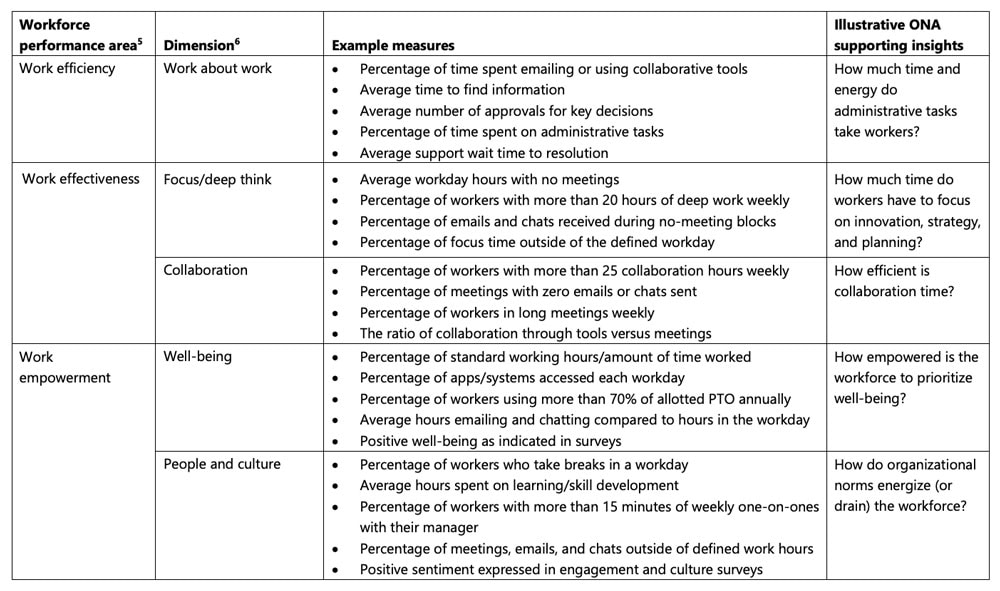 Hybrid Work
 Hybrid Work
 Hybrid Work
 Hybrid Work
 Hybrid Work
 Hybrid Work
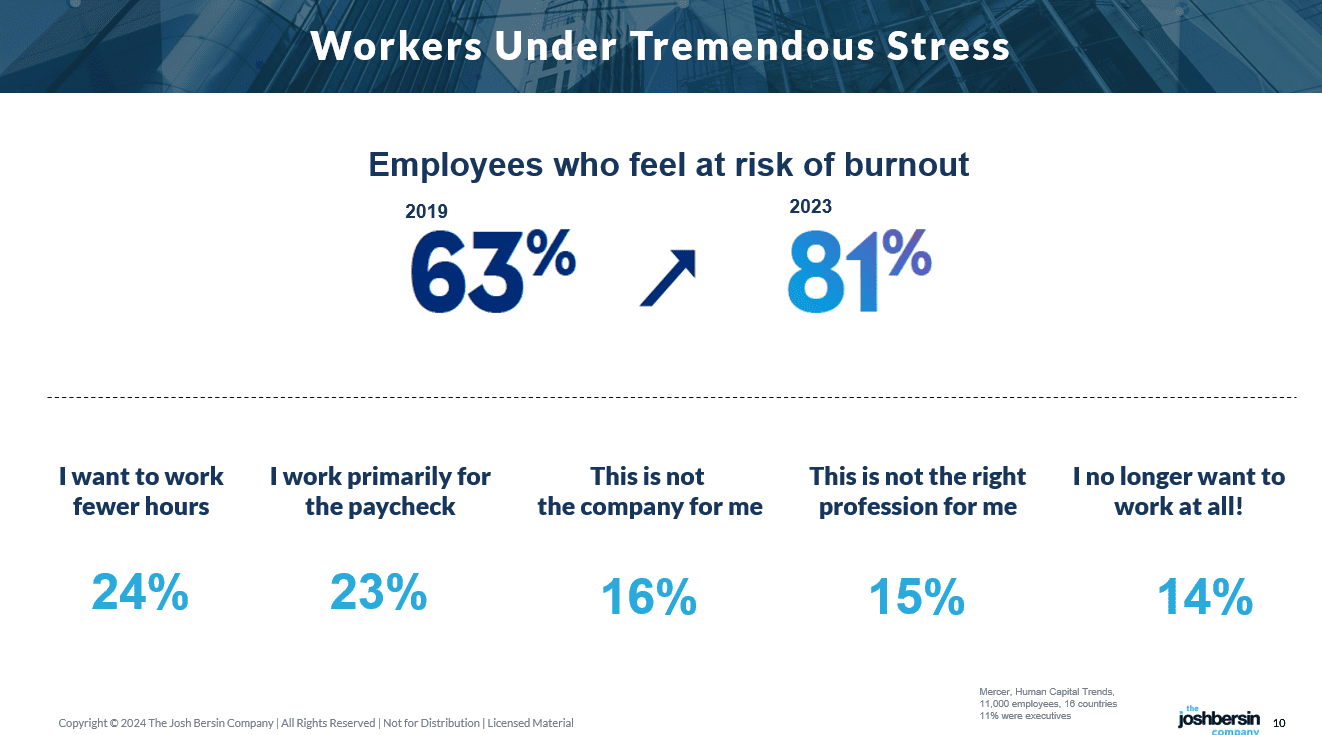 Hybrid Work
 Hybrid Work


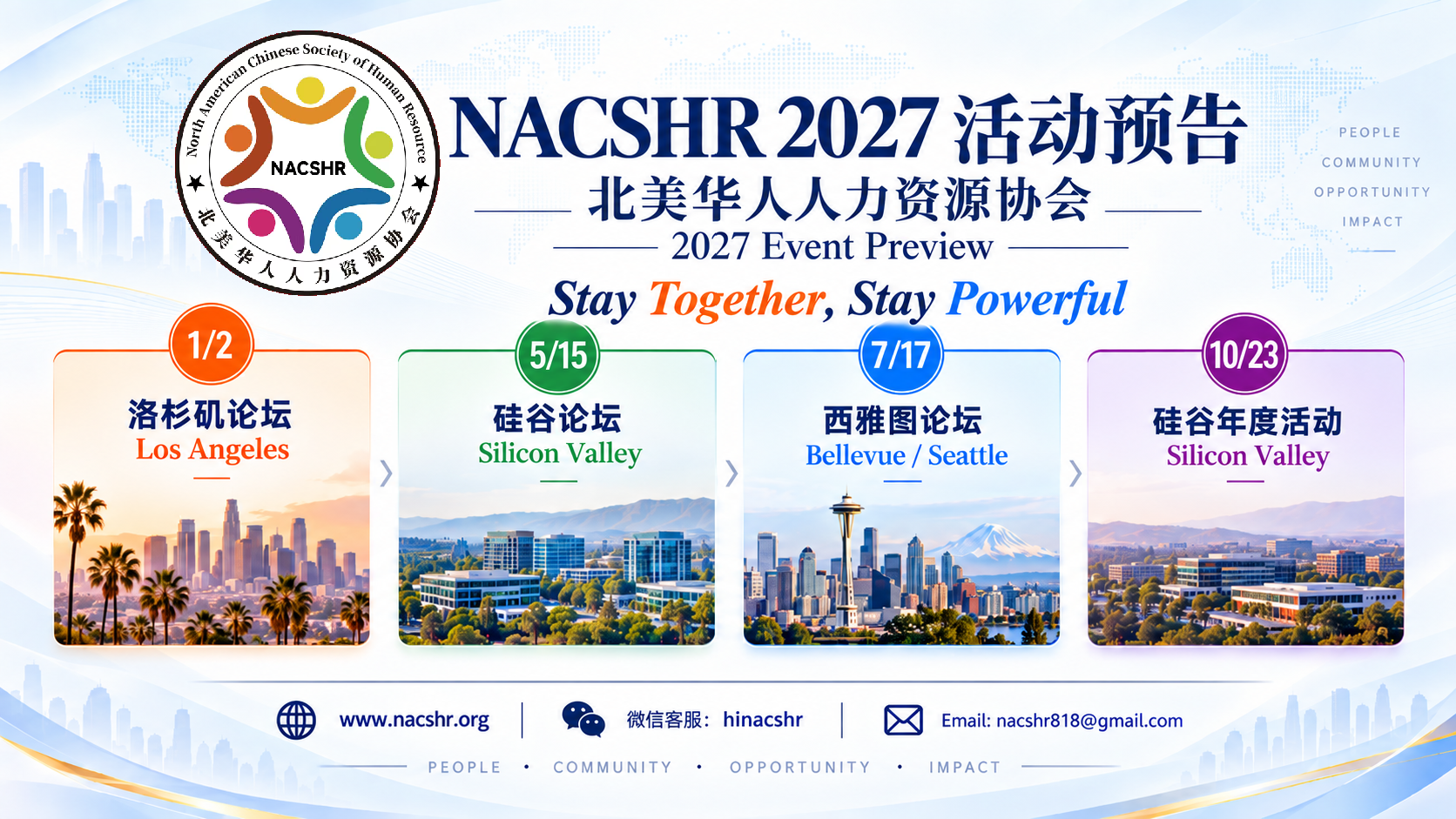

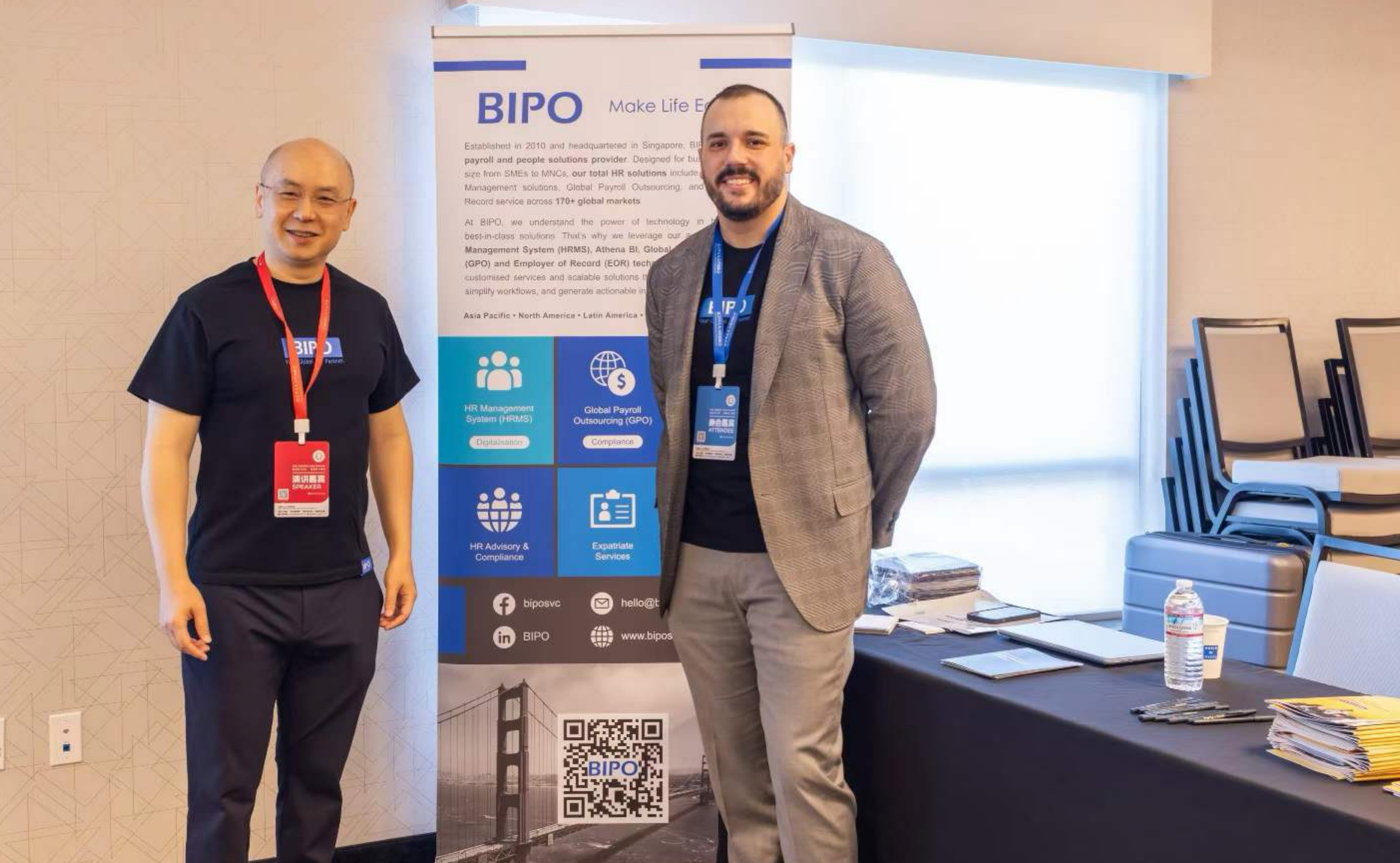

 扫一扫
添加客服
扫一扫
添加客服


