德州联邦法官全国范围内推翻联邦贸易委员会禁止竞业限制协议的禁令On August 20, 2024, a federal judge in Texas struck down the Federal Trade Commission's (FTC) nationwide ban on noncompete agreements, ruling that the ban exceeded the agency's statutory authority and violated the Administrative Procedure Act. This decision, just 15 days before the ban was set to take effect, marks a significant victory for employers, particularly in the healthcare sector, and a setback for medical workers who anticipated increased job mobility and wage growth. The ruling also aligns with concerns from the American Hospital Association and other industry groups regarding the potential disruptive impact of the ban. The FTC is considering an appeal, but the ruling emphasizes the ongoing legal challenges surrounding the agency's authority to regulate noncompete agreements.
德克萨斯州一位联邦法官周二推翻了联邦贸易委员会(FTC)对雇佣合同中竞业限制协议的禁令,裁定该禁令违反了《行政程序法》并超出了该机构的法定权限。
这一裁决适用于全国范围,并在禁令原定于9月4日生效前15天作出。
美国德克萨斯北区地方法院的艾达·布朗法官上个月已经做出裁定,初步禁止FTC的竞业限制禁令,但仅限于本案的原告。
然而,布朗法官在8月20日的决定中完全取消了这一规定,因为她写道,APA“并未考虑针对特定当事方的救济”。
这一决定是对美国商会——全国最大的商业游说团体——的胜利,商会与一家税务公司一起提起了诉讼。
对于医疗行业而言,这一裁决则是喜忧参半。禁令原本被认为可以帮助被限制性合同束缚的医生、护士和其他医疗工作者更容易换工作,并可能促使工资上涨。
据美国医学会称,大约35%到45%的医生受到竞业限制协议的约束。
然而,关于禁令仍有一些悬而未决的问题,包括FTC是否有法律权力颁布此禁令、是否适用于非营利性医院以及它将如何影响并购活动、医生短缺和招聘工作,特别是对较小的地区系统。
强烈反对这一禁令的强大医院游说团体——美国医院协会,对法官的决定表示了赞扬。
“这一规定是监管权力的惊人宣示……更糟糕的是,委员会没有尝试理解它对医院、卫生系统以及他们所服务的患者所产生的破坏性影响,”AHA总法律顾问查德·戈尔德在与Healthcare Dive分享的声明中说。
与此同时,FTC发言人维多利亚·格雷厄姆表示,FTC正在“认真考虑”上诉。
格雷厄姆指出,布朗的裁决并未阻止监管机构通过个案执法来追究过度限制性的竞业限制协议。
今年4月,FTC以3票对2票通过了这项禁令,该禁令将使所有现有的竞业限制协议(除了一些高级管理人员外)不可执行,并禁止签订新的此类合同。两位共和党委员投票反对这一禁令,认为FTC没有国会授权来实施它。
在周二的裁决中,布朗法官认为《联邦贸易委员会法》确实赋予FTC“制定规则以排除不公平竞争方法”的某些权力,但该机构“没有创建实质性规则”的权力,比如竞业限制协议禁令。
这一观点得到了这样一个事实的支持,即国会没有为某些FTC法规的违反规定制裁措施,“这表明缺乏实质性效力”,她说。
布朗还得出结论认为,FTC的禁令在《行政程序法》意义上是任意和反复无常的,因为它不合理地过于宽泛且没有合理解释。
法官表示,该机构未能为其决定禁止所有竞业限制协议而不是针对具体有害协议提供证据。
布朗的裁决与7月23日支持FTC的宾夕法尼亚州联邦法官的裁决相冲突,该法官拒绝阻止禁令。上周,佛罗里达州的一位联邦法官也对禁令发布了有限的禁令,认为FTC可能超越了其法定权限。
这些不同的裁决表明,FTC是否有权禁止竞业限制条款的问题可能会面临上诉审查。
Texas
2024年08月24日
Texas
Rest and Lunch Break Laws in Every US State (2024)Employee meal and rest break rights depend on their own laws according to their state. Meal, rest and minor breaks are detailed below for states of Alabama, Alaska, California….
Summary
Federal law does not require meal or rest breaks. – More
Some states have laws requiring meal and rest breaks – failing to comply can result in severe fines and even lawsuits.
Employers can reduce their risk exposure by automatically scheduling meal breaks and recording them on timesheets with the right software. – More
When it comes to rest and lunch breaks, it’s easy for managers to assume that a few minutes here and there won’t make a difference.
However, this is simply not the case. We’ve seen break-rule violations result in costly lawsuits over the past several years.
In April of 2022, an Oregon healthcare facility filed a lawsuit with the federal court system to overturn the state’s detailed meal and rest break rules. It’s an attempt to get out of nearly $100 million in fines due to persistent violations of employee meal and rest break rights dating all the way back to 2015.
What’s confusing is that if this healthcare facility was in a different state, say Arkansas, these violations and fines would not exist.
Federal guidance on the subject of lunch breaks is slim to none – but state laws concerning paid and unpaid breaks vary.
It’s important to understand what state-specific rules do and do not apply to your business. While these rules can be convoluted, it is actually quite easy to comply these days with the right scheduling software in place.
Federal break laws
No federal law requires companies to offer breaks during work hours for meals or any other purpose.
However, according to the U.S. Department of Labor, federal law says that if a company chooses to allow break periods, any break under 20 minutes should be paid, and any over 30 minutes can be unpaid and classified as “off-the-clock.”
So, in essence, the federal government leaves it up to the employer. Rest breaks (under 20 minutes) are paid, and meal breaks (over 30 minutes) are unpaid. If a state has no laws regarding breaks, these federal standards automatically apply.
State break laws
It is up to the states to choose their own lunch and rest break laws. Some states default to the federal policy, while others have their own set of specific regulations to follow.
All meal and rest break laws only apply to non-exempt employees. For exempt employees receiving over $23,000 annually, breaks are at the employer’s discretion.
Find your state below and click on it to see its rest and lunch break rules:
Alabama
Alaska
Arizona
Arkansas
California
Colorado
Connecticut
Delaware
Florida
Georgia
Hawaii
Idaho
Illinois
Indiana
Iowa
Kansas
Kentucky
Louisiana
Maine
Maryland
Massachusetts
Michigan
Minnesota
Mississippi
Missouri
Montana
Nebraska
Nevada
New Hampshire
New Jersey
New Mexico
New York
North Carolina
North Dakota
Ohio
Oklahoma
Oregon
Pennsylvania
Rhode Island
South Carolina
South Dakota
Tennessee
Texas
Utah
Vermont
Virginia
Washington
West Virginia
Wisconsin
Wyoming
Alabama
Meal Break: None
Rest Break: None
Minor Break:14-15-year-old employees who work more than 5 continuous hours get a 30-minute break.
Alabama defaults to federal law regarding breaks for workers aged 16+. If an employer chooses to provide a break, it must be paid only if it lasts less than 20 minutes. Breaks lasting longer than 30 minutes are classified as meal periods and do not need to be paid as long as the employee is completely relieved of all duties.
Back to top
Alaska
Meal Break: None
Rest Break: None
Minor Break: Minors ages 14-17 who work 5+ consecutive hours get a 30-minute break.
Alaska defaults to federal law regarding breaks for workers aged 18 and over. If an employer chooses to provide a break, it must be paid only if it lasts less than 20 minutes. Breaks lasting longer than 30 minutes are classified as meal periods and do not need to be paid as long as the employee is completely relieved of all duties.
Back to top
Arizona
Meal Break: None
Rest Break: None
Minor Break: None
Arizona defaults to federal law regarding breaks for all workers. If an employer chooses to provide a meal break, it must be paid only if it lasts less than 20 minutes. Breaks lasting longer than 30 minutes are classified as meal periods and do not need to be paid as long as the employee is completely relieved of all duties.
Back to top
Arkansas
Meal Break: None
Rest Break: None
Minor Break: None
Arkansas defaults to federal law regarding breaks for workers of all ages. If an employer chooses to provide a break, it must be paid only if it lasts less than 20 minutes. Breaks lasting longer than this do not need to be paid as long as the employee is completely relieved of all duties.
The state does have a special lactation break law. Employers must provide reasonable unpaid break time to employees who are lactating. These breaks must be taken in a private place close to their work area (not a bathroom stall).
Back to top
California
Meal Break:
Employees get a 30-minute paid meal break during a shift that is longer than five consecutive hours. If the employee is relieved of regular work duties and can leave the premises during their break, the break goes unpaid. But if these requirements are not met, the break must be paid at the regular rate of pay.
An employee may also waive their lunch break upon mutual consent with management if a workday will be completed in six hours or fewer.
If a work shift is longer than 10 hours, a second 30-minute rest break must be provided. If a total of 12 hours or fewer are worked in a day, this second meal break may be waived, but only if the first meal period was not waived. Employees who work longer than 15 hours get an additional third 30-minute break. If they work longer than 20 hours, they get a fourth 30-minute break.
If an employer fails to provide an employee a meal break during a shift, they owe the employee one extra hour of pay at the employee’s regular rate.
Rest Break:
Employees get a 10-minute paid rest break every 4 hours. A 10-minute break is not required for work time totaling less than three and a half hours.
Employees working in extreme weather conditions must also be provided with a five-minute “recovery period” in a protected environment in addition to their meal and rest break.
For every day an employee is forced to work through one or more of their rest breaks, their employer must pay them one additional hour of wages at the regular rate.
Minor Break: N/A
Back to top
Colorado
Meal Break:30minutes for employees who work 5+ hours. If the break is “duty-free” it goes unpaid. However, if a “duty-free” meal is not possible, the employee may take an “on-duty” meal, in which case the employee must be paid.
Rest Break:10minutes paid per 4 hours worked only for employees in the retail, food and beverage, commercial support, health, and medical industries.
Minor Break: N/A
Back to top
Connecticut
Meal Break: 30 minutes for non-exempt employees who work at least 7.5 hours. Employers are exempt from this requirement only if:
Complying endangers public safety
The duties of the position can only be done by one employee
Fewer than five employees are working a shift in a particular location
Operations require employees to be available to respond to urgent conditions
Rest Break: None
Minor Break: N/A
Back to top
Delaware
Meal Break: Unpaid 30 minutes for employees 18+ who work at least 7.5 hours. Meal breaks must be given sometime after the first two hours of work and before the last two hours of work. Employers are exempt from this requirement only if:
Complying endangers public safety
The duties of the position can only be done by one employee
Fewer than five employees are working a shift in a particular location
Operations require employees to be available to respond to urgent conditions
There exists a collective bargaining agreement that provides otherwise
The employee is employed by a local school board to work directly with children
Rest Break: None
Minor Break: 30 minutes for employees under 18 for every 5 consecutive hours of work.
Back to top
Florida
Meal Break: None
Rest Break: None
Minor Break: 30 minutes for employees under 18 who work more than 4 hours.
Florida defaults to federal law regarding breaks for workers aged 18 and over. If an employer chooses to provide a meal break, it must be paid only if it lasts less than 20 minutes. Breaks lasting longer than 30 minutes are classified as meal periods and do not need to be paid as long as the employee is completely relieved of all duties.
Back to top
Georgia
Meal Break: None
Rest Break: None
Minor Break: None
Georgia defaults to federal law regarding breaks for all workers. If an employer chooses to provide a meal break, it must be paid only if it lasts less than 20 minutes. Breaks lasting longer than 30 minutes are classified as meal periods and do not need to be paid as long as the employee is completely relieved of all duties.
Back to top
Hawaii
Meal Break: None
Rest Break: None
Minor Break: 30 minutes for 14 and 15-year-old employees who work five consecutive hours
Hawaii defaults to federal law regarding breaks for workers aged 16 and over. If an employer chooses to provide a meal break, it must be paid only if it lasts less than 20 minutes. Breaks lasting longer than 30 minutes are classified as meal periods and do not need to be paid as long as the employee is completely relieved of all duties.
Back to top
Idaho
Meal Break: None
Rest Break: None
Minor Break: None
Hawaii defaults to federal law regarding breaks for all workers. If an employer chooses to provide a meal break, it must be paid only if it lasts less than 20 minutes. Breaks lasting longer than 30 minutes are classified as meal periods and do not need to be paid as long as the employee is completely relieved of all duties.
Back to top
Illinois
Meal Break: At least 20 minutes unpaid for employees who work 7.5+ continuous hours. Must be given no later than five hours after beginning work.
Rest Break: None
Minor Break: At least 30 minutes for employees under 16 who work 5+ hours.
Back to top
Indiana
Meal Break: None
Rest Break: None
Minor Break:1-2 breaks totaling 30 minutes for employees under 18 who work at least six consecutive hours.
Indiana defaults to federal law regarding breaks for workers aged 18+. If an employer chooses to provide a meal break, it must be paid only if it lasts less than 20 minutes. Breaks lasting longer than 30 minutes are classified as meal periods and do not need to be paid as long as the employee is completely relieved of all duties.
Back to top
Iowa
Meal Break: None
Rest Break: None
Minor Break: At least 30 minutes for employees under the age of 16 who work 5+ consecutive hours.
Iowa defaults to federal law regarding breaks for workers aged 16 and over. If an employer chooses to provide a meal break, it must be paid only if it lasts less than 20 minutes. Breaks lasting longer than 30 minutes are classified as meal periods and do not need to be paid as long as the employee is completely relieved of all duties.
Back to top
Kansas
Meal Break: None
Rest Break: None
Minor Break: None
Kansas defaults to federal law regarding breaks for all workers. If an employer chooses to provide a meal break, it must be paid only if it lasts less than 20 minutes. Breaks lasting longer than 30 minutes are classified as meal periods and do not need to be paid as long as the employee is completely relieved of all duties.
Back to top
Kentucky
Meal Break: Reasonable unpaid break period (typically 20-30 minutes long) after the third and before the fifth hour of work for employees who work 5+ consecutive hours.
Rest Break: 10 minutes after every 4 hours of work.
Minor Break: N/A
Back to top
Louisiana
Meal Break: None
Rest Break: None
Minor Break: At least 30 minutes unpaid for employees under 18 who work five consecutive hours
Louisiana defaults to federal law regarding breaks for workers aged 18 and over. If an employer chooses to provide a meal break, it must be paid only if it lasts less than 20 minutes. Breaks lasting longer than 30 minutes are classified as meal periods and do not need to be paid as long as the employee is completely relieved of all duties.
Back to top
Maine
Meal Break: None
Rest Break: At least 30 minutes unpaid for all employees who work 6+ hours, but only if there are three or more people on duty.
Minor Break: N/A
Back to top
Maryland
Meal Break: None for the majority of employees. However, under the Healthy Retail Employee Act, retail organizations with 50+ staff operating for 20+ calendar weeks must give employees a 30-minute meal break if they work a shift that is longer than six hours.
Rest Break: Under the Healthy Retail Employee Act, certain retail employees are entitled to 15-minute breaks when they work shifts that last 4-6 hours. Employees who work for 8+ hours receive an additional 15-minute break for every additional four hours worked.
Minor Break: 30 minutes for employees under 18 for every five consecutive hours of work.
Back to top
Massachusetts
Meal Break: 30 minutes unpaid for employees who work 6+ hours, excluding those in factory and mechanical establishments.
Rest Break: None
Minor Break: N/A
Back to top
Michigan
Meal Break: None
Rest Break: None
Minor Break: At least 30 minutes for employees under 18 if they work more than 5 consecutive hours.
Michigan defaults to federal law regarding breaks for workers aged 18 and over. If an employer chooses to provide a meal break, it must be paid only if it lasts less than 20 minutes. Breaks lasting longer than 30 minutes are classified as meal periods and do not need to be paid as long as the employee is completely relieved of all duties.
Back to top
Minnesota
Meal Break: Sufficient unpaid time to eat a meal for employees who work 8+ hours. Must be paid if less than 20 minutes.
Rest Break: Sufficient time to use the restroom every 4 hours.
Minor Break: N/A
Back to top
Mississippi
Meal Break: None
Rest Break: None
Minor Break: None
Mississippi defaults to federal law regarding breaks for all workers. If an employer chooses to provide a meal break, it must be paid only if it lasts less than 20 minutes. Breaks lasting longer than 30 minutes are classified as meal periods and do not need to be paid as long as the employee is completely relieved of all duties.
Back to top
Missouri
Meal Break: None
Rest Break: None
Minor Break: None
Missouri defaults to federal law regarding breaks for all workers. If an employer chooses to provide a meal break, it must be paid only if it lasts less than 20 minutes. Breaks lasting longer than 30 minutes are classified as meal periods and do not need to be paid as long as the employee is completely relieved of all duties.
Back to top
Montana
Meal Break: None
Rest Break: None
Minor Break: None
Montana defaults to federal law regarding breaks for all workers. If an employer chooses to provide a meal break, it must be paid only if it lasts less than 20 minutes. Breaks lasting longer than 30 minutes are classified as meal periods and do not need to be paid as long as the employee is completely relieved of all duties.
Back to top
Nebraska
Meal Break: None
Rest Break: At least 30 minutes per 8-hour shift for assembling plant, workshop, or mechanical establishment employees.
Minor Break: None
Back to top
Nevada
Meal Break: At least 30 minutes for employees working 8+ continuous hours.
Rest Break: At least 10 minutes paid every 4 hours. This break is not typically required if an employee’s total work time is less than three and a half hours.
Minor Break: N/A
Back to top
New Hampshire
Meal Break: 30 minutes for employees who work 5+ consecutive hours.
Rest Break: None
Minor Break: N/A
Back to top
New Jersey
Meal Break: None
Rest Break: None
Minor Break: At least 30 minutes for employees under 18 who work 5+ hours.
New Jersey defaults to federal law regarding breaks for workers aged 18 and over. If an employer chooses to provide a meal break, it must be paid only if it lasts less than 20 minutes. Breaks lasting longer than 30 minutes are classified as meal periods and do not need to be paid as long as the employee is completely relieved of all duties.
Back to top
New Mexico
Meal Break: None
Rest Break: None
Minor Break: None
New Mexico defaults to federal law regarding breaks for all workers. If an employer chooses to provide a meal break, it must be paid only if it lasts less than 20 minutes. Breaks lasting longer than 30 minutes are classified as meal periods and do not need to be paid as long as the employee is completely relieved of all duties.
Back to top
New York
Meal Break:30minutes for employees who work 6+ hours between 11 am and 2 pm. 45 minutes for employees midway through a 6+ hour shift that starts between 1 pm and 6 am. An additional 20 minutes between 5 pm and 7 pm for those working a shift starting before 11 am and continuing after 7 pm.
Different rules apply to factory workers. They get a 1-hour lunch period anywhere between 11 am and 2 pm for 6+ hour shifts or a 60-minute break midway through a shift of more than 6 hours that starts between 1 pm and 6 am.
Rest Break: 24 consecutive hours per week
Minor Break: N/A
Back to top
North Carolina
Meal Break: None
Rest Break: None
Minor Break: At least 30 minutes for employees under 16 who work 5+ hour shifts.
North Carolina defaults to federal law regarding breaks for workers aged 16+. If an employer chooses to provide a meal break, it must be paid only if it lasts less than 20 minutes. Breaks lasting longer than 30 minutes are classified as meal periods and do not need to be paid as long as the employee is completely relieved of all duties.
Back to top
North Dakota
Meal Break: 30 minutes unpaid for employees who work 5+ hours when two or more employees are on duty.
Rest Break: None
Minor Break: N/A
Back to top
Ohio
Meal Break: None
Rest Break: None
Minor Break: At least 30 minutes unpaid for employees under 18 working five consecutive hours or more.
Ohio defaults to federal law regarding breaks for workers aged 18+. If an employer chooses to provide a meal break, it must be paid only if it lasts less than 20 minutes. Breaks lasting longer than 30 minutes are classified as meal periods and do not need to be paid as long as the employee is completely relieved of all duties.
Back to top
Oklahoma
Meal Break: None
Rest Break: None
Minor Break: At least 30 minutes for every 5 hours worked and 1 hour for every 8 hours worked for employees under 16.
Oklahoma defaults to federal law regarding breaks for workers aged 16 and over. If an employer chooses to provide a meal break, it must be paid only if it lasts less than 20 minutes. Breaks lasting longer than 30 minutes are classified as meal periods and do not need to be paid as long as the employee is completely relieved of all duties.
Back to top
Oregon
Meal Break: At least 30 minutes, unpaid, uninterrupted, and relieved of all duties, must be provided per 6 hours worked. No meal break is required for shifts under 6 hours.
6-14 hours: 1 break
14-22 hours: 2 breaks
22-24 hours: 3 breaks
Rest Break: 10 minutes paid based on hours worked.
2-6 hours: 1 break
6-10 hours: 2 breaks
10-14 hours: 3 breaks
14-18 hours: 4 breaks
18-22 hours: 5 breaks
22-24 hours: 6 breaks
Minor Break: Workers under 18 receive the same meal breaks as adults; however, it is required that they get 15-minute rest breaks rather than 10-minute breaks.
Back to top
Pennsylvania
Meal Break: None
Rest Break: None
Minor Break: 30 minutes per 5 hours for workers under 18 years of age.
Pennsylvania defaults to federal law regarding breaks for workers aged 18 and over. If an employer chooses to provide a meal break, it must be paid only if it lasts less than 20 minutes. Breaks lasting longer than 30 minutes are classified as meal periods and do not need to be paid as long as the employee is completely relieved of all duties.
Back to top
Rhode Island
Meal Break: 20 minutes for employees who work 6 hours and 30 minutes for employees who work 8+ hours. The break may be unpaid if the employee is relieved of all duties.
Rest Break: None
Minor Break: N/A
Back to top
South Carolina
Meal Break: None
Rest Break: None
Minor Break: None
South Carolina defaults to federal law regarding breaks for all workers. If an employer chooses to provide a meal break, it must be paid only if it lasts less than 20 minutes. Breaks lasting longer than 30 minutes are classified as meal periods and do not need to be paid as long as the employee is completely relieved of all duties.
Back to top
South Dakota
Meal Break: None
Rest Break: None
Minor Break: None
South Dakota defaults to federal law regarding breaks for all workers. If an employer chooses to provide a meal break, it must be paid only if it lasts less than 20 minutes. Breaks lasting longer than 30 minutes are classified as meal periods and do not need to be paid as long as the employee is completely relieved of all duties.
Back to top
Tennessee
Meal Break: At least 30 minutes for employees who work 6+ hours
Rest Break: None
Minor Break: N/A
Back to top
Texas
Meal Break: None
Rest Break: None
Minor Break: None
Texas defaults to federal law regarding breaks for all workers. If an employer chooses to provide a meal break, it must be paid only if it lasts less than 20 minutes. Breaks lasting longer than 30 minutes are classified as meal periods and do not need to be paid as long as the employee is completely relieved of all duties.
Back to top
Utah
Meal Break: None
Rest Break: None
Minor Break: At least 30 minutes for lunch no later than 5 hours into the workday for employees under 18. They must also be given a 10-minute rest break for every 4 hours worked and cannot work 3+ consecutive hours without a 10-minute break.
Utah defaults to federal law regarding breaks for workers aged 18 and over. If an employer chooses to provide a meal break, it must be paid only if it lasts less than 20 minutes. Breaks lasting longer than 30 minutes are classified as meal periods and do not need to be paid as long as the employee is completely relieved of all duties.
Back to top
Vermont
Meal Break: Employees must have a “reasonable opportunity” to eat and use the restroom. This opportunity must be paid if it is less than 20 minutes.
Rest Break: None
Minor Break: N/A
Vermont has a special lactation break law requiring employers to provide reasonable break time throughout the day to employees who are lactating. It is left to the employer’s discretion whether these breaks are paid or unpaid unless denoted by a collective bargaining agreement.
Back to top
Virginia
Meal Break: None
Rest Break: None
Minor Break: At least 30 minutes for employees under 16 who work 5+ consecutive hours.
Virginia defaults to federal law regarding breaks for workers aged 16 and over. If an employer chooses to provide a meal break, it must be paid only if it lasts less than 20 minutes. Breaks lasting longer than 30 minutes are classified as meal periods and do not need to be paid as long as the employee is completely relieved of all duties.
Back to top
Washington
Meal Break:30minutes for every 5 consecutive hours worked, given not less than 2 hours nor more than 5 hours from the beginning of a shift (excludes agricultural employees). 30 additional minutes for employees who work at least 3 hours past the time they normally end their shift. Unpaid if the employee is completely free of duties.
Rest Break: At least 10 minutes for every 4 hours worked.
Minor Break: 14 and 15-year-old employees must have a 30-minute meal break before working 4 consecutive hours. A 30-minute meal break is required for employees ages 16 and 17 no less than 2 hours but no more than 5 hours from the beginning of their shift.
Back to top
West Virginia
Meal Break: 20 minutes for employees who work 6+ hours.
Rest Break: None
Minor Break: At least 30 minutes if scheduled to work over 5 hours.
Back to top
Wisconsin
Meal Break: None
Rest Break: None
Minor Break: 30 minutes duty-free for employees under 18 working 6+ consecutive hours. 16 and 17-year-olds must have 8 hours of rest between shifts if scheduled after 8 pm.
Wisconsin defaults to federal law regarding breaks for workers aged 18+. If an employer chooses to provide a meal break, it must be paid only if it lasts less than 20 minutes. Breaks lasting longer than 30 minutes are classified as meal periods and do not need to be paid as long as the employee is completely relieved of all duties.
Back to top
Wyoming
Meal Break: None
Rest Break: None
Minor Break: None
Wyoming defaults to federal law regarding breaks for all workers. If an employer chooses to provide a meal break, it must be paid only if it lasts less than 20 minutes. Breaks lasting longer than 30 minutes are classified as meal periods and do not need to be paid, as long as the employee is completely relieved of all duties.
Back to top
Meal vs. rest breaks
The main difference between a meal and a rest break is often its length. The typical meal break is 20-30 minutes and must be taken around midday, while a rest break is usually anywhere between 10-15 minutes and occurs at regular intervals throughout a shift.
As with lunch breaks, no federal labor law requires short breaks at work. Only 11 states have local laws requiring employers to offer rest periods during work hours, and these short breaks almost always come in addition to a meal break. For instance, Colorado requires a 30-minute meal break for 5+ hour shifts and a 10-minute break for every four hours of work.
Sometimes, however, it’s all just semantics.
Take Maine, for example. The Pine Tree State is the only one of these 11 states that does not have a “meal break” per see, but it does have a rest break, requiring 30 minutes for work periods of over six hours. Technically, it’s not a meal break, just a rest break, but you and I both know it’s used for lunch.
Minors and break laws
State laws typically afford minors more break leniency than adult employees. While most state meal break rules for adults automatically cover minors, some states have specific standards for those under 18. Delaware, for example, gives adults a 30-minute break for seven and a half hours worked while giving those under 18 the same break time for only five hours worked.
Some states with no adult lunch or rest break rules have unique break laws for minors. For instance, Louisiana and Michigan require employers to give 30-minute breaks to employees under 18 for shifts longer than five consecutive hours. However, In Hawaii, this same rule applies only to 14 and 15-year-olds.
Managing rest and meal breaks
If your state has specific rest break requirements, it’s essential that management understands them and takes appropriate action to uphold them. This, of course, is sometimes easier said than done.
Without the right protocols and tools in place, tracking breaks can be tough, especially in complicated states like California, Oregon, and New York. Luckily, there are many ways to automate the workload.
An online employee scheduling and time tracking platform like Workforce.com handles all break and employment law compliance for you, meaning staff will never miss breaks, and your business will never be penalized. Here are a few specific ways the cloud-based system helps you plan lunch breaks and calculate compensation accurately:
Auto-schedule compliant breaks
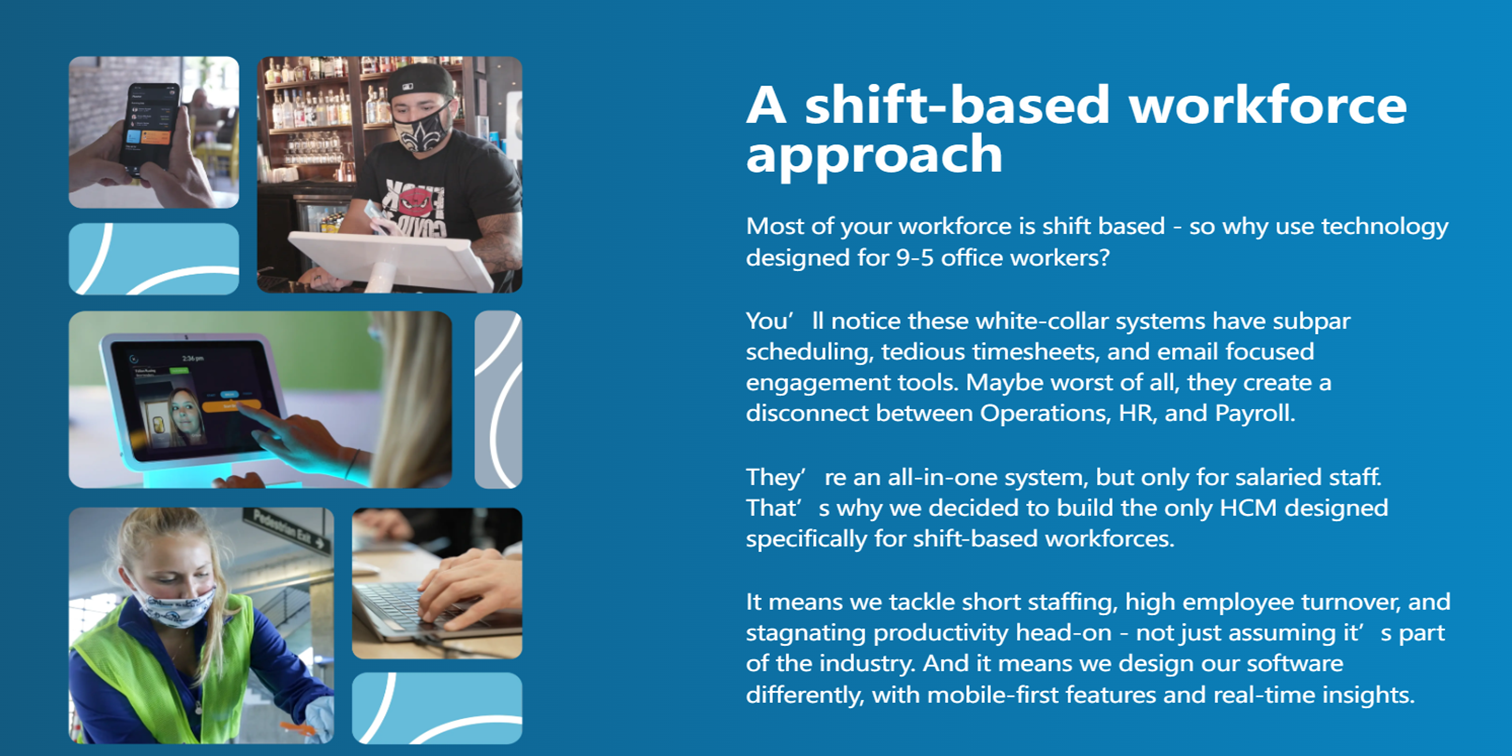
Workforce.com’s scheduling allows managers to automatically apply compliant meal and rest breaks to employee schedules according to local state laws. Employees can easily view these breaks from their phones, knowing exactly when to work and rest.
Capture break clock-out data
Via a time clock app, staff can temporarily clock out for breaks, and then clock back in once their break is over. This granular time clock data helps managers easily pinpoint non-compliant break times on timesheets.
Utilize time clock questions
Managers can create conditional questions that appear whenever an employee clocks out of a shift. These questions may ask things like “Did you waive your break?” or “Did you take your break?” depending on the length of the shift. Answers will automatically add all necessary premiums and allowances to timesheets, ensuring employees are always paid accurately.
Track breaks in real-time
With a live time clock feed, managers can see who’s working, who’s not, and who’s on break – all in one place and in real-time. This frontline visibility helps managers respond more quickly to lunch break non-compliance.
Manage break rules across state lines
Workforce.com has robust team and location functionality, letting you set up multiple locations on the platform. Break rules at each location can be configured according to local state laws, ensuring chains stay organized no matter where they are in the country.
Support staff and protect your business with better breaks
There are two key things managers can do right now to ensure their business stays on the right side of the law. One is to understand and adhere to whatever legislation applies in your state. The other is to be clear about what breaks are allowed, encourage staff to use them, and ensure they are accurately recorded.
Doing all of this manually is a huge task and is prone to human error. Use employee scheduling software instead to automate how breaks are administered. Pair it with a time and attendance system to log hours and wages accurately so you’ll never have to search old time cards and spreadsheets for the needed data. Sound intriguing? Get in touch with us today, let’s talk about it.
But getting break times right doesn’t just reduce your risk exposure – it also makes for happier employees.
Shift workers deserve their breaks. Routinely taking time during a shift to eat, rest, and recharge always helps productivity and, most importantly, mental health.
SOURCE Workforce

 Texas
Texas
 Texas
Texas
 Texas
Texas
 Texas
Texas





 扫一扫
添加客服
扫一扫
添加客服


