美国企业DEI退潮:一场声势浩大的企业运动走向何方?
短短五年间,美国企业的多元化、公平与包容(DEI)运动从高歌猛进走向急速退潮。Revelio Labs最新发布的研究报告《The Rise and Fall of DEI in Corporate America》揭示:自2022年以来,美国企业的DEI岗位流失速度已明显高于其他职能部门。曾被誉为推动社会正义与企业创新的象征,如今却在政治与经济的双重压力下陷入低谷。
一、2020年的浪潮:DEI成为企业标配2020年“黑人的命也是命”(Black Lives Matter)运动后,美国企业竞相设立DEI部门,公开承诺建设更公平、包容的职场。大型公司尤其积极投入,平均雇用的DEI专业人员数量是中小企业的四倍。这一时期,DEI不仅被视为社会责任,更被认为能带来创新力和更高的组织绩效。
根据Revelio Labs的数据,2021至2022年间,Russell 3000指数企业的DEI岗位数量增长迅速,几乎成为企业“政治正确”的标志。科技、咨询与消费品行业处于最前列,推动了全行业对多元与包容的重视。
二、转折点:政治逆风与经济寒潮然而,热潮未能延续。自2022年起,企业裁员和预算收紧使DEI部门成为首批被削减的对象。2024年后,形势急转直下。Walmart、Ford、Lowe’s、Amazon、Cisco、Intel等相继缩减或撤销DEI项目。Revelio Labs数据显示,2022年7月达到峰值后,美国上市公司DEI岗位已下降13%。尤其在特朗普重返白宫后,政府公开批评DEI政策“分裂社会”,这一政治立场加速了企业层面的退缩。
三、数据背后:DEI曾带来真实改变与批评者所称的“作秀式多元化”不同,Revelio Labs的研究显示,DEI团队确实产生了可量化的积极影响:
招聘结构优化:有DEI团队的公司录用的亚裔、非裔与西语裔员工比例更高;
员工满意度提升:这些公司在“文化与价值观”“多元与包容”评分上显著领先;
创新与绩效改善:研究表明,DEI投入与企业创新率、股价表现呈正相关。
尤其对非白人员工而言,DEI团队在公平薪酬、职业晋升、心理安全感方面起到了关键作用。这些成果的削弱,意味着职场公平与信任可能出现倒退。
四、象征性承诺与实质性行动的分水岭报告进一步指出,企业的DEI承诺分为“象征性”(Symbolic)与“实质性”(Substantive)两类。前者常见于换上彩虹Logo、发布平权声明等品牌行为;后者则体现在扩充DEI团队、推行包容性政策、调整晋升体系等结构性改变。数据显示:带有EEO(平等就业机会)声明的职位招聘,其录用员工中有色人种比例为33%,显著高于无声明企业的28%。但许多公司在高技术岗位中使用这些声明,却在一线服务岗位中忽视多元原则,显示出“选择性包容”的现象。
五、DEI人才的去向:理念未消,形式转变在DEI岗位被削减的同时,大量专业人士将经验迁移至人力资源、员工关系与培训等领域。55%的DEI人员已转入非DEI岗位,另有38%留在原公司但更换职能。报告指出:“DEI的标签在消失,但DEI的理念正被内化至组织管理的其他部分。”
六、结语:多元化不是政治议题,而是生存战略Revelio Labs在报告结尾警示:放弃DEI不仅意味着道德上的倒退,也将削弱企业的长期竞争力。未来企业若想在动荡的政治与市场环境中保持韧性,应当:
重新审视招聘渠道与评估标准,减少无意识偏见;
加强多元人才的留任与晋升机制;
用数据推动透明度与问责;
保护并传承DEI专业人才的经验。
“多元化不应被政治化,它是企业持续创新与适应的关键。”报告写道。DEI的退潮或许不可避免,但包容与公平的价值,仍将在那些真正相信它的企业中延续。
DEI
2025年11月03日
DEI
The best HR & People Analytics articles of July 2025HR如何在AI时代掌握主动?David Green发布的7月《Data Driven HR Monthly》汇集全球顶尖报告与实践,聚焦“技能+任务”新范式、AI对员工体验与倦怠的双面影响,以及CHRO在企业AI战略中的领导地位。BCG数据显示,印度AI使用率达92%,但全球员工对AI培训满意度仅36%。Upwork报告揭示:高效AI用户更易疲惫离职。McKinsey与Gartner呼吁HR重构组织模型与人才规划体系。本期还探讨神经多元、NASA人才图谱与“Vibe Coding”等创新实践。
I always enjoy spending time in India, so I was delighted to arrive in Delhi yesterday ahead of People Matters Tech HR later this week. I’ll be delivering the opening keynote on how HR leaders can ace the next curve of change as well as leading a workshop on the science of better decisions. I’m looking forward to catching up with fellow speakers such as Jason Averbook (tip: subscribe to his Now to Next blog, if you don’t already), Pushkaraj Bidwai, Mukesh Jain, and Shefali Raias well as immersing myself in what is happening in the Indian HR tech scene.
In this month’s edition of the Data Driven HR Monthly, which comes against the backdrop of CEOs flexing on the impact of AI on jobs, I’ve included new research from BCG and Upwork on AI at work, and the role of HR. Marc Effron is spot on here with his assessment that CHROs need to be leading the strategic conversation with the executive team on their desire to reduce costs through job reduction enabled by AI: “CHROs can lead this conversation through organization, operating model and job design, where we should be experts.”
I expect plenty of discussion at Tech HR on this topic as well as the wider impact of AI on work, the workforce, and the workplace. One of the messages, I’ll look to get across in my keynote is:
AI guides, but humans decide. We must prioritise the ‘H’ in HR.
This edition of the Data Driven HR Monthly is sponsored by our friends at TechWolf
Skills, Tasks, and Workforce Intelligence: Navigating the AI Transformation
This month’s edition highlights an important conversation from the TechWolf Podcast, recorded live in New York, featuring Marc Steven Ramos, global learning leader with 25+ years’ global transformation experience with Google, Microsoft, Accenture, Novartis, Oracle, and Cornerstone, and Jeroen Van Hautte ?, CTO & Co-Founder of TechWolf.
The discussion explores how task-based intelligence complements skills data to create a complete view of workforce capabilities, empowering organizations to navigate one of the largest business transformations in history: the AI-driven redefinition of work.
Skills without context can be ambiguous. Tasks ground them in real work, and that’s where change, productivity, and AI come together — Marc Ramos
Why This Matters Now:
The pace of change in the workforce is unprecedented. Leading enterprises are already recognizing that workforce intelligence - the ability to understand, predict, and act on how work is changing in real time - is no longer optional.
From skills to skills + tasks + jobs: Combining these data points allows organizations to connect individual capabilities to tangible outputs and outcomes.
AI as a catalyst: AI is accelerating job evolution, making real-time visibility into tasks and skills essential for workforce planning and redeployment.
Strategic urgency for boards: Workforce automation isn’t a distant trend — it is reshaping workforces today, creating pressure on executives to act on reskilling, redeployment, and workforce design at speed.
To really understand a skill, you need to understand the context in which it’s applied — the tasks. And that’s where AI can add transformative clarity — Jeroen Van Hautte
For HR leaders, this is an opportunity to lead. With skills and tasks as the foundation, HR is uniquely positioned to drive cultural alignment, manage change, and deliver on the board-level mandate to prepare workforces for the AI era.
Listen to the Episode: ?️ Marc Ramos & Jeroen Van Hautte on Tasks, Skills & the Future of Work (TechWolf website summary)
To sponsor an edition of the Data Driven HR Monthly, and share your brand with more than 145,000 Data Driven HR Monthly subscribers, send an email to dgreen@zandel.org.
JULY ROAD REPORT
Until flying to Delhi yesterday, as mentioned above for Tech HR India later this week, July had been a light month of travel other than a short trip to Switzerland to run an AI workshop with the HR leadership team of one of the companies that are part of the Insight222 People Analytics Program. For those interested, one of my speaking engagements from earlier this year, at the Wharton People Analytics Conference, is now available to view (see below). In the talk, I explore the critical role of data democratisation and adoption in driving workforce insights, enhancing decision-making, and scaling HR’s strategic impact. I also share best practices from our work and research at Insight222 for making people analytics accessible to leaders and employees alike, the challenges of adoption, and the key investments required to unlock the full potential of workforce data. Enjoy!
Share the love!
Enjoy reading the collection of resources for July and, if you do, please share some data driven HR love with your colleagues and networks. Thanks to the many of you who liked, shared and/or commented on June’s compendium.
If you enjoy a weekly dose of curated learning (and the Digital HR Leaders podcast), the Insight222 newsletter: Digital HR Leaders newsletter is usually published every other Tuesday – subscribe here – and read the latest edition.
HYBRID, GENERATIVE AI AND THE FUTURE OF WORK
BCG - AI at Work: Momentum Builds, but Gaps Remain | JOHN BRAZIER AND NICK SOUTH - BCG’s AI at Work 2025 report: Four takeaways for HR leaders
Companies are realizing that merely introducing AI tools into existing ways of working isn’t enough to unlock their full potential. The real magic happens—and value generated —when businesses go further and reshape their workflows end-to-end.
BCG’s annual AI at work global survey of employees is packed full of insights and guidance for business and HR leaders looking to maximise value, adoption and employee experience with AI. The key takeaways include: (1) AI is now part of our daily work lives: 72% of respondents are regular AI users (although adoption amongst frontline employees has stalled at 51%). (2) Investment in training, leadership support and access to the right tools can break this ceiling: Yet only 36% of employees are satisfied with their AI training. (3) The Global South is showing higher adoption of AI. India leads the pack with 92% of regular users compared to the US (64%), UK (68%) and Japan (51%). (4) The next frontier: from adoption to value with end-to-end redesign. One-half of respondents say their company is starting to reshape processes. These companies also invest more in their people – and it pays off (see FIG 1). (5) AI agents are not widely deployed. Only 13% see agents integrated into broader workflows (see FIG 2). Kudos to the authors: Vinciane Beauchene, Sylvain Duranton, Nipun Kalra, and David Martin. For HR leaders, I also recommend reading John Brazier’s interview with BCG’s Nick South about the implications of the report’s findings for HR on the UNLEASH blog.
FIG 1: The relationship between workflow redesign due to AI and investment in people (Source: BCG)
FIG 2: Use of AI agents (Source: BCG)
GABBY BURLACU AND KELLY MONAHAN - From Tools to Teammates: Navigating the New Human-AI Relationship
Full time employees getting the most done with AI are also the most burned out, disengaged, and disconnected from their teams.
In their study for the Upwork Research Institute, Gabriela (Gabby) Burlacu and Kelly Monahan, Ph.D. identify a crucial message for the future of work: while AI is undeniably boosting productivity – with a reported 40% jump for many workers – it's also creating a human paradox. Alarmingly, top AI performers are experiencing high burnout (88%) and are twice as likely to leave, often feeling disconnected from strategy and even trusting AI more than human colleagues (see FIG 3 and 4). The report offers three urgent calls to action for business leaders: (1) Redesign work for human-centered, AI-empowered talent and workflows, prioritising autonomy, trust and psychological safety. (2) Cultivate flexible and resilient talent ecosystems, combining full-time employees, freelancers, and AI capabilities to create agile, resilient, and high-performing teams. (3) Redefine AI strategies to focus on the end-to-end human experience, including new roles, norms, and governance. For HR leaders, these findings are a wake-up call. We must prioritise the relational side of AI, ensuring human connection, well-being, and purpose are augmented, not eroded. It's about preventing burnout in our most productive AI users, fostering alignment, and learning from agile models like freelancers to build a truly sustainable human-AI collaborative future.
FIG 3: The human cost of AI productivity (Source: The Upwork Research Institute)
FIG 4: The rise of human-like relationships with AI (Source: The Upwork Research Institute)
COBUS GREYLING - Do AI Agents Substitute Human Workers — Or Enable Humans To Succeed In New Ways? | L. ELISA CELIS, LINGXIAO HUANG, AND NISHEETH K. VISHNOI - A Mathematical Framework for AI-Human Integration in Work
AI Agents are good at tasks not jobs…
In his article, Cobus Greyling provides an insightful and accessible analysis of a new study by Elisa Celis, Lingxiao Huang, and Nisheeth Vishnoi, which presents a mathematical framework that models jobs, workers, and worker-job fit, and introduces a novel decomposition of skills into decision-level and action-level subskills to reflect the complementary strengths of humans and GenAI. Greyling’s incisive analysis offers a helpful perspective for HR leaders navigating the future of work. His core message is clear: AI agents are fantastic at tasks, not entire jobs. They're not just substitutes, but powerful amplifiers of human capability, especially for less experienced workers, effectively compressing productivity gaps and fostering extraordinary collaboration. Here are four key learnings for HR: (1) Agentic AI Augments Human Potential: AI agents boost efficiency and performance, particularly for junior talent, by handling structured tasks and freeing humans for higher-order work. (2) Redefine Skills & Development: While AI takes on the mundane, HR must strategically ensure continuous skill development, focusing on uniquely human capabilities like judgment, creativity, and complex problem-solving. (3) Design for Human-AI Synergy: Organisational design must pivot to foster premium collaborations between humans and AI. It's about combining complementary strengths to achieve outcomes greater than the sum of the parts. (4) HR Leads Strategic Integration: Our role in HR is pivotal. We must orchestrate the strategic integration of agentic AI, balancing its efficiency gains with the imperative to preserve and nurture human ingenuity, driving both innovation and connection.
FIG 5: Al for work: skill difficulty continuum (Source: Cobus Greyling)
PEOPLE ANALYTICS
KETAKI SODHI AND COLE NAPPER - Who Needs a “Human in the Loop” When AI Gives Itself Feedback
Ketaki Sodhi, PhD, Program Owner for Agentic Listening and Analytics at Microsoft, and Cole Napper provide a fascinating perspective on the "human in the loop" concept for Generative AI, provocatively asking: which human, and how? This isn't just a technical question; it's where I/O Psychology and People Analytics come into their own. The article frames AI "evals"— the systems for assessing whether AI outputs are useful, accurate or aligned —as essentially performance management for Large Language Models. Just as we've wrestled with defining "good" in complex human knowledge work for decades, we now face the same challenge in building AI systems. In a world of infinite " " answers, AI evals demand the same nuance we apply to human systems: competency models, multi-rater input, calibration, and context. One of the key takeaways from Ketaki and Cole is that true success lies not in chasing perfect answers from AI, but in designing smart, human-informed systems. These are the systems that can discern between good, better, and what genuinely drives impact for your organisation. For people analytics leaders and I/O psychologists, this is a clarion call to leverage their deep expertise in human performance to shape the very fabric of our AI-driven future.
FIG 6: Source – Ketaki Sodhi
BEN BERRY - The future is built by everyone: What is Vibe Coding and why should People Analytics teams adopt it | ROSARIO GERMINO - From People Analytics to People Economics and Impact | ADRIAN PEREZ – GitLab People Analytics Team Handbook | DOMINIK TOMICEVIC - Can NASA’s People Graph and LLMs Revolutionize Workforce Planning? | MORGAN DEPENBUSCH - How to let color do the storytelling
In each edition of the Data Driven HR Monthly, I feature a collection of articles by current and recent people analytics leaders. These are intended to act as a spur and inspiration to the field. Five are highlighted in this month’s edition: (1) In a particularly insightful piece, Ben Berry examines whether vibe coding, a product management practice of using AI tools to rapidly build functional prototypes to help turn rough ideas into working concepts, should be adopted in people analytics. (2) In her thoughtful article, Rosario Germino argues that to elevate people decisions to the same level of strategic investment as product or finance, we need a new way of thinking—and a new kind of function – People Economics and Impact, which she then breaks down into the why (see FIG 7 on the multi-dimensional aspect of informed decision making), what and how. (3) In a recent post, Adrian M. Pérez provides open source access to GitHub’s People Analytics Team Handbook, a rich resources covering areas such as (i) data governance framework, (ii) tools and methodologies, (iii) survey administration, and (iv) Tableau dashboard strategies. (4) Dominik Tomicevic provides a compelling account of how NASA’s People Graph is supporting a range of priorities from upskilling to workforce planning – with insights from the NASA team of David Meza, Madison Ostermann and Katharine Knott, MBA: “Knowledge graphs offer flexibility, since you don’t need a full schema upfront. We began with known relationships and expanded as we uncovered more insights in the data.” (5) In an edition of her excellent Trending Up newsletter, Morgan Depenbusch, PhD offers some compelling guidance on the use of colour in data visualisation and storytelling.
FIG 7: Informed decisions are multi-dimensional. Financial logic makes them investable (Source: Rosario Germino)
THE EVOLUTION OF HR, LEARNING, AND DATA DRIVEN CULTURE
MCKINSEY - HR Monitor 2025
The gap is widening between what is needed from an efficient, effective HR function and what most organizations currently offer
McKinsey's HR Monitor 2025 benchmark study of workforce and HR trends across Europe, delivers a sharp analysis of the critical shifts shaping the HR profession, emphasising that the next 12-24 months are decisive for the function. The report identifies five key trends: (1) Workforce planning is not approached strategically enough – see FIG 8 - (“…with rapid changes driven by gen AI and shifting skill needs, workforce planning must move beyond short-term staffing forecasts to include a longer-term view and future-scenario planning”). (2) Talent acquisition is becoming more complex: with only 56% offer acceptance rates, 18% of new hires leaving during their probationary period and the overall hiring success rate in Europe standing at a lowly 46%, a more strategic and coordinated approach to attracting and hiring talent is required. (3) Employee development continues to be highly fragmented (“To prepare the workforce for future challenges, organizations must connect performance management, learning and development, and talent development in one cohesive strategy”). (4) Employee experience is essential—and underdeveloped (“A more tailored, data-driven approach to the employee experience is needed to build motivation and long-term commitment to employers”). (5) Gen AI and shared-services centres could boost efficiency and effectiveness (“HR departments must modernize their operating models by expanding SSC adoption and using automation and gen AI to increase speed, scalability, and strategic impact”). For Chief People Officers, the message is clear: You must align HR strategy directly with business priorities, strengthen your HR operating model, and aggressively build digital and AI skills within HR. This is about laying the foundation for a modern, AI-enabled HR function that is both deeply people-centric and laser-focused on organizational performance. Kudos to the authors: Julian Kirchherr, Vincent Bérubé, Charlotte Seiler, Dr. Kira Alexandra Rupietta, Kristina Stoerk, Nina-Marlene Senst, and Simon Gallot Lavallée.
...with rapid changes driven by gen AI and shifting skill needs, workforce planning must move beyond short-term staffing forecasts to include a longer-term view and future-scenario planning
FIG 8: Engagement in workforce planning (Source: McKinsey)
FIG 9: Predicted impact of gen AI on HR department (Source: McKinsey)
ESER RIZAOGLU AND STEPHANIE CLEMENT - How CHROs Can Prepare Their Function and the Enterprise for AI Transformation
CHROs play a key role in safely using AI at scale to deliver business outcomes.
Recent research by Eser Rizaoglu and Stephanie Clement for Gartner provides a helpful roadmap for CHROs steering their organisations through AI transformation, by focusing on HR's pivotal role in shaping the future of work. The report highlights three key actions for CHROs to enable their organisation's AI approach: (1) Assist in delivering business outcomes using AI: Leverage GenAI for HR productivity first, then expand to drive enterprise-wide improvements with a broader AI portfolio. (2) Manage behavioural outcomes of AI: Cultivate a culture of innovation, build human-centred change management plans, and introduce new HR roles to foster human-machine partnerships. (3) Enable workforce readiness for AI: Implement AI literacy programs for all (see FIG 10), while targeting upskilling efforts on segments most impacted, building empathy, and tracking readiness indicators. For CHROs in Steady-AI-Pace organisations, the focus is on foundational AI literacy and policy. Those at an Accelerated-AI-Pace must deepen this by targeting high-impact workforce segments and deploying AI champions to drive effective, human-centric change.
FIG 10: AI Literacy Program Roadmap (Source: Gartner)
DAVE ULRICH - Navigating Eight Paradoxes of AI for HR
When algorithms combine with human empathy, judgement, and creativity, sustained progress occurs.
In his article, Dave Ulrich highlights eight paradoxes on the AI for HR agenda that he believes business and HR leaders need to navigate to move up the s-curve and waves of HR impact (see FIG 11) to deliver more value. As Dave explains: “Navigating (not just managing) paradox means highlighting and working through opposing ideas—each of which is valid—that combine to create more value.” The eight paradoxes identified in the article are: (1) AI and AI: Artificial Intelligence * Authentic Intimacy. (2) Remove jobs and redefine work. (3) Bottom line efficiency and top line growth. (4) Distribute and concentrate power. (5) Lower and increase risk. (6) Expand perspective and reduce cognition. (7) Provide answers and explore questions. (8) Isolate and connect.
FIG 11: Five stages of AI for HR evolution (Source: Dave Ulrich)
EMPLOYEE LISTENING, EMPLOYEE EXPERIENCE, AND EMPLOYEE WELLBEING
JARED WEINTRAUB - A day in the life of a GenAI-enabled workforce
Deloitte forecasts that 25 percent of companies currently using GenAI will launch agentic pilots this year, rising to 50 percent by 2027
Jared Weintraub, PhD, SPHR's article for Deloitte paints a tantalising picture of a 'Gen-AI enabled workforce,' showcasing how AI agents are already transforming our daily work. Through a fictional Fortune500 company, Jared brings to life three key personas: (1) New Hire (Riley): Experiences personalised onboarding, with AI agents helping her navigate culture and quickly excel in her role. (2) VP (Taylor): Sees optimised leadership workflows, receiving instant summaries, personalised action items, and even real-time feedback on calls. (3) CEO (Angelina): Gains powerful support for strategic decision-making, with AI agents providing real-time insights and even coaching for high-stakes events like public town halls. These examples demonstrate AI's profound potential not to replace workers, but to fundamentally enhance human potential, leading to a significantly improved employee experience where individuals, teams, and organisations can thrive and perform at their absolute best. Thanks to Brian Heger for highlighting in his excellent Talent Edge Weekly.
WORKFORCE PLANNING, ORG DESIGN, AND SKILLS-BASED ORGANISATIONS
SCOTT REIDA AND KRISTIN SABOE - Applying the Rule of 72 to Workforce Skill Obsolescence and Productivity Degradation
Amazon's Scott Reida and Google's Kristin Saboe, Ph.D. introduce a powerful financial concept to HR: the "Rule of 72." Traditionally, it's a shortcut to estimate how long an investment takes to double, by dividing 72 by its annual growth rate. They ingeniously flip this, applying it to skill evolution: by dividing 72 by a role's weighted average 3-year Compound Annual Growth Rate (CAGR) of its skills, one estimates the "years to obsolescence" if no upskilling occurs. This provides critical directional clarity on how fast job competencies are shifting. Their framework, illustrated in FIG 12, categorises skills into four key zones: (1) Emerging (low adoption, high growth, representing the cutting edge). (2) Table Stakes (widely adopted, foundational must-haves with steady growth). (3) On the Cusp (moderate adoption, sustained expansion, offering long-term value). (4) Sunset (declining demand, requiring intentional upskilling). This enables smarter workforce planning. HR can now target training budgets where skill erosion is rapid, shifting from reactive to proactive strategies. It transforms talent into a dynamic portfolio , informing sharper hiring and career development in our accelerating world.
FIG 12: Categorising skills into four key zones (Source – Scott Reida and Kristin Saboe)
McKINSEY - The new rules for getting your operating model redesign right
When people feel invested in and supported, they are more likely to embrace change, contribute meaningfully, and sustain the behaviors that drive long-term impact.
New research from McKinsey updating their nine golden rules for operating model redesign, which finds that five original (evergreen) rules have stood the test of time while four new (evolved) rules have emerged (see FIG 13). The study identifies a key finding: redesign success jumps from 59 percent when using all nine original rules to 97 percent when using all nine in the refreshed set. The article also presents four broad redesign themes for leaders to focus on: (1) Create alignment among leaders and decision-makers, grounded in strategy. (2) Invest deeply in rewiring workflows. (3) Make significant investments in people. (4) Create a performance-oriented culture for durable impact. For Chief People Officers, the key takeaway is that they need to become the architects of dynamic, human-centric operating models. Their focus shifts from traditional talent management to proactively designing how work gets done, emphasising skills and capabilities over static roles. CPOs should also lead on ethical AI integration, foster a culture of continuous learning, and empower leaders. This creates a workforce built for perpetual reinvention, driving sustained value in an increasingly uncertain world. Kudos to the authors: Brooke Weddle, J.R. Maxwell, Tristan Allen, Deepak Mahadevan, Elizabeth Mygatt, and Olli Salo.
FIG 13: The refreshed golden rules of organisational redesign (Source: McKinsey)
LEADERSHIP, CULTURE, AND LEARNING
JEFF WETZLER - The Right Way to Prepare for a High-Stakes Conversation
Curiosity increases your ability to process new information and respond creatively to complex problems. It activates the brain’s learning and reward centers, increasing your capacity for insight and creative problem-solving.
In his recent HBR article, Jeff Wetzler introduces a helpful concept for leaders: The Curiosity Check (see FIG 14). This diagnostic is designed to fundamentally shift your mindset from defensive certainty to productive curiosity, and so improve your effectiveness in high-stakes discussions and boost your influence. It’s all about unlocking crucial, often hidden, insights. Wetzler outlines three actionable steps: (1) Choose Curiosity Over Certainty: Actively ask yourself "What am I missing?" challenging your assumptions. (2) Make It Safe to Speak Up: Create an environment where people feel secure sharing their true thoughts, proving safety through action, not just words. (3) Pose Quality Questions: Shift from shallow or leading questions to open-ended, neutral, and deeper inquiries that encourage genuine reflection. Wetzler brings this to life with examples, highlighting how leaders often miss critical information when they assume team alignment, never probing for the "unspoken thoughts" that hold the real insights. This approach empowers you to tap into wisdom you might otherwise completely overlook. Thanks to Amy Edmondson for highlighting.
FIG 14: The Curiosity Curve (Source: Jeff Wetzler)
MCKINSEY RESEARCH AND INNOVATION LEARNING LAB – Reimagined: Development for the Future of Work – Evolving Trends in L&D Article | Full report
Leaders must prepare for a future defined by radical candor regarding the impacts of AI on work and the workforce.
The 2025 McKinsey Learning Perspective spotlights three interconnected themes crucial for people development in a rapidly changing world: (1) Fluid Development Ecosystems: Organisations must design work to be inherently developmental, shifting from rigid structures to dynamic, data-driven ecosystems. This means de-siloing HR functions and embedding learning into daily work, making growth continuous and seamless. The goal is to make daily challenges catalysts for growth, supported by real-time data and foresight. (2) Responsible AI Adoption: This defining moment demands leaders preserve employee trust by showing AI will help them thrive, not just automate work. It's about fostering powerful human-AI collaboration, offloading repetitive tasks to AI to unlock human creativity and higher-order skills. Responsible adoption hinges on equipping employees with uniquely human capabilities like critical thinking and judgment. (3) Resilient and Adaptable Individuals and Organisations: Thriving organisations anticipate challenges, adapt, and grow, building structural and cultural foundations for resilience. This involves unlocking the potential of diverse, multigenerational workforces, supporting recuperation to prevent burnout, and enabling organisational resilience through sustainable workflows. It means seeing resilience as a shared, cultivated capability, not just an individual trait. Read the article by Heather Stefanski, Benjamin Hall, Jake Gittleson, and Jessica Glazer, and then dive into the full report, which also includes contributions from the likes of Sandra Durth.
DIVERSITY, EQUITY, INCLUSION AND BELONGING
ROBERT D. AUSTIN, NEIL BARNETT, CHLOE R. CAMERON, HIREN SHUKLA, THORKIL SONNE, AND JOSE VELASCO - How Neuroinclusion Builds Organizational Capabilities
Leaders should consider neuro-inclusion as a strategic capability-building opportunity rather than a diversity initiative
In a rapidly evolving world, neuro-inclusion is emerging as a critical organisational capability, as highlighted by Robert Austin, Neil Barnett, Chloe Cameron, Hiren Shukla, Thorkil Sonne, and Jose Velasco in the MIT Sloan Management Review. This isn't merely a diversity initiative; it's a strategic imperative that unlocks competitive advantage by leveraging the rich, natural variation in human cognition. By intentionally designing processes for neurodistinct individuals, organisations can profoundly improve: (1) Hiring, by tapping into overlooked talent pools with unique skills (as seen with SAP attracting highly credentialed candidates often missed by traditional interviews); (2) Innovation, through diverse perspectives that spark novel solutions (Microsoft's Teams ‘Blur’ feature emerged from a neurodistinct engineer's insights); and ultimately, (3) Culture, by fostering a more adaptive and truly inclusive environment for everyone. As the article reveals, EY, Microsoft, and SAP are prime examples of organisations already reaping these benefits, demonstrating that embracing neurodiversity enhances collective intelligence and drives superior business outcomes.
FRANK DOBBIN AND ALEXANDRA KALEV - Achieve DEI Goals Without DEI Programs
Many management innovations designed to improve performance actually boost workforce diversity as well, without inviting the backlash of formal DEI programs.
Frank Dobbin and Alexandra Kalev, in their recent HBR article, challenge the traditional view of DEI. They argue that as formal DEI programs face headwinds, HR leaders can still drive significant diversity, equity, and inclusion by focusing on high-performance management techniques that naturally foster inclusion and improve business outcomes, all without the ‘DEI program’ label. They highlight five powerful techniques and provide examples of how these have been implemented by companies: (1) Referral programs: Companies like Oracle use these effectively, often boosting representation organically. (2) Skills upgrading: Walmart exemplifies this, investing in employee upskilling that broadens opportunities for diverse talent (see FIG 15). (3) Mentoring programs: IBM has long leveraged robust mentoring to support career progression across all groups. (4) Scheduling flexibility and stability: Gap demonstrates how providing predictable yet flexible schedules empowers diverse workforces. (5) Performance-based retention: Amazon uses data-driven approaches to identify and retain top performers, inherently benefiting those who excel regardless of background (also see FIG 15). This approach embeds DEI within the fabric of how we manage and develop our people, making it an undeniable component of business success. It’s about doing good by doing well.
FIG 15: Walmart and Amazon’s changing workforces (Source: Dobbin and Kalev)
HR TECH VOICES
Much of the innovation in the field continues to be driven by the vendor and analyst community, and I’ve picked out a few resources from July that I recommend readers delve into:
LISA K. SIMON - How Much Is a Skill Worth?
In her article, Lisa K. Simon, Chief Economist at Revelio Labs, presents the findings of a new paper, she co-authored with David Dorn, Ludger Woessmann, Moritz Seebacher and Florian Schoner, which finds that the number and type of skills workers report are strong predictors of how much they earn: “In fact, differences in skills predict earnings better than differences in education or past experience. Workers who list more skills tend to be in better-paid jobs. On average, each additional skill listed on a resume is associated with 0.67 percentage points higher earnings.” Another finding is that not all skills are valued equally, with occupation-specific and managerial skills providing the largest boost to income, while a higher prevalence of general skills is associated with lower earnings (see FIG 16). Thanks to Seth Hollander, MBA for highlighting the article and paper.
Workers who list more skills tend to be in better-paid jobs. On average, each additional skill listed on a resume is associated with 0.67 percentage points higher earnings.
FIG 16: Only having general skills on a resume is associated with lower earnings (Source: Revelio Labs)
WARDEN AI - State of AI Bias in Talent Acquisition
This is an excellent new report from Jeffrey Pole and the team at Warden AI, which provides a comprehensive and data-driven review of AI bias, compliance and responsible AI practices in talent acquisition – the area of HR, which perhaps has the most significant adoption of AI. With a foreword by Kyle Lagunas, and contributions from the likes of Hung Lee (see quote below) and Sarah Smart, Sultan Murad Saidov and Trent Cotton, key findings include: (1) 75% of HR leaders say bias is a top concern when adopting AI. (2) 15% of AI systems fail to meet fairness metrics for one or more demographic group. (3) AI scores 0.94 vs 0.67 for humans, outperforming on average across fairness metrics (see FIG 17). (4) AI is up to 45% more fair than humans for women and racial minority candidates. Congrats too to Jeff and the team for raising $1.6m in a recent funding round.
We are right to worry about AI bias, but we should not forget that the baseline, human only judgment, is far from bias-free - Hung Lee
FIG 17: AI outperforms humans across fairness metrics (Source - Warden AI, State of AI Bias in Talent Acquisition)
COLE NAPPER - From HR Skills…to HR Jobs
When new trends emerge at work, they are likely to first appear as skills. As skills evolve, they consolidate into job titles and full occupations.
The prolific Cole Napper highlights Lightcast data to paint a compelling analysis on the journey of people analytics, workforce planning and talent intelligence from trends to skills to jobs: “When new trends emerge at work, they are likely to first appear as skills. As skills evolve, they consolidate into job titles and full occupations.” In the article, Cole presents data visualisations and analysis on how job postings mentioning each of the three skills fluctuated over time, how this translated into job titles, and the wage premium (see FIG 18) that these three categories have on HR salaries in general (on the theme of people strategy and analytics salaries, read this post by Pallavi Narang) Look out for Cole’s book, People Analytics: Using data-driven HR and Gen AI as a business asset, which is available for pre-order now ahead of being published on August 26.
FIG 18: Median salaries in HR areas (Source: Lightcast)
PODCASTS OF THE MONTH
In another month of high-quality podcasts, I’ve selected four gems for your aural pleasure: (you can also check out the latest episodes of the Digital HR Leaders Podcast – see ‘From My Desk’ below):
PETER FASOLO - Leading with impact as a chief human resources officer – In this must-listen episode of Capital H, Peter Fasolo, Ph.D., former chief human resources officer at Johnson & Johnson, joins host Kyle Forrest to discuss the power of systems thinking, board collaboration, aligning your people agenda with enterprise strategy, and more.
ANGELA LE MATHON - AI-Native HR Operating Model & AI Agents for Skills/Tasks – The brilliant Angela LE MATHON joins Cole Napper to discuss how AI is transforming the work that people analytics does and how the function operates as well as envisioning a new AI-native operating model for HR.
SVENJA GUDELL, BROOKE WEDDLE, AND BRYAN HANCOCK - What the labor market isn’t telling you—yet – Svenja Gudell, chief economist at Indeed, joins Brooke Weddle, Bryan Hancock, and host Lucia Rahilly, on an episode of McKinsey Talks Talent to help leaders make sense of the current collision of labour market trends: generative AI, agentic AI, an aging workforce, shifting priorities, and more.
BEN WEIN – How Bristol-Myers Squibb used skills data to solve a life-or-death talent shortage – Ben Wein, Director of Workforce Skills Enablement at Bristol Myers Squibb, joins Julius Schelstraete ? on The TechWolf Podcast to share how BMS is becoming a skills-based organisation—starting with a business-critical talent shortage in cell therapy manufacturing. Ben explains how BMS uses skills data to drive faster hiring, smarter workforce planning, and ultimately, patient impact.
VIDEO OF THE MONTH
DJ PATIL - Data, Decisions, and the Future of Work: How AI and Curiosity Are Redefining Careers
Many of the videos of the talks at the recent Wharton People Analytics Conference are now available on the Wharton School YouTube channel, including my talk on How Top Companies Scale People Analytics Adoption. There are some wonderful talks from the likes of Amy Edmondson, Ravin Jesuthasan, CFA, FRSA, Ben Waber, Karalee Close, Guru Sethupathy and Michael Fraccaro, but perhaps my favourite session of the two days was former US Chief Data Scientist DJ Patil’s fireside chat with Eric Bradlow on how firms can harness data science to navigate the future of work. They explore the evolving relationship between AI and human collaboration, the promises and pitfalls of algorithmic management, and how leaders can build ethical, resilient, and high-performing organizations in an increasingly data-driven world.
BOOKS OF THE MONTH
Given it’s the summer in Europe and North America, here are two books to read while you are getting some well-earned relaxation time:
PETER HINSSEN – The Uncertainty Principle - Peter Hinssen's The Uncertainty Principle, his fifth book, is a vital read for HR leaders. It argues we're in a "Never Normal" world, where constant change is inevitable. Hinssen transforms uncertainty from a threat to an opportunity, urging us to move faster and think bigger. For HR, this means embracing ambiguity, leading cultural shifts, leveraging people data, and redefining talent and leadership for relentless evolution. It's about equipping our people to thrive and transform every challenge into a strategic advantage. For a preview of the book, I recommend Peter’s recent discussion with me on the Digital HR Leaders podcast: Uncertainty as an Opportunity: HR's role in Shaping the Future.
JENNY DEARBORN AND KELLY RIDER - The Insight-Driven Leader: How High-Performing Companies are Using Analytics to Unlock Business Value - Jenny Dearborn, MBA and Kelly Rider's The Insight-Driven Leader is an inspirational guide to unlocking serious business value through people analytics. This book shows how to transform raw data into powerful workforce insights, solving critical challenges and driving success. You'll learn: (1) How to move beyond traditional rear-view HR metrics to actionable insights. (2) Real-life case studies from leading organisations, as well as cautionary tales. (3) Recommendations for becoming an insights-driven organization using workforce analytics. The book is a must-read for leaders aiming to align data with strategy and build a truly insight-driven culture.
FROM MY DESK
July saw four new episodes of the Digital HR Leaders podcast – all sponsored by our friends at Mercer (thanks IŞIL ÇAYIRLI KETENCI):
ANSHUL SHEOPURI - How People Analytics is Powering Business Strategy - Anshul Sheopuri, Executive Vice President of People Operations & Insights at Mastercard, joins me for a conversation on how to embed analytics into enterprise-wide decision-making at scale. Thanks to Sasha Houlihan for organising.
PETER HINSSEN - Uncertainty as an Opportunity: HR's role in Shaping the Future – As highlighted in the Books of the Month above, Peter Hinssen joined me to discuss what it really takes for HR to embrace uncertainty and lead in this era of the ‘Never Normal.’
RAVIN JESUTHASAN AND BRIAN FISHER - The Skills Revolution: Your Playbook for Workforce Agility – Ravin Jesuthasan, CFA, FRSA and Brian Fisher join me to explore why skills-based workforce planning has surged to the top of the HR agenda - and what leading companies are doing to turn intent into action.
AMY BAXENDALE - How Arcadis Built a Skills-Powered Organisation – Amy Baxendale , Global Future of Workforce Director at Arcadis, provides a detailed guide on the journey the company has embarked to become a skills-powered organisation. The episode includes discussion on the business case, securing sponsorship, setting up governance, the partnership with Mercer and Eightfold, and the early benefits:
We are early in the journey, but we are seeing some promising signs of progress. Our time to hire is trending downwards - that has a direct commercial impact for the business. We've also actually been able to calculate the financial impact of work that's being completed through gigs and show the actual impact on EBITDA
LOOKING FOR A NEW ROLE IN PEOPLE ANALYTICS OR HR TECH?
I’d like to highlight once again the wonderful resource created by Richard Rosenow and the One Model team of open roles in people analytics and HR technology, which now numbers over 525 roles with half of these being new.
THANK YOU
To HR magazine and Charissa King for including me again in their annual HR Most Influential list as one of the ten most influential practitioners
The Talent Games for including the Digital HR Leaders podcast at #6 in its 27 Best Leadership Podcasts for HR Leaders.
Steve Sands for including my work as part of his Human Resource Management Analytics night class at the National College of Ireland.
A huge thank you to the following people who either shared the June edition of Data Driven HR Monthly and/or posted about the Digital HR Leaders podcast, conferences or other content. It's much appreciated: Emmanuel Duncan, Rob Baker, FCIPD, MAPP, Richard Hall, Robert Rogowski, Catherine de la Poer, Caroline Lambe, Jeremy Sholl, Narelle Burke, Edan Halili, Francesca Caroleo (SHRM-SCP, ICF-ACC), Uwe Gohr, Joseph Frank, PhD CCP GWCCM, Randeep Kaur, Aaron Chasan, Danial Singh Kang, Jorge-Luis Gonzalez, Anisha Moosaأنيشا موسى?????, Carlos Lopes, Danielle Farrell, MA, CSM, Kris Saling, Hiroyuki MIYAI, Ph.D., Yukiko Hosomi, Dr. Christoph Spöck, Joachim Rotzinger, Kevin Le Vaillant, Seung Won Yoon, Alexis Fink, Timo Tischer, Dr. Tobias Bartholomé, Jose Luis Chavez Vasquez, Meg Bear, Abhinav Tiwari, Esther Abraas, Gareth Flynn, Elizabeth Musso, Jana Glogowski, Maarten van Beek, K Nair, Joonghak Lee, Sameer Tahir, Robert Allen, Volker Jacobs, Bilal Laouah, Florent Maire, Oliver Kasper, Jaap Veldkamp, Patrick Coolen, Jeff Wellstead, Jean-Francois (Jeff) BOUBANGA MIGOLET, Dan George, Shujaat Ahmad, Alexandra Nawrat, People Edge Consulting Ltd., Andrew Spence, Roshaunda Green, MBA, CDSP, Phenom Certified Recruiter ?, Austin Brockert, MBA, Dan Riley, Sanja Licina, Ph.D., Anna A. Tavis, PhD, Stela Lupushor, Jeremy Shapiro, David Simmonds FCIPD, Catriona Lindsay, Aravind Warrier, Michael Arena, Greg Pryor, Isabella Cheshire, Amardeep Singh, MBA, Aline Costa, Anis Alexandros El Namparaoui, Adam Treitler, Helder Figueiredo, Sebastian Knepper, Sebastian Kolberg, Lewis Garrad, Kerry Ghize, Preetha Ghatak Mukharjee, Jacob Nielsen, Pete Jaworski, Søren Kold, Prabhakar Pandey, Avani Solanki Prabhakar, Ian Grant FCIPD, Erik Samdahl, Max Blumberg, Sergey Puchka, Romy Hobson, Bettina Dietsche, Hernan Chiosso, CSPO, SPHR ?, Paola Alfaro Alpízar, Sergio Garcia Mora, Hanadi El Sayyed, David van Lochem, Maria Nolazco Masson, David McLean, Clara W Estanqueiro, Shonna Waters, PhD, Kevin Martin, Kathi Enderes, Serena H. Huang, Ph.D., Smadar Tadmor, Tobias W. Goers ツ, Dr. Denise Turley AI.Impact.Equity, Stella Ioannidou, Apeksha Awaji, Evan Franz, MBA, L N Divya Mudundi, Ross Sparkman, Salman Farooq, Megan Reitz, Todd Tauber, Heather Muir, AJ Herrmann, Priyanka Mehrotra, Oliver Auty, Priya Subrahmanyan, Naotake Momiyama, Bill Banham, Matthew Yerbury, Prachi Agasti, Robin Haag, Fabian Stokes, MBA, SWP, Monika Manova, Barry Swales, Dean Carter, Ian OKeefe, Ying Li, Alexandre Monin, Mike Zarrilli, Natasha Fearon, Pedro Pereira, David Balls (FCIPD), Naomi Verghese, Geetanjali Gamel, Frankie Close, Warren Howlett, Stephanie Murphy, Ph.D., John Gunawan, Jesse Clark, MBA, Caitie Jacobson Mikulis, Meghan M. Biro, Dan Trares, Kouros Behzad, Kathleen Kruse, Nick Lynn, Mariana Allain Carrasqueira, Marina Pearce, PhD, Dawn Klinghoffer, Raquel Mitie Harano, Delia Majarín, Deborah M. Weiss, Courtney McMahon, Nirit Peled-Muntz, Hanne Hoberg, Adam McKinnon, PhD., Don Dela Paz, Matt Elk, Sophia Houziaux, Danielle Bushen, Nabil Dewsi, Sai Bon Timmy Cheung 張世邦, Dolapo (Dolly) Oyenuga Agnes Garaba, Wouter Minten, Olly Britnell, Nick Hudgell, Roxanne Laczo, PhD, Claire Masson, Daisy Grewal, Ph.D., Laura Cole, Brian Elliott, Erin Eatough, PhD Henrik Håkansson Gabe Horwitz Russell Klosk (智能虎)
The final note this month is a sad one - rest in peace Diogo Jota and André Silva.
ABOUT THE AUTHOR
David Green ?? is a globally respected author, speaker, conference chair, and executive consultant on people analytics, data-driven HR and the future of work. As Managing Partner and Executive Director at Insight222, he has overall responsibility for the delivery of the Insight222 People Analytics Program, which supports the advancement of people analytics in over 100 global organisations. Prior to co-founding Insight222, David accumulated over 20 years experience in the human resources and people analytics fields, including as Global Director of People Analytics Solutions at IBM. As such, David has extensive experience in helping organisations increase value, impact and focus from the wise and ethical use of people analytics. David also hosts the Digital HR Leaders Podcast and is an instructor for Insight222's myHRfuture Academy. His book, co-authored with Jonathan Ferrar, Excellence in People Analytics: How to use Workforce Data to Create Business Value was published in the summer of 2021.
MEET ME AT THESE EVENTS
I'll be speaking about people analytics, the future of work, and data driven HR at a number of upcoming events in 2025:
July 31 - August 1 - People Matters TechHR India 2025, Delhi
August 13-16 - GCHRA Africa, Accra, Ghana (I will join virtually)
September 25 - Visier Outsmart Local London, London
October 7-9 - Insight222 Global Executive Retreat, Atlanta (exclusive to the people analytics leader in member companies of the Insight222 People Analytics Program®)
October 15-16 - People Analytics World, New York
October 21-22 - UNLEASH World, Paris
November 12-13 - HR Forum 2025, Oslo
More events will be added as they are confirmed.
DEI
2025年07月27日
DEI
The best HR & People Analytics articles of March 20252025年3月的《Data Driven HR Monthly》由人力分析专家David Green主编,汇集了全球最新的HR与人力分析领域的重要洞察。文章聚焦于“技能驱动型组织”、“CHRO领导力崛起”与“生成式AI在HR中的落地应用”等核心主题。Insight222最新研究指出,若CHRO和高管团队以身作则地使用数据,HR人员在日常工作中应用人力分析的可能性将提高三倍。Mercer报告显示,高技能效能企业中有73%建立了系统的技能目录。此外,Deloitte《2025全球人力资本趋势》强调,应在“组织文化”“员工个人成长”“企业社会价值”三者之间平衡张力。McKinsey指出,25%的企业通过应用生成式AI,HR成本下降超过10%。Josh Bersin研究则揭示,13%的CHRO已跻身企业前五高薪高管,展现出其日益增强的战略地位。本期还涵盖了关于员工体验设计、DEI策略调整、混合办公模式下的设计思维、HR技术成熟度评估、员工聆听模型等多项实务建议,是HR从业者和决策者必读的专业内容合集。
I was reflecting this weekend that I have now been in the people analytics field for over a decade. Much has changed during that time, but three constants have been the Wharton People Analytics Conference, People Analytics World and UNLEASH. All have acted as a source of inspiration to me and an unmissable opportunity to connect with others in our field. As such, I am looking forward to attending and speaking at all three events in the coming weeks.
First, I’m excited to be speaking for the first time at the Wharton People Analytics Conference in Philadelphia on April 10 and 11 on Unlocking the Power of Data: The Case for Analytics Democratization. Other speakers include: Amy Edmondson, Ravin Jesuthasan, Ben Waber, Jennifer Kurkoski, Guru Sethupathy, Siri Chilazi, and Michael Fraccaro.
Next up, I’ll be co-chair and opening keynote speaker at People Analytics World in London on April 29 and 30, where I’ll be sharing some of the research and work we do at Insight222. Other speakers include: Dawn Klinghoffer, Alexis Saussinan, and Cole Nussbaumer.
The week after, I’ll be heading back to the US for Unleash America, which takes place in Las Vegas, and where I’ll be moderating the Unleash Talent Summit on May 6, and the AI Track on May 7 and 8. Other speakers include; Adam Holton, Anshul Sheopuri, Sue Lam, Avani Prabhakar, Christy Pambianchi, and Amy Coleman.
I hope to see some of you in Philadelphia, London and/or Las Vegas.
This edition of the Data Driven HR Monthly is sponsored by our friends at Mercer
Putting skills to work: Benchmarking skills-powered success
The scale of skills gaps poses an existential threat to businesses’ ability to get work done. The velocity and volatility of change associated with these gaps stems from compounding trends across geopolitics, climate, demographics and the AI revolution. How can organizations keep pace when supply fails to meet shifting demand?
Accelerating agility is one answer. By connecting the dots between skills and the specific tasks that are changing, employers can unlock new ways to connect people to work (beyond moving them from one job to another). A skills taxonomy lays the groundwork: Mercer’s 2024-2025 Skills Snapshot Survey Report shows that 73% of companies with high skills effectiveness have a skills catalog.
While technology makes skills mapping easier, the overall journey can feel overwhelming. HR capacity concerns often stop teams from taking the first step to becoming skills-powered. To put skills to work in a manageable way, think big but start small with a pilot program. This may be for a specific talent process like internal mobility or talent acquisition in the context of a fast-changing business area.
Find more strategic skills insights in Mercer’s 2024-2025 Skills Snapshot Survey report, including:
Building the path to a skills-powered organization
Mapping skills to employees
Linking skills with rewards
Overcoming obstacles
Get the Snapshot
Enterprises who realize the full potential of Skills-Powered Organization practices use skills to revolutionize how they work, modernize talent deployment, and rethink development and rewards. Their journeys are underpinned by a shared vision and a strong data foundation.
To sponsor an edition of the Data Driven HR Monthly, and share your brand with more than 140,000 Data Driven HR Monthly subscribers, send an email to dgreen@zandel.org.
MARCH ROAD REPORT
March turned into a month of highs and lows. Focusing on the former, the first week of March witnessed the most successful and well-attended Peer Meeting yet for member companies of the Insight222 People Analytics Program®, hosted by NBC Universal at their iconic global headquarters at the Rockefeller Center in New York. A huge thank you to Jamie Nevshehir and Jennifer Mandelson for hosting as well as our speakers at the event: Dawn Klinghoffer, Lynette Carlson, Olga Dobromyrova, Geetanjali Gamel, Anshul Sheopuri and Jeremy Shapiro. March also saw me deliver two conference keynotes in my home city of London. First up, I had the privilege of delivering the closing keynote at HiBob’s Heartcore HR event in London (see here) – thanks to Emily Hanssen Arent for inviting me and Toby Hough for hosting. The following week, I had the pleasure of delivering another closing keynote – this time at the Workhuman Forum Live – on how data-driven storytelling can elevate HR’s impact and role in shaping the future (see here) – thanks to Maya Lane and Kathryn Santora for inviting me.
Join me for an Insight222 webinar on April 2 on building data literacy in HR at scale.
In our research at Insight222, we have found that when both the CHRO and the HR leadership team role-model the use of people data and analytics, HR practitioners are three times more likely to use those insights in their day-to-day work. That’s the kind of cultural shift that unlocks business impact, strategic alignment, and organisational capability. If you’re interested in learning more about why data literacy is central to the success of both the HR function and the wider business—please join Naomi Verghese along with Shannon Rutledge, Director of People Analytics & Data Solutions at T. Rowe Price, and me on 2 April 2025 at 4:00 PM BST for our upcoming webinar, “Upskilling the HR Profession – Building Data Literacy at Scale”.
Share the love!
Enjoy reading the collection of resources for March and, if you do, please share some data driven HR love with your colleagues and networks. Thanks to the many of you who liked, shared and/or commented on February’s compendium.
If you enjoy a weekly dose of curated learning (and the Digital HR Leaders podcast), the Insight222 newsletter: Digital HR Leaders newsletter is usually published every other Tuesday – subscribe here – and read the latest edition.
HYBRID, GENERATIVE AI AND THE FUTURE OF WORK
HELEN POITEVIN - AI in HR: Hits, Misses and Growing Pains
Skills-based talent management cannot scale or be sustainable long-term without AI-enabled skills management.
Writing for Gartner, Helen Poitevin presents a AI use-case prism for human capital management (see FIG 1) before providing detailed insights on AI in HR across three key areas: recruiting, virtual assistants and skills in terms of what’s working and what isn’t as well as areas requiring more focus (growing pains) and what to expect next. For example, with AI-enabled skills management, AI is helping organisations to scale and personalise but is still struggling to incorporate unstructured skills data. Helen recommends starting with the teams that are most ready for using skills data alongside creating a long-term skills vision and ambition. She also highlights that growth in the use of AI based skills management tools is set to rise: “Gartner predicts that by 2028, 40% of large organizations will have invested in two or more AI-enabled skills management solutions with the aim of delivering business agility.” Thanks to Brian Heger for highlighting in his excellent Talent Edge Weekly newsletter.
FIG 1: AI use-case prism for human capital management (Source: Gartner)
McKINSEY - The state of AI: How organizations are rewiring to capture value
The latest McKinsey Global Survey on AI finds that the use of AI (both generative and analytical) is increasing with three-quarters of organisations using AI in at least one business function. From a people and HR perspective there are a number of takeaways from the report including these five: (1) Just over 20% of companies have created a comprehensive approach to foster trust among employees in the use of GenAI. (2) 31% of large and 17% of small organisations have established capability-based training courses designed to help employees use GenAI appropriately. (3) AI is shifting the skills organisations need with roles on risk and ethics on the rise and those in data-visualisation reducing. (4) There is an increased focus on reskilling with companies expecting this to further increase in the next three years (see FIG 2). (5) Across industries 13% of companies report they are using GenAI regularly in HR with the media and telecom sector highest at 22%. (6) 25% of companies report cost reductions in HR of more than 10% in the second half of 2025. Kudos to the authors: Alex Singla, Alexander Sukharevsky, Lareina Yee, and Michael Chui, with Bryce Hall.
FIG 2: Employee reskilling due to AI use (Source: McKinsey)
DELOITTE - 2025 Global Human Capital Trends: Navigating complex tensions and choices in the worker-organization relationship
Organizations that successfully increase the capacity of workers to grow personally, use their imagination, and think deeply are: 1.8 times more likely to report better financial results, 1.4 times more likely to say they are creating broad value for customers, community, and society, and 1.6 times more likely to say they provide workers with meaningful work.
Deloitte’s annual Global Human Capital Trends report is always insightful, thought-provoking and forward-looking, and the 2025 edition does not disappoint. The introduction sets the scene and highlights the need for organisations and leaders to find a balance between competing tensions (see FIG 3). The report has eight chapters organised around three themes of work, workforce, and organisation and culture, and what it means to navigate the tensions in them. As ever, the report is packed full of insights, visualisations and data – I particularly found the analysis on AI’s potential silent impacts interesting (see FIG 4). Kudos to the authors who include: Susan Cantrell, David Mallon, Kevin Moss, Nicole Scoble-Williams GAICD, and Yves Van Durme.
FIG 3: Navigating the tensions (Source: Deloitte)
FIG 4: AI’s potential silent impacts (Source: Deloitte)
PEOPLE ANALYTICS
NAOMI VERGHESE - The Importance of Data Literacy Skills for HR Professionals
By embracing people data and analytics, HR can move beyond traditional administrative functions and become a key driver of business success.
Insight222’s most recent People Analytics Trends survey confirms that scaling data literacy is a strategic priority for CHROs, with 85% of companies confirming that the CHRO has emphasised people data and analytics as an essential component of the HR strategy. However, only 58% of companies report that they have a data-driven culture for people data and analytics today, and only 51% of companies report that HR Practitioners are actively developing their data literacy skills to become more data driven. In her article, Naomi Verghese provides examples of data literacy in practice (see FIG 5), and highlights five skills for HR professionals to develop data literacy (including being able to tell stories with data)
FIG 5: Examples of data literacy in HR in practice (Source: Naomi Verghese, Insight222)
MARTHA CURIONI - Analytical AI vs Gen AI – What’s the Difference? | PRABHAKAR PANDEY - Understanding the European Union's Pay Transparency Directive | ALEXIS FINK - The Power of Responding instead of Reacting | RICHARD ROSENOW - An (updated) interview with an unusual People Analytics Expert - ChatGPT 4.5 | SCOTT REIDA - Evaluating Talent Hubs: A Data-Driven Approach using GenAI w/Tableau
In each edition of the Data Driven HR Monthly, I feature a collection of articles by current and recent people analytics leaders. These are intended to act as a spur and inspiration to the field. Five are highlighted in this month’s edition. (1) Martha Curioni provides a helpful primer on the differences between analytical AI and generative AI in a HR setting (see FIG 6). (2) Prabhakar Pandey provides a detailed examination on the background, objectives, key provisions, and potential impacts of the EU’s Pay Transparency Directive on employers, employees, and the broader European economy. (3) Alexis Fink provides a timely guide on the power of responding instead of reacting. (4) Richard Rosenow fires a series of questions related to people analytics at ChatGPT 4.5, and gets a pretty good set of answers. (5) Scott Reida walks through a structured, GenAI-powered methodology for evaluating talent hubs using ChatGPT, which explains how to define clear objectives, select job families and locations, weight decision factors, and visualise results for smarter, faster insights. Thanks to Hung Lee and Toby Culshaw for highlighting Scott’s article.
FIG 6: The differences between analytical and generative AI (Source: Martha Curioni)
THE EVOLUTION OF HR, LEARNING, AND DATA DRIVEN CULTURE
DAVE ULRICH - Six Actions for HR to Create More Stakeholder Value
How can HR create more value for all stakeholders? That’s the question posed by Dave Ulrich at the start of his article. As he explains, answering this pivotal question enables HR leaders to make informed choices about where to prioritise their work and then intentionally share what they are doing and its business impact. In the article, Dave outlines HR’s key stakeholders and the outcomes they require, a human capability framework that integrates 38 initiatives into four pathways, how to focus on outcomes as opposed to activities, and how we can get more precise when it comes to prioritising our work.
FIG 7: Six actions, questions, next steps to create stakeholder value from human capability
KATE BRAVERY, JOANA SILVA, AND JENS PETERSON | MERCER - Workforce 2.0: Unlocking human potential in a machine-augmented world - Global Talent Trends 2024-25
The world of work is in full metamorphosis, forever changed by the seismic shifts of recent years and accelerated by the imminent human-machine teaming revolution. The rise of generative AI has been met with equal measures of unease and excitement, changing not only how people work but the work experience itself…Unlocking the potential of this new world of work means keeping people at the heart of the transformation agenda.
These are an abridged version of the opening words from the Mercer Global Talent Trends report for 2024-25, which has recently been published. As ever, the study, which is based on a survey of 14,400 executives, HR leaders, employees, and investors, and is authored by Kate Bravery Joana Silva and Jens Peterson – with contributions from the likes of Jason Averbook, Ilya Bonic, Lewis Garrad, Ravin Jesuthasan, CFA, FRSA, Jean Martin and JESS VON BANK is an absolute must-read. As in previous years, the study highlights a disconnect between what HR is prioritising for the 2025 people agenda and the initiatives that executives believe will have the most impact on business growth (see FIG 8). The analysis also highlights that improving people managers’ skills (up from 9th in 2024 to 1st in 2025) and designing talent processes around skills (up from 8th to 3rd) are high on HR’s agenda. The study identifies and breaks down four priorities that firms that outpace their competitors are focusing on: (1) Driving human-centric productivity. (2) Anchoring to trust and equity. (3) Boosting the corporate immune system (including highlighting the importance of insights and analytics – see FIG 9). (4) Cultivating a digital-first culture. My tip to enjoy the study: find a couple of hours, make yourself a cup of tea and have a pen and paper to hand.
FIG 8: HR priorities for the 2025 people agenda (Source: Mercer Global Talent Trends 2024-25)
FIG 9: What gets measured gets managed (Source: Mercer Global Talent Trends 2024-25)
JOSH BERSIN AND KATHI ENDERES - Secrets Of The High Performing CHRO
The CHRO role is critical for business success, with CHROs serving as C-suite leaders first, and HR function leaders second.
In his article previewing his new paper with Kathi Enderes, Understanding the Path to CHRO, Josh Bersin cites a recent study by Nick Bloom and Mert Akan (see here), which finds that 13% of CHROs are among the top five highest-paid executives in their organisations, a sharp rise from just 0.5% thirty years ago. The paper outlines the role of the CHRO, career trajectories, education, experiences, and high-level success drivers, along with the implications for leaders. Findings include: (1) More than 75% of CHRO appointments come from the outside, indicating a lack of CEO confidence in HR and/or a lack of succession planning for this job. (2) There are four major archetypes of CHRO (see FIG 10): Career CHRO (who change companies regularly), Company CHRO (who grow up inside the company), Business CHRO (who are rotated into the job from non-HR roles), and Operations CHRO (who come from legal, finance, or operations background). (3) Business CHROs drive the greatest change and impact.
FIG 10: Four paths to the CHRO (Source: The Josh Bersin Company)
WORKFORCE PLANNING, ORG DESIGN, AND SKILLS-BASED ORGANISATIONS
MCKINSEY - The critical role of strategic workforce planning in the age of AI
S&P 500 companies that excel at maximizing their return on talent generate an astonishing 300 percent more revenue per employee compared with the median firm
In many cases, these top performing firms are using strategic workforce planning to stay ahead of their competitors in the talent race, treating talent with the same rigour as managing their financial capital. In their article, Neel Gandhi, Sandra Durth, Vincent Bérubé, Charlotte Seiler, Kritvi Kedia and Randy Lim, highlight how the emergence of generative AI is making strategic workforce planning even more important (see FIG 11), and discuss five best practices for building a holistic talent plan through SWP: (1) Prioritise talent investments as much as financial investments. (2) Consider both capacity and capabilities. (3) Plan for multiple business scenarios. (4) Take an innovative approach to filling talent gaps – by refocusing from hiring to reskilling and upskilling. (5) Embed SWP into business as usual:
Strategic workforce planning should become a business-as-usual process, not just a one-off exercise in the face of a single threat to an organization’s talent pipeline or business goals.
FIG 11: The impact of GenAI on tasks that previously had low potential for automation (Source: McKinsey)
JOSH TARR - Key Skills-Based Strategies for Building a More Agile and Resilient Workforce | WORKDAY – The Global State of Skills
Skills-based strategies are transforming the workplace into a more dynamic, adaptable, and equitable environment.
Josh Tarr shares key findings from Workday’s recently published The Global State of Skills report, which finds that 51% of business leaders are concerned about a looming talent shortage, with only 32% in agreement that their organisation possesses the skills needed for future success. The article examines three key skills-based strategies: (1) Skill Identification: Building an Accurate Picture of Workforce Capabilities. (2) Skills-Based Hiring: Focusing on What People Can Do, not Their Credentials. (3) Upskilling and Reskilling: Elevating the Workforce. Thanks to Sophie Barnes for highlighting.
FIG 12: Top drivers and anticipated outcomes for becoming a skills-based organisation (Source: Workday)
EMPLOYEE LISTENING, EMPLOYEE EXPERIENCE, AND EMPLOYEE WELLBEING
PATRICK COOLEN AND SANDER DE BRUIJN - 7 Golden Rules For Improving Employee Experience
Effective EX solutions are built on an iterative and evidence-based approach while co-creating with employees.
In their article, Patrick Coolen and Sander de Bruijn of KennedyFitch share their experience and insights on how to do continuous employee listening and improve employee experience. They share seven ‘Golden Rules’ for improving employee experience including: (1) Applying the ‘Triple Diamond Model’ (see FIG 13) in order to capture, understand and act on your employees' needs and ambitions. (2) Ensuring strategic positioning (“EX is a strategic capability, so the responsible team should be positioned in HR accordingly”). (3) Aiming for hyper-personalisation (“By understanding employee differences, organisations can tailor experiences to be more personalised and meaningful”). Read the article to learn about the other golden rules as well as letting Patrick and Sander know what rules eight, nine and ten should be.
FIG 13: The ‘Triple Diamond Model’ to drive employee experience (Source: Patrick Coolen and Sander De Brujin)
DANIEL WENTZEL, ALICE MINET, STEFAN RAFF-HEINEN, AND JANINA GARBAS - How Remote Work Changes Design Thinking
A key advantage of the design-thinking process over other innovation methods is its emphasis on the user experience.
Design thinking and user centred design are critical tools in building an exceptional employee experience – and HR practitioners can learn much from how these tools are applied to customer experience. In their article for MIT Sloan Management Review, Daniel Wentzel, Alice Minet, Dr. Stefan Raff-Heinen, and Dr. Janina Garbas share advice for leaders on structuring the design-thinking process to exploit the best features of both physical and virtual environments for more effective ideation, customer experience research, and other design-thinking steps. As outlined in FIG 14, effectively combining physical and virtual formats throughout the design-thinking process allows innovation leaders to harness the distinct advantages of each setting.
FIG 14: How to set up hybrid design thinking processes (Source: Wentzel et al)
LEADERSHIP, CULTURE, AND LEARNING
STUART L. HART - How to Embed Purpose at Every Level
In his article, drawn from his book, Beyond Shareholder Primacy: Remaking Capitalism for a Sustainable Future, Stuart L. Hart presents a practical framework and approach for truly embedding societal purpose, drawing upon the experience of several innovative companies. This framework imagines the company as a house of transformational sustainability – see FIG 15 – where the shared values are the foundation, the roof is the company purpose, the middle floor is the core elements of strategy. The article examines of the elements of the corporate architecture in more depth, along with examples from the 15 companies Hart and his team studied as part of their work: (1) What We Believe: Values (“The transformational companies we examined established a strong foundation built on their organizations’ values”). (2) Why We Exist: Purpose. (3) What We Solve: Aspirations and Quests: (“Together, aspirations and quests serve as the fulcrum for change in leading-edge companies, translating purpose and intention into strategy and operating reality”). (4) How We Win: Strategies and Initiatives. (5) What We Track and How We Accelerate: Goals and Metrics, Rewards and Incentives.
FIG 15: The House of Transformational Sustainability (Source: Stuart L. Hart)
DIVERSITY, EQUITY, INCLUSION AND BELONGING
DANIEL ZHAO – DEI Data Points on Glassdoor | JOELLE EMERSON – Analysis on EEOC Assessment of Unlawful DEI Initiatives | MEG A. WARREN – Amid DEI Rollbacks, Champion Allyship | JEREMIE BRECHEISEN, TERESA ALMEIDA AND NIKITA - When Does a Regional Approach to DEI Make Sense for Multinational Companies? | BRANDON DENON - In the US, DEI is under attack. But under a different name, it might live on
With the continuing uncertainty around Diversity, Equity and Inclusion, as with the February edition of Data Driven HR Monthly, I wanted to share some of the resources I’ve consumed on this topic with readers: (1) Daniel Zhao shares a number of DEI related data points from Glassdoor, which perhaps not surprisingly has seen that conservations on DEI have surged on Glassdoor’s community platform (see FIG 16). (2) DEI expert Joelle Emerson provides an initial assessment of the EEOC’s recent guidance on unlawful DEI initiatives. (3) Meg Warren, Ph.D. presents research that finds that abandoning DEI initiatives can harm both performance and workplace culture – with inclusive workplaces being better for workers and our businesses. (4) Jeremie K Brecheisen, Teresa Almeida, and Nikita present findings from a study by Gallup and the London School of Economics that found that 77% of companies had centralised DEI operations, but that the companies with decentralised regional operations reported greater business impact. (5) Finally, in a BBC InDepth article, Brandon Drenon writes on how companies in the US are adopting different stances to Trump’s Executive Orders.
FIG 16: The rise of DEI conversations on Glassdoor (Source: Glassdoor)
HR TECH VOICES
Much of the innovation in the field continues to be driven by the vendor and analyst community, and I’ve picked out a few resources from March that I recommend readers delve into:
EMILY KILLHAM | PERCEPTYX - The State of Employee Listening 2025 – Perceptyx's annual analysis of employee listening, authored by Emily Killham, is always a compulsory read. The 2025 edition continues the high standard with highlights including (1) How the top barriers to listening and action have changed in the last 12 months. (2) The critical risks associated with increasing burnout of HR leaders. (3) An update to Perceptyx’s 4-stage maturity model that describes the progression of an employee listening and action program from its most fundamental to its most robust.
FIG 17: Employee listening maturity model (Source: Perceptyx)
PHILIP ARKCOLL - The AI Maturity Curve: Measuring AI Adoption in your Organization – Philip Arkcoll, CEO at Worklytics , sets out a compelling framework for measuring the impact of AI on your organisation – the AI Maturity Curve (see FIG 18), which is comprised of three stages: Adoption (focused on uptake), Proficiency (focused on impact), and Leverage (focused on productivity gains).
FIG 18: Measuring the impact of AI on your organisation (Source: Worklytics)
DIRK JONKER AND RALF BOVERS - How common are people analytics teams? – In a recent edition of Crunchr’s newsletter, The HR Crunch, Dirk Jonker and Ralf Bovers provide some illuminating insights into the size and location of companies that have people analytics teams (see FIG 19) with the US and larger companies leading the way.
FIG 19: Companies with people analytics teams (Source: Crunchr)
ERNEST NG - AI Holds the Potential to Lead Organizations Into an Era of Abundance – Workday’s Ernest Ng, PhD discusses how AI agents will impact how we think about the organisation and challenge common HR orthodoxies. His article outlines how we can reimagine the organisation with a ‘beginners mind’ if we were not bound by the limitations of time and human attention, why AI is potentially transformational, and where to go from here.
FRANCISCO MARIN - Measuring the Impact of Organizational Network Analysis (ONA): From Insights to Tangible ROI - Francisco Marin and the Cognitive Talent Solutions team share a helpful primer on how to measure the ROI of organisational network analysis (ONA), which includes a table (see FIG 20) with example use cases and ROI estimates.
FIG 20: ONA Use Cases & Hard Savings Estimations (Source: Cognitive Talent Solutions)
PODCASTS OF THE MONTH
In another month of high-quality podcasts, I’ve selected five gems for your aural pleasure: (you can also check out the latest episodes of the Digital HR Leaders Podcast – see ‘From My Desk’ below):
DR. HOLLY LAM - Bridging the Chasm Between People Analytics & the Business – Holly Lam, PhD joins hosts Cole Napper and Scott Hines, PhD on the Directionally Correct podcast to discuss what it’s like to be decision maker in the business and move back to people analytics.
BRENDA KOWSKE - Strategic Workforce Planning in the Age of AI – In an episode of Workplace Stories, hosts Stacia Sherman Garr and Dani Johnson speak with Brenda Kowske about how her people analytics and workforce planning team is breaking down traditional HR silos, integrating workforce planning into business decisions, and staying ahead of the curve with AI and skills-based planning at Boston Scientific.
ARNE-CHRISTIAN VAN DER TANG – CHRO Insights – Arne-Christian Van Der Tang, CHRO at TomTom, joins Kathi Enderes on the What Works podcast to explain why the CHRO is no longer an HR leader, but now a business transformation executive.
IAN WILSON - How Amazon Builds High-Performing Teams – Ian Wilson, VP HR at Amazon, speaks to Christopher Rainey on the HR Leaders podcast about how Amazon builds high-performing teams, the role of psychological safety, and HR’s role in driving business impact.
BRYAN HANCOCK AND BROOKE WEDDLE - How to get return to office right - In this episode of McKinsey Talks Talent, Bryan Hancock and Brooke Weddle speak with host Lucia Rahilly about their recent research on the opportunities and challenges of RTO—and how leaders can drive productivity, collaboration, and innovation successfully.
VIDEO OF THE MONTH
AMIT MOHINDRA AND HEATHER WHITEMAN – People Analytics Career Skills Live!
Two giants of people analytics – Amit Mohindra and Heather Whiteman, Ph.D., who both featured on the recent list of Top 20 People Analytics Influencers join forces as Amit shares his career journey, the key skills for success in people analytics, and a wealth of invaluable advice. The webinar includes a demonstration of how to leverage basic descriptive analytics to perform predictive analytics.
BOOK OF THE MONTH
KWEILIN ELLINGRUD, LAREINA YEE, AND MARÍA DEL MAR MARTÍNEZ – The Broken Rung: When the Career Ladder Breaks for Women and How They Can Succeed in Spite of It
For every 100 men who are promoted to manager, only 81 women get promoted. This causes women to fall behind men early on – far below the ‘glass ceiling’. This is what Kweilin Ellingrud, Lareina Yee, and Maria del Mar Martinez have coined “the broken rung”. Their book is based on a decade of research, their own experiences as the first three chief diversity and inclusion officers for McKinsey, interviews with 50 leaders, and is a guide to help women accelerate their career growth. For a preview of the book, I recommend reading a recent article by the authors: How Women Can Win in the Workplace.
RESEARCH REPORT OF THE MONTH
FABRIZIO DELL’ACQUA ET AL - The Cybernetic Teammate: A Field Experiment on Generative AI Reshaping Teamwork and Expertise
Our results suggest that AI adoption at scale in knowledge work reshapes not only performance but also how expertise and social connectivity manifest within teams, compelling organizations to rethink the very structure of collaborative work.
This new paper summarises the findings from a study of how AI transforms the core pillars of collaboration – namely performance, expertise sharing, and social engagement – through a field experiment with 776 workers at Procter & Gamble. The findings include: (1) AI significantly enhances performance, (2) AL breaks down functional silos. (3) AI’s language-based interface prompted more positive self-reported emotional responses among participants (see FIG 21). The paper is a collaboration between Fabrizio Dell'Acqua, Charles Ayoubi and Karim Lakhani from the Digital Data Design Institute at Harvard along with Hila Lifshitz, Raffaella Sadun, Ethan Mollick, and Lilach M., and Yi Han, Jeff Goldman, Hari Nair, and Stewart Taub from Procter & Gamble. You can also read Ethan Mollick’s article on the research: The Cybernetic Teammate.
FIG 21: Working with AI leads to better emotional experiences (Source: Ethan Mollick)
BONUS RESOURCES
Some bonus resources to consume this month feature articles from five of my favourite newsletters:
Lars Schmidt ’s personal and compelling Confessions of a Reluctant Thought Leader explains why he has shifted back from being an influencer to an operator. Much of this really resonates.
In AI’s battle of the skills: upskilling vs deskilling, Laetitia Vitaud asks and then answers the question: “Does generative AI mostly amplify the skills of experienced workers, or does it level the playing field by enabling less experienced, less qualified workers to perform at higher levels?”
Andrew Spence’s Workforce Futurist is consistently one of the most insightful newsletters out there – his latest: Seven Ways Technology is Making Us More Human, Not Less is a must-read.
Serena H. Huang, Ph.D.’s From Data to Action has close to 10,000 subscribers, and it’s easy to see why as the latest edition: The Future of Work is Wellbeing—And It’s Broken Without Inclusion, tackles an important and timely topic in her typically insightful and personal style.
Not many understand the world of HR Tech better than Thomas Otter as his excellent Work in Progress substack consistently testifies. In Explaining M&A through the lens of Income Statement v Balance Sheet analyses two very different recent acquisitions: ServiceNow and Moveworks. and Deel and the global payroll business of Safeguard.
As an additional bonus, I also want to highlight the inaugural edition of Phil Kirschner’s The Workline, which features an exclusive interview with Annie Dean of Atlassian on their “Cost Per Visit” metric. See: Exclusive Case Study: Atlassian Humanized the Office with One New Metric.
FROM MY DESK
March saw the final four episodes of series 45 the Digital HR Leaders podcast, sponsored by our friends at Amazing Workplace, Inc.
KATHERINE MACNAUGHTON - How Manulife Improved Employee Experience Through Transforming Its Organisational Culture - In this episode I talk to Katherine Macnaughton, CHRL, Vice President of Global Talent Management and Development at Manulife, about how Manulife is embedding purpose into every stage of the employee journey.
SHON HOLYFIELD - Why Measuring Happiness Matters Just as Much as Engagement - Shon Holyfield, Founder and CEO of Amazing Workplace, Inc., joins me to explore how focusing on employee happiness can transform business outcomes.
LUCY ADAMS - How HR Can Lead Successful Digital Transformation Initiatives – Lucy Adams, CEO of Disruptive HR and former CHRO at the BBC and Eversheds, joins me to discuss how HR can lead digital transformation and enable business leaders to be change champions.
ANNA TAVIS - How to Drive Workforce Experience and Learning with Digital Coaching - Anna A. Tavis, PhD, Chair of the Human Capital Management Department at New York University and co-author (with Dr. Woody Woodward, PhD, PCC) of The Digital Coaching Revolution, joins me to explore how organisations can move from traditional coaching methods to scalable AI-powered solutions.
LOOKING FOR A NEW ROLE IN PEOPLE ANALYTICS OR HR TECH?
I’d like to highlight once again the wonderful resource created by Richard Rosenow and the One Model team of open roles in people analytics and HR technology, which – as Richard’s latest newsletter reveals - now numbers over 525 roles. Look out too for Richard's latest newsletter analysing the current job market.
THANK YOU
The Economic Times for including Excellence in People Analytics in their Top 20 books HR professionals should consider reading in 2025
Joachim Rotzinger for featuring me in the inaugural issue of his #OrgPeople series, which highlights individuals who are shaping the way we think about organisations and analytics: you can read Joachim’s post here.
Chrishtica Sivakumar for including me in her list of 11 HR Professionals to follow and learn from.
Similarly, K Nair for including me in his 25 Must-Follow LinkedIn Accounts for HR in 2025.
Congratulations to Sukumaran Mariappan on 25 years of growth and gratitude – and thanks for including me as one of 20 people you highlight for having helped you on your journey.
Marc Voi Chiuli. (MSc. HRM. Assoc CIPD. MIHRM.) for referencing Excellence in People Analytics in his recent article: HR Analytics Is Here! Are HR Practitioners Ready to Adopt this New Trend and Take Their Businesses to the Next Level?
I always enjoy reading posts from listeners of the Digital HR Leaders podcast summarising their key takeaways and learnings from individual episodes. Two great examples (the first from the recent episode with Lucy Adams on HR’s role in transformation and the second with Anna Tavis on digital coaching come from Shrez Ghelani (here) and Olimpiusz Papiez (here).
Finally, a huge thank you to the following people who either shared the February edition of Data Driven HR Monthly and/or posted about the Digital HR Leaders podcast, conferences or other content. It's much appreciated: Sam Streak, Anja Leschly, Thomas Kohler, Raja Sengupta, Brandon Merritt Johnson, Galo Lopez Noriega, Mike Madelin FCIPD, Megan Reif, Johann Cheminelle, Gerard Kiely, Charlotte Copeman, Clodagh Scannell, Matthew Phelan, Catriona Lindsay, Aurélie Crégut, Keji Fakeye, MS, CSM, Jose Luis Chavez Vasquez, Kouros Behzad, Jarret O., Callum MacRae, Dan George, Francesca Gabetti, Susana Pires, Felipe Jara, Laurent Reich, Bob Pulver, Megan Sherman, Ph.D., Diego Miranda ??, Amardeep Singh, MBA, Viktoriia Kriukova (Вікторія Крюкова), Krista V., David Simmonds FCIPD, Danielle Farrell, MA, CSM, Ian OKeefe, Sanja Licina, Ph.D., Deborah M. Weiss, Dean Carter, Dan Riley, Sibusiso Mkhize, Nitish Kumar, Aravind Warrier, Sarajit Poddar, Preetha Ghatak Mukharjee, Lewis Garrad, Greg Pryor , Kris Saling, Nick Lynn, Shirley Mariole, MPNGHRI, Richard Bretzger, Till Alexander Leopold, Kyle Forrest, Erik Samdahl, Ralf Buechsenschuss, David Boyle, Ben Berry, Amanda Nolen, Andrew Pitts, Swechha Mohapatra (IHRP-SP, SHRM-SCP, CIPD), Linpei Zhang, Moïra Taillefer, Sonia Mooney, Kathleen Kruse, Timo Tischer, Volodymyr Shevchenko Rebecca Ray, Anyuta Dhir, Tobias W. Goers ツ, John Guy, Kristin Saboe, Ph.D., Caitie Jacobson Mikulis, Hesham Ahmed, Daisy Grewal, Ph.D., Brian Elliott, Paola Alfaro Alpízar, Mila Pascual-Nodusso, John Golden, Ph.D., Heather Muir, Dan Lapporte, Tina Peeters, PhD, Frankie Close, Tonille Miller, Narelle Burke, Ying Li, Raquel Mitie Harano, Saumya Singh, Joseph Frank, PhD CCP GWCCM, John Perrian, Jill Larsen, Kelly Cartwright, Paul Boyle, Paulo Henrique Bolgar, Federico Bechini, Phil Inskip, Tammy Arnaud, Anushree Kabra Tatu Westling, Brad Hubbard, Marie-Hélène Gélinas, MBA (Cand.), Aimee Shirreffs, Delia Majarín, Jo Thackray FCIPD, Gishan Nissanka, Ali Nawab, Pedro Pereira, Natasha Ouslis, PhD, David Balls (FCIPD), Nikita D'Souza, Tanya Jain, Angela LE MATHON, Graham Tollit, Mino Thomas, Dave Millner, Ingi Finnsson ?, Maria Ursu, Craig Starbuck, PhD, Stela Lupushor, Dave Fineman, Monika Manova, Hanne Hoberg, Jacob Nielsen, James McKay, Morgan Baldwin, Mattijs Mol, Sebastian Knepper, Maria Alice Jovinski, Mariami Lolashvili, Shuang Yueh Pui, PhD, Ken Clar, Andrés García Ayala, Dr Philip Gibbs, Elizabeth Esarove, Higor Gomes, Olivier Bougarel, Ron Ben Oz, Louis Gordon, Jeff Wellstead, Agnes Garaba, Erik Otteson, Stephen Hickey
UNLOCK THE POTENTIAL OF YOUR PEOPLE ANALYTICS FUNCTION THROUGH THE INSIGHT222 PEOPLE ANALYTICS PROGRAM
At Insight222, our mission is to make organisations better by putting people analytics at the centre of business and upskilling the HR profession The Insight222 People Analytics Program® is your gateway to a world of knowledge, networking, and growth. Developed exclusively for people analytics leaders and their teams, the program equips you with the frameworks, guidance, learnings, and connections you need to create greater impact.
As the landscape of people analytics becomes increasingly complex, with data, technology, and ethical considerations at the forefront, our program brings together over one hundred organisations to collectively address these shared challenges.
Insight222 Peer Meetings are a core component of the Insight222 People Analytics Program®. They allow participants to learn, network and co-create solutions together with the purpose of ultimately growing the business value that people analytics can deliver to their organisations. If you would like to learn more, contact us today.
ABOUT THE AUTHOR
David Green ?? is a globally respected author, speaker, conference chair, and executive consultant on people analytics, data-driven HR and the future of work. As Managing Partner and Executive Director at Insight222, he has overall responsibility for the delivery of the Insight222 People Analytics Program, which supports the advancement of people analytics in over 100 global organisations. Prior to co-founding Insight222, David accumulated over 20 years experience in the human resources and people analytics fields, including as Global Director of People Analytics Solutions at IBM. As such, David has extensive experience in helping organisations increase value, impact and focus from the wise and ethical use of people analytics. David also hosts the Digital HR Leaders Podcast and is an instructor for Insight222's myHRfuture Academy. His book, co-authored with Jonathan Ferrar, Excellence in People Analytics: How to use Workforce Data to Create Business Value was published in the summer of 2021.
MEET ME AT THESE EVENTS
I'll be speaking about people analytics, the future of work, and data driven HR at a number of upcoming events in early 2025:
April 10-11 - Wharton People Analytics Conference, Philadelphia
April 16 - Delegation Rewired: What HR Can Stop Doing, Thanks To Agentic AI, Webinar organised by People Matters
April 29-30 - People Analytics World, London
May 6-8 - UNLEASH America, Las Vegas
June 4-6 - TALREOS (Talent Analytics Leadership Roundtable Economic Mobility Summit), Chicago
June 10-11 - Insight222 Q2 North American Peer Meeting, Toronto, (hosted by Royal Bank of Canada, and exclusive to the people analytics leader in member companies of the Insight222 People Analytics Program®)
June 25-26 - Insight222 Q2 European Peer Meeting, London, (hosted by BT, and exclusive to the people analytics leader in member companies of the Insight222 People Analytics Program®)
July 31 - August 1 - People Matters TechHR India 2025, Delhi
October 7-9 - Insight222 Global Executive Retreat, Atlanta (exclusive to the people analytics leader in member companies of the Insight222 People Analytics Program®)
October 15-16 - People Analytics World, New York
October 21-22 - UNLEASH World, Paris
More events will be added as they are confirmed.
DEI
2025年04月14日
DEI
David Green: The best HR & People Analytics articles of February 20252025年2月的 Data Driven HR Monthly 深入探讨了影响未来HR战略的关键趋势,涵盖了混合办公、AI驱动的技能管理、组织设计以及人力资源分析的最新发展。
麦肯锡提出了一种全新的HR运营模式,强调**“人力资源战略家、数据科学家和技术专家”** 的三位一体架构,以增强HR的战略影响力。同时,世界经济论坛(WEF)发布了**《全球技能分类法工具包》**,推动企业采用通用的技能语言,以提升人才管理能力。
另一个重要议题是任务智能(Task Intelligence),TechWolf的研究表明,企业应关注员工实际执行的任务,而不仅仅是他们具备的技能。这种方法有助于精准规划人才需求、优化招聘和培训,并挖掘自动化机会,以提升企业效能。
此外,混合办公和多样性、公平性、包容性(DEI)等议题正日益被政治化。美国最新数据表明,2025年1月仍有29%的工作日为远程办公,但企业对重返办公室(RTO)的讨论持续升温。随着AI的发展,HR部门如何平衡企业需求与员工期望,将成为未来几年最重要的挑战之一。
本期还关注了HR科技市场的发展,例如Gartner对2025年首席人力官(CHRO)的三大战略优先事项,以及AI在HR转型中的应用案例。对于希望在人力资源管理中充分利用数据和科技的HR领导者来说,本期内容不容错过!
February is supposed to be the shortest month but the 2025 version felt conspicuously long. We may be living in a post-truth world but it is an irrefutable fact that it was Ukraine that was invaded just over three years ago by 150,000 Russian troops. The Ukrainian people - and Volodymyr Zelenskyy - need to be supported not disparaged.
Compiling this month’s edition of the Data Driven HR Monthly proved to be a welcome distraction from geopolitics, even if two hitherto work topics that are increasingly being politicised - hybrid work and diversity, equity and inclusion - feature prominently. Other selections include a fresh take on the HR operating model from McKinsey, which is founded upon a strategic triumvirate of people strategists, people scientists, and people technologists. Look out also for a Global Skills Taxonomy toolkit from the World Economic Forum, as well a list of 20 global people analytics influencers, which was compiled using active ONA data. Enjoy!
This edition of the Data Driven HR Monthly is sponsored by our friends at TechWolf
Are we looking at skills the wrong way?
AI and automation are reshaping work. By 2028, one-third of enterprise software will automate tasks and decisions (Gartner), and McKinsey estimates this could add 1.2% to annual GDP growth.
Yet, 92% of HR leaders say (Gartner) they don’t have reliable data on the skills of their workforce. The challenge is clear:
How do we ensure skills evolve as fast as work itself?
Which skills actually drive business value?
How can companies align business and talent strategies with real work?
Most organizations track skills through self-reports, manager assessments, and outdated frameworks. An AI data layer like TechWolf revolutionizes that issue. But skills alone don’t tell the full story—tasks do.
"Skills tell us what someone càn do, tasks tell us what they actually do" says Jeroen Van Hautte ?, TechWolf’s CTO & Co-Founder, "They explain why those skills are needed and what value they bring."
So to understand skills, we need to understand work itself. That’s where Task Intelligence comes in.
By analyzing real work data—from projects, collaboration tools, and enterprise systems—Task Intelligence connects skills to actual work, giving companies a real-time, unbiased view of workforce capabilities.
Organizations using task intelligence to gain insights in the skills of their workforce can:
Plan workforce needs with confidence
Target learning & development where it matters
Improve hiring by focusing on real skills
Identify automation opportunities to free up time for high-value work
Curious to see how task intelligence and AI-powered skills insights are shaping the future of work? Dive into our latest insights:
? How TechWolf Bridges Skills and Work
? Exploring the Task-Skill Connection
TechWolf helps large enterprises understand the skills they have, the skills they need, and how to manage the gap in between—powered by AI.
To explore how TechWolf’s AI can help your organization, reach out at hello@techwolf.ai or visit techwolf.ai.
To sponsor an edition of the Data Driven HR Monthly, and share your brand with more than 140,000 Data Driven HR Monthly subscribers, send an email to dgreen@zandel.org.
FEBRUARY ROAD REPORT
In the last week of February, I had the privilege of chairing the second People Analytics World event in Zürich, which Ralf Buechsenschuss perfectly captures in his key takeaways and learnings. Thanks to Barry Swales and his team for organising a great two days. From Zürich, I am now heading to New York where Jamie Nevshehir and his team at NBC Universal are hosting a peer meeting for members of the Insight222 People Analytics Program®. It promises to be an enthralling two days with more than 70 people analytics professionals attending and a line-up of speakers including: Dawn Klinghoffer, Geetanjali Gamel, Anshul Sheopuri and Jeremy Shapiro. Also in March, I’m looking forward to delivering keynotes at HiBob’s Heartcore HR Live event in London on March 13, as well as the Workhuman Live Forum, also in London on March 19. I hope to see some of you there. February also saw the acquisition of eqtble by Paradox - congrats to Adam Godson, Gabe Horwitz, Joseph Ifiegbu and all concerned.
Share the love!
Enjoy reading the collection of resources for February and, if you do, please share some data driven HR love with your colleagues and networks. Thanks to the many of you who liked, shared and/or commented on January’s compendium.
If you enjoy a dose of curated learning (and the Digital HR Leaders podcast), the Insight222 newsletter: Digital HR Leaders newsletter is usually published every other Tuesday – subscribe here – and read the latest edition.
HYBRID, GENERATIVE AI AND THE FUTURE OF WORK
PHIL KIRSCHNER - McKinsey On Return To Office: Leaders Are Focused On The Wrong Thing | AARON DE SMET, BROOKE WEDDLE, BRYAN HANCOCK, MARIN MUGAYAR-BALDOCCHI, AND TAYLOR LAURICELLA - Returning to the office? Focus more on practices and less on the policy | NICK BLOOM - There are lies, damned lies and statistics | NICK BLOOM - The Future of Working from Home
Leaders must stop obsessing over where work gets done and start improving how it gets done.
February’s edition of the Data Driven HR Monthly has to start with this debate on RTO and hybrid. As Phil Kirschner’s article in Forbes explains, McKinsey has been publishing the findings of its ‘talent trends’ research through six studies since 2021. He observes that one clear trend has emerged: “The tension between where employees work and how effectively work gets done has been growing.” The latest McKinsey study finds that there was a surge in RTO from 2023 to 2024, with the proportion of mostly in-person workers (those working in person at least four days a week) doubling to 68 percent, from 34 percent in 2023. In his LinkedIn post citing Mark Twain’s infamous quote, Nick Bloom, who tracks work arrangements and attitudes monthly – see wfhresearch.com – questions the McKinsey data, explaining why he believes it is flawed and has both recall and sample biases. Bloom provides alternative data sources, which find that in January 2025, 29% of paid days in the US were work-from-home days (see FIG 1). Bloom’s supposition is that McKinsey may have felt pressurised by clients that want the narrative that work from home is failing in the media. One hopes that’s not the case, particularly as the main message the authors of the McKinsey article (Aaron De Smet, Brooke Weddle, Bryan Hancock, Marino Mugayar-Baldocchi and Taylor Lauricella) appear to be making is that: “The working model is far less important than the work environment leaders create.” They highlight five core practices to help firms implement a policy that fits their culture: collaboration, connectivity, innovation, mentorship, and skill development (see FIG 2). With the increasing politicisation – and even weaponisation by the new US Administration - of work topics such as flexible working and DEI, expect more debates like this as the year continues to unfurl.
FIG 1: About 29% of Paid Days in the US in January 2025 Were Work-From-Home Days (Source: WFH Research)
FIG 2: Employees’ ratings of their organization’s maturity in five practices by working model (Source: McKinsey)
CALLUM MCRAE AND SAMUEL BAMIDELE - Redefining workplace flexibility: Harmonizing corporate culture and employee satisfaction | KIM PARKER - Many remote workers say they’d be likely to leave their job if they could no longer work from home | BRIAN ELLIOTT, ANNIE DEAN, AND KEVIN OAKES – Navigating the Return-to-Office, Hybrid and Remote Landscape
Three more resources to help readers of the Data Driven HR Monthly navigate the latest research, challenges and discussions on flexible working. (1) Callum McRae and Samuel BAMIDELE present the key findings from WTW’s 2024 Workplace Flexibility Pulse Survey. One finding is that while 50% of 1,200 companies who participated in the study have policies in place requiring employees to be in the office for two to four days per week, the actual number of in-person days per week is lower (see FIG 3). (2) Similar to the WTW study, which also highlights the risk of employee attrition if companies fail to balance employer and employee needs, Kim Parker presents data from the Pew Research Center, which finds that nearly half of workers who currently work from home some of the time would likely leave if they were no longer able to do so (see FIG 4). (3) Finally, I highly recommend tuning into a recent The Institute for Corporate Productivity (i4cp) webinar, which saw Brian Elliott, Annie Dean, Kevin Oakes, and host Tom Stone get into the complexities of RTO, hybrid and remote work strategies. Topics covered included workplace design, how AI can augment human potential, and how blanket RTO mandates erode trust and engagement.
FIG 3: In-office-days required vs. actual by country (Source: WTW)
FIG 4: Source: Pew Research Center
HANNAH MAYER, LAREINA YEE, MICHAEL CHUI, AND ROGER ROBERTS - Superagency in the workplace: Empowering people to unlock AI’s full potential
Almost all companies invest in AI, but just 1 percent believe they are at maturity. The biggest barrier to scaling is not employees—who are ready—but leaders, who are not steering fast enough.
Inspired by Reid Hoffman’s book Superagency, this new report from McKinsey asks a similar question: How can companies harness AI to amplify human agency and unlock new levels of creativity and productivity in the workplace? Perhaps the standout conclusion is that employees are ready for AI but that the biggest barrier to success is leadership. The report is presented in five chapters. (1) An analysis of the rapid advancement of technology over the past two years and its implications for business adoption of AI. (2) The attitudes and perceptions of employees and leaders, with the former three times more likely than leaders realise to believe that AI will replace 30 percent of their work in the next year. (3) An examination of the need for speed and safety in AI deployment, with half of employees worrying about AI inaccuracy and cybersecurity risks. (4) A look at how companies risk losing ground in the AI race if leaders do not set bold goals. (5) Guidance on what is required for leaders to set their teams up for success with AI: “The challenge of AI in the workplace is not a technology challenge. It is a business challenge that calls upon leaders to align teams, address AI headwinds, and rewire their companies for change.” Finally, the article poses three questions each for leaders and employees to meet their AI future (see FIG 5). If you enjoy the article, I also recommend diving into AI in Action, an interactive four-part learning journey featuring Reid Hoffman and Lareina Yee, one of the authors of the McKinsey report. (Authors: Hannah M. Mayer, Lareina Yee, Michael Chui, and Roger Roberts).
FIG 5: Questions to shape a company’s AI future (Adapted from McKinsey)
FELIPE JARA - The Reality Check: Making AI in HR Actually Work
While 75% of organisations are still in early stages of AI adoption, those taking a systematic, process-led approach will see remarkable results - from 40% efficiency gains to fundamental transformations in how HR operates.
In his comprehensive and illuminating article, Felipe Jara analyses AI transformation in HR, breaking it down into four sections: (1) The Reality Check, which examines some of the barriers holding HR back: capability, financial constraints, delivery limitations, and technology. (2) The Process Revolution, examining the promise. With cases studies from the likes of Mastercard, IBM and Stanford Health Care, and how AI can augment the employee lifecycle (see FIG 6). (3) The Maturity Journey, which presents a maturity model from Deloitte and provides guidance on how to move forward. (4) The Implementation Framework, presenting a four-step approach to enabling AI in HR.
FIG 6: The AI-Augmented Talent Lifecycle (Source: Felipe Jara)
PEOPLE ANALYTICS
ANDREW PITTS, MATTHEW DIABES, RICHARD ROSENOW AND STEPHANIE MURPHY - Top 20 People Analytics Influencers and more from the PANC
Whilst I always appreciate being included on ‘influencer’ lists, most are wholly subjective and compiled using little or no data. This makes the People Analytics Network Census (PANC), all the more interesting. The initiative, which is the brainchild of Andrew Pitts, Matthew Diabes, PhD, Richard Rosenow and Stephanie Murphy, Ph.D., uses active organisational network analysis to map the global people analytics network. The results, which are based on more than 450 participants, are presented in five groups: (1) Top 20 Overall People Analytics Influencers, (2) Top 3 Networking Influencers, (3) Top 3 Mentorship Influencers, (4) Top 3 Technical Influencers (5) Top 10 Influencers from Outside of the United States. It’s a real honour to be included in the first list. Congrats to all those selected – many of whom I count as friends, colleagues and inspirations: Al Adamsen, Alexis Fink, Amit Mohindra, Andrew Pitts, Cole Napper, Dave Ulrich, Dawn Klinghoffer, Heather Whiteman, Ph.D., Ian OKeefe, John Boudreau, Josh Bersin, Mark H. Hanson, Michael Arena, Michael M. Moon, PhD, Patrick Coolen, Richard Rosenow, Rob Cross, Stacia Sherman Garr, Stephanie Murphy, Ph.D., Annika Schultz, Barry Swales, Greg Pryor, Lexy Martin, Michelle Deneau, Kevin Erikson, Kevin S., Michael Walsh, PhD, Adam McKinnon, PhD., David Shontz, Jaap Veldkamp, Kinsey Li, Leopoldo Torres, Ludek Stehlik, Ph.D., Martha Curioni, Rafael Uribe, Sanja Licina, Ph.D.
MCKINSEY - What makes product teams effective?
In episodes of the Digital HR Leaders podcast with leaders such as Ian OKeefe (here) and Aashish Sharma (here), we’ve talked about the importance of productisation in people analytics. Moreover, Insight222’s 2024 People Analytics Ecosystem study found that ‘analytics at scale’ teams (those teams that turn an insight, prediction, or algorithm into a product) have emerged as a core capability in the people analytics function of Leading Companies. As such, this article by Santiago Comella-Dorda, Vik Sohoni, Arun Sunderraj, Dan Gardner, and Lauren Gingerich McCoy for McKinsey is required reading for people analytics leaders. They analysed data from 1,700 teams, to measure how five capabilities (strategy, structure, people, process, and technology) impact four main outcomes (effectiveness, speed, productivity, and quality). This article focuses on the key capabilities required for three sub-outcomes of effectiveness: (1) Delivery predictability, (2) Value realisation (see FIG 7), and (3) Team engagement.
FIG 7: The ten key capabilities of value realisation in product teams (Source: McKinsey)
HELEN FRIEDMAN - Early Trends Influencing People Analytics Agendas In 2025 | BEN BERRY - The Rise of External Talent Intelligence as a Strategic Priority | DAVID BOYLE - Beyond Build-Buy-Borrow: "Blend" Emerges as a Pillar of Workforce Strategy | HESHAM AHMED - The three pillars of competitive advantage in data & analytics
In each edition of the Data Driven HR Monthly, I feature a collection of articles by current and recent people analytics leaders. These are intended to act as a spur and inspiration to the field. Four are highlighted in this month’s edition. (1) Helen Friedman walks through three topics shaping many current people analytics agendas: workforce planning, AI in relation to skills and pay equity, and using data to drive decisions around turnover, pay and managing uncertainty. (2) Ben Berry explains why the use of external talent intelligence data by organisation is rising sharply, how they’re using this data and what we can expect to see in the future. (3) David Boyle writes on the emergence of ‘blend’ as a fourth pillar of workforce planning: “Workforce strategy and AI strategy have the potential to trip over each other if they are not synchronized.” (4) Hesham Ahmed outlines three ways data and analytics can drive competitive advantage: superiority of information, insight and action (see FIG 8): “Superiority of action: it is not sufficient to know something that others don’t. It is the ability to act on that information or insight that leads to an advantage or edge.”
FIG 8: Three pillars of competitive advantage in data and analytics (Source: Hesham Ahmed)
THE EVOLUTION OF HR, LEARNING, AND DATA DRIVEN CULTURE
ASMUS KOMM, FERNANDA MAYOL, NEEL GANDHI, SANDRA DURTH, AND JASMIN KIEFER - A new operating model for people management: More personal, more tech, more human
Organizations that excel in both people development and financial performance are four times as likely as peers to outperform financially and one and a half times as likely as peers to remain top tier year on year.
In the last three years, the most popular resource I have shared on LinkedIn, with over 1m views is McKinsey’s 2022 article, HR’s new Operating Model. The sequel is likely to drive just as much interest. In this article, which I was grateful to be invited to contribute to, the McKinsey team of Asmus Komm, Fernanda Mayol, Neel Gandhi, Sandra Durth, and Jasmin Kiefer explore a new vision of people management, centred on hyper-personalising the employee experience. Their findings conclude that that only about 20 percent of the most strategic activities in today’s HR portfolios will remain with two-thirds of current HR tasks being automated to a large degree (see FIG 9). They also outline the core elements of the operating system required to turn their vision into reality encompassing (1) Establishing a strategic triumvirate of people strategists, people scientists, and people technologists, (2) Streamlining the people operating model: more strategic, more fluid, and more tech-enabled (see FIG 10), and (3) Mastering complexity with technology. The authors also set out concrete steps organisations can take to implement a new people operating system. These steps include the need to experiment, a focus on continuous improvement and an onus on scaling what works.
FIG 9: Two-thirds of today’s people management processes can be largely automated (Source: McKinsey)
FIG 10: The future operating model for people management will be more strategic, fluid and tech-enabled (Source: McKinsey)
GARTNER - Top 3 Strategic Priorities for Chief HR Officers
CHROs are navigating a complex landscape shaped by several key trends. CEOs prioritizing growth through transformation, AI deployment challenges and shifting labor market pressures on talent strategies are influencing how the best organizations are leading HR to achieve business goals.
New research from Gartner identifying the three top CHRO focus areas for 2025: (1) Elevating HR’s impact on the organisation’s growth strategy. (2) Building a deep bench of change leaders. (3) Creating a future-ready workforce. The report provides a deep-dive on the three priorities with guidance and methodologies on how to drive success in each, such as the Talent Risk Assessment Heat Map (see FIG 11). The report also contains a powerful section on the new capabilities required by chief people officers (see FIG 12) and HR professionals. A must-read.
FIG 11: Example Talent Risk Assessment Heat Map (Source: Gartner)
FIG 12: Model of a World-Class CHRO (Source: Gartner)
DAVE ULRICH AND ROBERT DAVID - How HR Can Help Deliver Both Market Share and Customer Share through Human Capability
The evidence shows that when HR engages customers in talent, organization, leadership, and HR department initiatives, both market share and customer share improve.
What role can chief human resources officers play in helping their organisations to increase customer share while building market share? In their article, Dave Ulrich and Robert David outline five specific steps CHROs can take, which together demonstrate how HR can move from its traditional support role to help drive customer relationships and business growth: (1) Identify targeted customers – focus human capability investments on these. (2) Track customer share. (3) Define customer connection. (4) Engage with target customers (see FIG 13), and (5) Change HR conversations. For more on why and how HR professionals can increase their engagement with customers, do listen to Dave in discussion with Stacia Garr and me on this episode pf the Digital HR Leaders podcast: How HR Can Create Stakeholder Value and Drive Organisational Growth.
FIG 13: Ways to connect and engage with customers (Source: Dave Ulrich and Robert David)
WORKFORCE PLANNING, ORG DESIGN, AND SKILLS-BASED ORGANISATIONS
WORLD ECONOMIC FORUM - Global Skills Taxonomy Adoption Toolkit: Defining a Common Skills Language for a Future-Ready Workforce
Skills and talent shortages are critical challenges hindering economic growth, limiting business opportunities, and curbing individual potential. As technology rapidly advances and economic landscapes continue to shift, a common skills language is urgently needed to bridge gaps and enable workforce transformation.
The World Economic Forum is spoiling us thus far in 2025. Not content with publishing the barnstorming Future of Jobs 2025 report, they have also released the Global Skills Taxonomy Adoption Toolkit, which will be a boon for workforce planners and people analysts everywhere. The toolkit is designed to equip leaders with actionable steps, evidence-based insights, and real-world case studies to adopt a common skills language and embed skills-first approaches into talent management strategies. Contents include (1) reasons for adopting a common skills taxonomy, (2) a Global Skills Taxonomy roadmap comprised of three phases (see FIG 14), and (3) key insights and methodologies for implementing each phase. Kudos to the authors - Neil Allison, Ximena Játiva, and Aarushi Singhania along with a stellar cast of contributors including Peter Brown MBE, Simon Brown ??, Shannon Custard, Soon Joo Gog, Kelli Jordan, and Jan Meyer.
FIG 14: Global Skills Taxonomy adoption roadmap (Source: World Economic Forum)
EMPLOYEE LISTENING, EMPLOYEE EXPERIENCE, AND EMPLOYEE WELLBEING
IT SURVEY GROUP - The Future of Feedback: Trends Shaping Employee Listening in 2025
AI and technology advancement are game changers for the listening and survey space. They will allow us to synthesize and interpret data – particularly qualitative data – with unprecedented speed and complexity
What are the key trends shaping the evolution of employee listening? Who better to ask than practitioners at the forefront of this important work. In their article, members of the IT Survey Group – including Megan Sherman, Ph.D., Kristin Saboe, Ph.D., Sophie Horneber, Anthony Ariano, Caitie Jacobson Mikulis, David Koch, Kellie Roberts, M.A., Stephanie Andel, PhD, and Robyn Petree-Guzman, Ph.D. present five trends shaping employee listening in 2025 (see FIG 15): (1) Supercharging sentiment, (2) “Silent” signaling, (3) Synergising surveys, (4) Guiding greatness, and (5) Refining the rhythm.
FIG 15: Top five trends for employee listening (Source: IT Survey Group)
NICK LYNN - Proactive Accountability: Turning Employee Insights into Action
Proactive accountability is more than just a practice — it’s a cultural commitment to transforming insights into meaningful action. It thrives on clear ownership, well-defined goals, and unwavering transparency.
Nick Lynn uses the concept of ‘proactive accountability’, which is commonplace in health and safety work, to solve the habitual challenge of turning insights gathered from employee listening work into meaningful actions (see FIG 16). Nick examines some of the common challenges from moving from insight to action such as the lack of a framework to prioritise feedback, slow decision-making, and poo communication. He explains why proactive accountability matters and how to foster it including developing a structured framework, assigning clear ownership, setting measurable goals, leveraging technology, building a community of change leaders, and celebrating success.
FIG 16: Proactive accountability (Source: Nick Lynn)
LEADERSHIP, CULTURE, AND LEARNING
DARRELL RIGBY AND ZACH FIRST – The Power of Strategic Fit
Companies that excel at creating stakeholder value attract and retain the most valuable stakeholders, gaining a competitive advantage.
In their article for Harvard Business Review, Bain partners Darrell Rigby and Zach First how to create a cohesive strategy that unleashes the power of ‘strategic fit’, which they define as: “Strategic fit is the degree of alignment and amount of synergy in a company’s business system.” They identify seven strategic factors: (1) the mental model, (2) purpose and ambitions, (3) stakeholder value creation, (4) macro forces, (5) markets and products, (6) competitive advantages, and (7) the operating model. They explain how aligning them generates beneficial multiplier effects, and – especially relevant for HR and people analytics professionals – demonstrate how creating value for employees and other stakeholders leads to higher returns (see FIG 17).
FIG 17: Strategic Fit Leads to Higher Returns (Source: Bain)
ANNE MCSILVER | LINKEDIN – Workplace Learning Report 2025: The rise of career champions
Learning combined with career development — leadership training, coaching, internal mobility, and more — accelerates the flow of critical skills to keep pace with business needs
The key theme of LinkedIn’s Workplace Learning Report 2025 is that the 36% of companies categorised as ‘career development champions’ (those companies with robust programs that yield business results) enjoy positive correlations with profitability outlook, confidence to attract and retain talent, and increased adoption of GAI. The report, with lead author Anne McSilver, features contributions from a host of talent leaders including: Vidya Krishnan (“The companies that outlearn other companies will outperform them.”), Chris Louie, Chris Foltz, Jennifer Shappley, Al Dea and Amanda Nolen (“You must be able to answer at least one of these three questions: How will this initiative help you to make money, save money, or mitigate risk for the company.”). The report also presents five talent foundations designed to accelerate career-driven learning: (1) Build the right skills, faster (see FIG 18). (2) Help people – and skills – move more easily. (3) Measure business impact. (4) Empower managers to support employee careers. (5) Inspire individual career growth. Thanks to Jennifer Gronski for making me aware of the report.
FIG 18: Skills-based talent and career development champions (Source: LinkedIn)
DIVERSITY, EQUITY, INCLUSION AND BELONGING
STACIA GARR - Understanding the Impact of Recent DEI Executive Orders | KENJI YOSHINO, DAVID GLASGOW, AND CHRISTINA JOSEPH - The Legal Landscape Around DEI Is Shifting. Your Messaging Should, Too | JOSH BERSIN - Despite Political Firestorm, Diversity Investments Are Alive And Well | JOELLE EMERSON - Continuing the Work of DEI, No Matter What Your Company Calls It |
While DEI the acronym may be on the decline, the work itself will remain vital for organizations that want to thrive today and in the future.
President Trump’s two executive orders (EOs) to “end radical and wasteful” Diversity, Equity, Inclusion and Accessibility initiatives, and litigate up to nine private companies as examples have set off a hailstorm of amazement and uncertainty. From what I’ve come across to date, here are some resources I recommend consuming: (1) Stacia Sherman Garr of RedThread Research was one of the first out of the blocks with a very helpful summary of the EOs and their implications. (2) Kenji Yoshino, David Glasgow, and Christina Joseph from the NYU School of Law’s Meltzer Center for Diversity, Inclusion, and Belonging, set out best practices on communicating about DEI, offer some sample language to avoid legal risk, and share strategies to disseminate these best practices throughout your organisation. (3) Josh Bersin offers a glimmer of hope in his article, first by highlighting organisations like Apple, Microsoft and JP Morgan that have all come out publicly against anti-DEI initiatives, and second by emphasising that rather than turning away from DEI, many companies are instead “embedding DEI into the disciplines of leadership, recruitment, performance management, and rewards.” (4) Joelle Emerson presents findings from a study by Paradigm, The State of Culture and Inclusion: 2024 Trends and a Look Ahead at 2025, which outlines three ways companies should consider shifting their approach to DEI: resetting the narrative, using data more effectively, and moving from siloed efforts to an embedded company-wide focus on creating cultures that work for everyone.
HR TECH VOICES
Much of the innovation in the field continues to be driven by the vendor community, and I’ve picked out a few resources from February that I recommend readers delve into. In a slight change-up this month, I’ll start with a couple of pieces that analyse the people analytics and wider HR technology market:
FRANZ GILBERT AND MATTHEW SHANNON - How agentic AI is changing HR dynamics in 2025 – Deloitte's Human Capital Forward team of Franz Gilbert and Matthew Shannon unveil six trends that will likely change how humans and technology work together in the year ahead. Their first prediction is that: “Improved macroeconomic factors will drive increased investment and transactions in the HR technology market.”
MERCER - The 2024/2025 Skills Snapshot Survey report – The Mercer team of Brian Fisher, Melba Gant, Katie Jenkins, ?Heather Ryan, and Peter Stevenson unveil the findings from their skills snapshot survey. One of the main findings is that the number of organisations attaining a high or very high level in skills maturity has increased significantly compared to 2023 (see FIG 19).
FIG 19: Skills maturity across organisations in talent practices, 2024 vs 2023 (Source: Mercer)
PHILIP ARKCOLL - How to get people to care about your insights – Philip Arkcoll, CEO at Worklytics, provides a five-step guide to help organisations turn insights from people data into meaningful outcomes.
JOHN GUY AND GARETH FLYNN - Simply Skills Chat: SWP, Tasks, AI, Skills and HR – John Guy and Gareth Flynn explore how HR can take advantage of the latest data, toolsets and mindsets to advance the field and drive business value.
LOUJAINA ABDELWAHED - Remote Companies Grow Twice as Fast – Loujaina Abdelwahed, PhD presents analysis by Revelio Labs, which finds that workforce growth in companies offering remote and hybrid work arrangements has outpaced that of in-person firms (see FIG 20).
FIG 20: Remote and hybrid companies have grown twice as fast as in-person companies (Source: Revelio Labs)
PODCASTS OF THE MONTH
In another month of high-quality podcasts, I’ve selected five gems for your aural pleasure: (you can also check out the latest episodes of the Digital HR Leaders Podcast – see ‘From My Desk’ below):
HEATHER BUSSING – Navigating Trump’s DE&I Executive Orders: Clarity – In a must-listen episode of Workplace Stories, Heather Bussing joins Stacia Sherman Garr and Dani Johnson to unpick the recent executive orders on DE&I, what they mean for businesses, and how employers can navigate this complex landscape without overreacting.
JEFFREY PFEFFER – Is Work Killing Us? – “An employer can be a good steward of the human beings whose lives have been entrusted to them — or not,” explains Jeffrey Pfeffer, author of Dying for a Paycheck, to host Kevin Cool, in this powerful episode of the if/then podcast from Stanford Business School.
MARC EFFRON - The Science of Talent, 8 Steps to High Performance – Marc Effron joins Cole Napper and Scott Hines, PhD of the Directionally Correct podcast for an absorbing discussion covering topics such as why top I/O psychology Ph.D. programs aren’t more practitioner focused, as well as Marc’s two recent articles: “It’s not the mortar, it’s the bricks” and “Is the juice worth the squeeze”.
RICHARD ROSENOW – Reimagining HR: Leveraging AI and Data for Better Outcomes – Richard Rosenow guests on the Capital H podcast with Kyle Forrest to discuss the role of data quality, governance, and AI in enabling HR teams to focus on strategic insights and drive business outcomes.
DEBORAH PERRY PISCIONE - Employment Is Changing Forever – Sharing insights from her new book with Josh Drean, Employment is Dead: How Disruptive Technologies are Revolutionizing the Way We Work, Deborah Perry Piscione joins host Alison Beard on HBR IdeaCast to explain why we’re at a pivot point where old models of employment will be replaced by entirely new ones, and how mindset shifts and upskilling can help us prepare.
VIDEO OF THE MONTH
NAOMI VERGHESE, MADHURA CHAKRABARTI, AND DAVID GREEN | INSIGHT22 – People Analytics Trends Webinar
Hopefully, I’ll be excused the mild dose of self-indulgence here, but this month’s ‘Video of the Month’ is the recent webinar I hosted with Naomi Verghese and Madhura Chakrabarti, PhD on the key findings of fifth annual Insight222 People Analytics Trends report. The webinar includes a deep dive on the four main findings of the study, which include insights on the impact of AI on people analytics, how leading companies measure the value of their work, and what we’ve identified as the adoption gap in people analytics.
BOOK OF THE MONTH
SERENA HUANG - The Inclusion Equation: Leveraging Data & AI For Organizational Diversity and Well-being
Serena H. Huang, Ph.D.’s debut book is incredibly well-timed given the current assault on diversity, equity and inclusion. The Inclusion Equation provides a compelling guide to merging DEI and wellbeing initiatives with people analytics and AI to deliver outcomes for employees – and the business. As I wrote in my endorsement of the book: “The Inclusion Equation acts as a guide for chief people officers to harness data, analytics and technology to create a truly inclusive and healthy environment where workers can thrive.”
RESEARCH REPORT OF THE MONTH
KYLE LAGUNAS - Unlocking AI’s Potential in HR: A Practical Guide for Leaders
This new report from Kyle Lagunas and the team at Aptitude Research is certainly worth a read. It features insights from seasoned HR thinkers and executives like Bob Pulver, Manjuri Sinha, Dustin Cann, and Meghan Rhatigan as well as a practical framework – impact, complexity, and risk - for assessing AI use cases, helping HR and operations professionals cut through the hype and so making smarter technology decisions.
FIG 21: Adoption of AI in HR is slowing, but interest isn’t (Source: Aptitude Research)
BONUS RESOURCES
Some bonus resources to also consume this month:
I don't anyone is writing with more quality or consistency on the impact of AI on work and on HR than Jason Averbook read one of his latest pieces, Thriving, Not Just Surviving, in an AI-First World, and then - if you haven't already - subscribe to his Now to Next Substack.
Adam Bryant’s Strategic CHRO newsletter is always required reading as his recent interviews with Ellyn Shook (CHROs Must Never Forget That They Are The Voice Of The People On The C-Suite Team) and Peter Fasolo, Ph.D. (You Have To Be Curious About How All The Levers Work In Large-Scale Social Systems) ably demonstrate.
Dr Tomas Chamorro-Premuzic asks Can AI Fix Succession Planning? and highlights how passive data can be used to help predict leadership success: “The work of David Stillwell, Sandra Matz and Michal Kosinski demonstrates how AI can infer personality traits and leadership potential from digital footprints, as well as internal company data not historically seen as critical to leadership talent.”
In a recent edition of his This Week, In Recruiting newsletter, Hung Lee asks is Elon Musk an existential threat to HR, and presents six compelling arguments to suggest he might be. After reading Hung’s piece, readers may wish that Musk is handed a one-way ticket to mars.
Thomas Otter is one of my favourite writers, and in The difficult second album: Advice for HR TECH vendors on launching a second product uses The Stone Roses sophomore album, The Second Coming (actually, a very good album) as a warning for HR Tech vendors intent on launching a second product.
Tom Redman and Donna Burbank explain how by mixing together some training, providing an opportunity to speak up, and having better KPIs, leaders can hone a data driven culture: How to Make Everyone Great at Data.
In his article, Laurent Reich provides five learnings to make the Corporate Sustainability Reporting Directive (CSRD) and opportunity for HR: CSRD: HR's Burden or Breakthrough? Turning Compliance into Opportunity: 5 learnings.
FROM MY DESK
February saw the final two episodes of series 44 the Digital HR Leaders podcast, sponsored by our friends at TalentNeuron (thanks to John Lynch, David Wilkins, Maureen McGinness, and the TalentNeuron team). It also saw a special bonus episode featuring my colleagues from Insight222, and the first episode of series 45, sponsored by our friends at Amazing Workplace, Inc. (thanks to Shon Holyfield).
HENRIK HÅKANSSON - What People Analytics Leaders Need to Know About Scaling Their Function – Henrik Håkansson, who has built people analytics functions at three companies: Sony, Delivery Hero, and now Volvo Cars, joins me to share practical insights from his journey—what worked, what didn’t, and the lessons he’s learned on scaling people analytics along the way.
TOBIAS BARTHOLOMÉ – How Lufthansa Group Combines Operational and Strategic Workforce Planning - Dr. Tobias Bartholomé, Project Lead for Strategic Workforce Planning at Lufthansa Group, joins me to explore why—after nearly a decade—Lufthansa has taken a bold step back to reimagine how it plans for the future of work.
JONATHAN FERRAR AND NAOMI VERGHESE - How Leading Companies Turn People Analytics Into Business Value – In a special bonus episode of the Digital HR Leaders podcast, I was joined by my Insight222 colleagues Jonathan Ferrar and Naomi Verghese to uncover what truly differentiates leading companies in people analytics, and what research tells us about the evolution of the field over the last five years.
ERIN MEYER - How to Bridge Cultures and Lead Global Teams for Success – Erin Meyer, Professor at INSEAD and author of The Culture Map: Breaking Through the Invisible Boundaries of Global Business joins me for a conversation exploring how cultural differences shape the way we work, lead, and collaborate.
DAVID GREEN - How do you leverage People Analytics to inform Strategic Workforce Planning initiatives? – A wrap up of series 44 of the Digital HR Leaders podcast, which featured conversations with Stacia Sherman Garr, Dave Ulrich, Prasad Setty, David Wilkins, Henrik Håkansson, and Dr. Tobias Bartholomé, and featured the common question: How do you leverage People Analytics to inform Strategic Workforce Planning initiatives?
LOOKING FOR A NEW ROLE IN PEOPLE ANALYTICS OR HR TECH?
I’d like to highlight once again the wonderful resource created by Richard Rosenow and the One Model team of open roles in people analytics and HR technology, which – as Richard’s latest newsletter reveals - now numbers over 500 roles. Look out too for Richard’s People Analytics Talent Book.
THANK YOU
The team at 365Talents for including me in their Top 50 HR influencers to follow in 2025
Mila Pascual-Nodusso for including the Digital HR Leaders podcast in her list of the Top 6 Spotify Podcasts on Human Resources, Talent Management, and Leadership Development.
Neeru Monga for also including the Digital HR Leaders podcast on a list of her seven favourite podcasts.
Steve Hunt for concluding after running a ChatGPT summary of the January edition of the Data Driven HR Monthly, that my version “is far more informative, interesting, and enjoyable even if it does take more time to read.” I won’t hang up my cap, just yet then ;-)
Hirex for including me as one of 10+ influential experts you need to follow in 2025
Thinkers360 for including me in their list of Top 100 B2B Thought Leaders, Analysts & Influencers You Should Work With In 2025 (EMEA).
Finally, a huge thank you to the following people who either shared the January edition of Data Driven HR Monthly and/or posted about the Digital HR Leaders podcast, conferences or other content. It's much appreciated: Thomas Kohler, Steve Sands, Christian Vetter ??, Ashish Pant, Stela Lupushor, Jo Thackray, Elin Thomasian, Guusje Brummer, Russell Flint, Kevin Le Vaillant, RJ Milnor, Ben Berry, Sewmini Amanda, Malinda Perera, Terri Horton, EdD, MBA, MA, SHRM-CP, PHR, Nesimi Akgul, Charlotte Copeman, Amardeep Singh, MBA, Diego Miranda, Jeff Wellstead, Dr Philip Gibbs, Amber O'Mahony, David Simmonds FCIPD, Sachin Sangade, Thiago Pimentel Pinto, Robin Haag, Susan Podlogar (she/her), Torin Ellis, Scott Reida, Catriona Lindsay, Kris Saling, Graham Tollit, Aravind Warrier, Jacob Nielsen, Swechha Mohapatra (IHRP-SP, SHRM-SCP, CIPD), Lewis Garrad, Viktoriia Kriukova (Вікторія Крюкова), Ying Li, Marc Steven Ramos, Danielle Farrell, MA, Greg Pryor, Jose Luis Chavez Vasquez, Michel Ciampi, Jacqui Brassey, PhD, MA, MAfN ?️ (née Schouten), Till Alexander Leopold, Richard Bretzger, José Valdivieso, John Golden, Ph.D., Kathleen Kruse, Kyle Forrest, Matthew Hamilton, Asaf Jackoby, David McLean, Dave Millner, Ben Waber, Ravin Jesuthasan, CFA, FRSA, Federico Bechini, Rebecca Ray, Aizhan Tursunbayeva, PhD, GRP, Tobias W. Goers ツ, Andrew Spence, Michelle Lee ?, Alex Franco, MHRM, Destin Cacioppo, Anisha Aulbach, Megan Reif, Dolapo (Dolly) Oyenuga, Kirsten Edwards, Kimberly Rose, Amanda dos Reis Garcia, Paola Alfaro Alpízar, Anna Kjellberg, Lucie Vottova, Kouros Behzad, Alexis Vergani, Francesca Gabetti, Brandon Roberts, Delia Majarín, Peter Ryan, John Gunawan, Sergio Garcia Mora, Dan George, Gal Mozes, PhD, Chris Long, Ohad Geron, Ryan Wong, Raja Sengupta, Pedro Pereira, Nikita D'Souza, Timo Tischer, Dave Fineman, Monika Manova, Shuang Yueh Pui, PhD, Holly Kortright (she-her), Hanne Hoberg, Andrés García Ayala, Arne-Christian Van Der Tang, Daisy Grewal, Ph.D., Nicolas Quadrelli, Erik Otteson, Bejoy Mathew, Stephen Hickey, Agnes Garaba, Gawain Wang, Emanuele Magrone, Maria Ursu, Marc Caslani, Dan Lapporte, Patrick Coolen, Ian Grant FCIPD, Joonghak Lee, Jaejin Lee, David Balls (FCIPD), Craig Starbuck, PhD, Mariami Lolashvili, Mattijs Mol, David Elkjær, Marie-Hélène Gélinas, MBA (Cand.), Aurélie Crégut, Nick Hudgell, Teodora Staneva, Sonia Mooney, Elizabeth Esarove, Søren Kold, Moïra Taillefer, Monika Mardaus, Tina Peeters, PhD, Ken Clar, Maria Alice Jovinski, Marcela Mury, Toon van der Veer, Madeline Cedeno, Marc Voi Chiuli. (MSc. HRM. Assoc CIPD. MIHRM.), Herbert Burri, Alexander S. Locher, Ava Dossi, Anna Kuzmenko
ABOUT THE AUTHOR
David Green ?? is a globally respected author, speaker, conference chair, and executive consultant on people analytics, data-driven HR and the future of work. As Managing Partner and Executive Director at Insight222, he has overall responsibility for the delivery of the Insight222 People Analytics Program, which supports the advancement of people analytics in over 100 global organisations. Prior to co-founding Insight222, David accumulated over 20 years experience in the human resources and people analytics fields, including as Global Director of People Analytics Solutions at IBM. As such, David has extensive experience in helping organisations increase value, impact and focus from the wise and ethical use of people analytics. David also hosts the Digital HR Leaders Podcast and is an instructor for Insight222's myHRfuture Academy. His book, co-authored with Jonathan Ferrar, Excellence in People Analytics: How to use Workforce Data to Create Business Value was published in the summer of 2021.
MEET ME AT THESE EVENTS
I'll be speaking about people analytics, the future of work, and data driven HR at a number of upcoming events in early 2025:
March 13 - HiBob Heartcore HR LIVE, London
March 19 - Workhuman Live Forum, London
April 10-11 - Wharton People Analytics Conference, Philadelphia
April 29-30 - People Analytics World, London
May 6-8 - UNLEASH America, Las Vegas
June 4-6 - TALREOS (Talent Analytics Leadership Roundtable Economic Mobility Summit), Chicago
July 31 - August 1 - People Matters TechHR India 2025, Delhi
October 21-22 - UNLEASH World, Paris
More events will be added as they are confirmed.
The best HR & People Analytics articles of January 20252025年伊始,人工智能(AI)和人力资源(HR)领域发生了一系列重大变革。DeepSeek的崛起是否标志着AI的“斯普特尼克时刻”尚未可知,但可以确定的是,AI正以前所未有的速度重塑产业、企业和工作方式。与此同时,混合办公、DEI(多元、公平与包容)等工作议题的政治化,在特朗普政府的回归下变得尤为突出,使得HR领导者面临更大挑战。
全球HR趋势与预测
世界经济论坛《未来工作报告2025》:未来五年内将新增1.7亿个新岗位,但9200万个工作将被取代,人才技能转型成为关键。
Spotify CPO Katarina Berg 提出HR应从“资源”转向“关系”,建立更具信任感和数据驱动的HR模式。
Gartner:AI第一的企业可能会因过度追求生产力而适得其反。
AI与人才分析
Josh Bersin的“AI超级员工”概念:AI将助力员工提高生产力、创造力,并推动企业文化变革。
Visier报告:欧洲64%企业高管 已获得员工数据分析权限,数据驱动HR决策成为主流。
员工体验与健康
麦肯锡健康研究院研究表明,关注员工健康的企业在业务表现上明显优于同行,健康与生产力紧密相关。
组织架构正在向技能为本的模式转型,人才战略已成为企业核心竞争力之一。
2025年,HR的核心任务将围绕AI技术、数据分析、员工福祉展开。面对变革,HR如何借力AI,实现企业与人才的双赢?欢迎讨论!?
To rework Lenin’s infamous observation, replacing weeks with months: “There are decades where nothing happens; and there are months where decades happen” – this manifestly could be applied to January 2025. It’s still way too early to judge whether the sudden emergence of DeepSeek is AI's Sputnik moment, but it is safe to say that AI is already rapidly reshaping industries, companies and how we work. We are increasingly seeing the politicisation of work topics such as hybrid work and diversity, equity and inclusion programs – especially with the arrival of the new Trump administration in the United States. Let's just say that there’s a lot on the plate for chief people officers to contend with at the moment.
Perhaps this partly explains the slew of insightful resources in January, which has made compiling this month’s collection as challenging as it has been enjoyable. Selections include the unmissable new Future of Jobs report from the World Economic Forum, the big trends and opportunities to look out for in HR, AI and data science in the year ahead, and a powerful new study from the McKinsey Health Institute, which finds that companies that prioritise employee health and wellbeing enjoy better business outcomes than their peers - a ray of light in the darkness. There’s lots to enjoy and learn from.
This edition of the Data Driven HR Monthly is sponsored by our friends at Visier
In Visier's latest research report, "The State of People Analytics in European Organisations," we explore how European companies are leveraging data-driven strategies to achieve measurable business outcomes. With 64% of organisations now enabling senior executives to access people insights, the shift toward analytics-driven decision-making is clear.
Based on a recent study by The Josh Bersin Company in partnership with Visier Inc., the report highlights key people analytics adoption trends in Europe, the maturity journey of people analytics teams, and the tangible advantages experienced by organisations using advanced people analytics platforms. From adaptive workforce planning to meeting regulatory demands, this report is essential for HR leaders driving growth and innovation in 2025.
Download the new report to learn:
Key trends driving people analytics adoption and growth in Europe
Why strategic investments in people data are critical for the future of work
The measurable business benefits of advanced people analytics practices
To sponsor an edition of the Data Driven HR Monthly, and share your brand with more than 140,000 Data Driven HR Monthly subscribers, send an email to dgreen@zandel.org.
JANUARY ROAD REPORT
I’m typing this on the Eurostar on my way back from Paris, where Laurent Reich and his team hosted the first Peer Meeting of 2025 for member companies of the Insight222 People Analytics Program® at L'Oréal’s Global HQ. A huge thank you to Laurent, his team and all the speakers over the two days: Isabel Gomez Garcia de Soria, Theo Leccia, Ashish Pant, Tracy Villanueva, David Tregidgo, Luc-O D L, Kai Wehmeyer, and Julien Legret, as well as my Insight222 colleagues: Naomi Verghese, Jordan Pettman, Jane Bloomfield, David Bebb and James Garrett, and all those who attended what was an absorbing, collaborative and fun two days.
Attendees at the January 2025 Peer Meeting for member companies of the Insight222 People Analytics Program, hosted by L'Oreal in Paris
January also saw two webinars, the first with the Italian People Analytics community (thanks to Martha Curioni, Aizhan Tursunbayeva, PhD, GRP and Federico Bechini), and the second, where I moderated a panel with Anette Bohm, Dawn Klinghoffer and Ian Cook on The Strategic Outlook for People Analytics in 2025 (click to get access to the recording) – thanks to Barry Swales, People Analytics World and Visier Inc. for organising. Speaking of webinars…
Join me for an Insight222 webinar on February 5 to discover the key themes shaping People Analytics in 2025.
If you want to learn how AI, close alignment with people strategy, and data democratisation, are enabling Leading Companies to drive business value with people analytics, register for the Insight222 People Analytics Trends Webinar. The webinar, which will take place on February 5, will be hosted by me and feature Naomi Verghese and Madhura Chakrabarti, PhD unpack the findings from the recently published 5th annual People Analytics Trend study. You can register for the webinar here – or by clicking the image below.
Share the love!
Enjoy reading the collection of resources for January and, if you do, please share some data driven HR love with your colleagues and networks. Thanks to the many of you who liked, shared and/or commented on December’s compendium as well as the five-part 2024 retrospective (Part 1: Creating value through people analytics, Part 2: Orchestrating the future of work, Part 3: Enhancing employee experience and wellbeing, Part 4: Developing leaders, culture and inclusion, and Part 5: Building the strategic HR function.
If you enjoy a weekly dose of curated learning (and the Digital HR Leaders podcast), the Insight222 newsletter: Digital HR Leaders newsletter is usually published every other Tuesday – subscribe here – and read the latest edition.
2025 HR PREDICTIONS, TRENDS AND PRIORITIES
KATARINA BERG - 2025 HR Predictions: Looking Into the Crystal Ball
In 2025, it’s time for HR to double down on the Human and rethink the Resources.
Katarina Berg, Chief People Officer at Spotify, presents ten predictions organised under her clarion call for HR to focus on the Human and replace Resources with Relationships. Three that stand out are: Make Trust and Purpose Great Again (“Trust is the glue, and purpose is the fuel”), Data-Informed HR: Sherlock, Not Skynet (“Data is your detective, not your dictator.”), and Ethical AI: Keep It Human (“AI is like your overachieving intern – it’s great at automating the boring stuff, but it can’t replace human judgment”). These are, in my view, by far and away the best set of HR trends, predictions for HR in 2025. If you agree, I also recommend buying Katarina’s book, Bold: A New Era of Strategic HR, and subscribing to the Spotify HR Blog.
GARTNER – 9 Future of Work Trends for 2025 and HR Toolkit | JEANNE MEISTER - 10 HR Trends As Generative AI Expands In The 2025 Workplace | JOSH BERSIN - The Rise of the Superworker: Delivering On The Promise Of AI
There has been the usual flood of commentators offering their take on the trends, priorities, and opportunities for HR in 2025 – including my own 12 Opportunities for HR in 2025: Thriving People, Thriving Organisation. With so many to choose from, it can be a challenge to ‘separate the wheat from the chaff,’ but hopefully I have done this for readers here! As well as those I highlighted in the December edition from the likes of Steve Hunt, Andrew Spence, and Lars Schmidt – and the one above from Katarina Berg, here are three others I recommend diving into. (1) Gartner’s Emily Rose McRae presents nine future of work trends for 2025 (see FIG 1) with perhaps the standout being that “AI-first organizations will destroy productivity in their search for it.” (2) I always enjoy Jeanne C M.’s annual set of HR trends, and the 2025 edition is no exception. Jeanne frames her ten trends around her belief that 2025 will see a more organisations “moving from experimenting with generative AI to making it an essential part of their business planning process”, and that this will transform HR. Two of Jeanne’s predictions that standout are: a) AI Agents Will Proliferate And Become The Killer App In The AI Era, and b) Generative AI Will Transform the Future of HR Jobs, where she highlights 13 HR jobs of the future (see FIG 2). (3) Josh Bersin’s 2025 set of HR and leadership predictions is themed: The Rise of the Superworker: Delivering On The Promise Of AI. Josh describes a Superworker as “an individual who uses AI to dramatically enhance their productivity, performance, and creativity,” and a Superworker company as “an organization that embraces this transformation, building a culture of adaptability where people reinvent themselves.” The study breaks down four types of superworker (see FIG 3) as well as the five imperatives for 2025, including the need to redesign works, jobs, and organisational models.
FIG 1: 9 Future of Work trends for 2025 (Source: Gartner)
FIG 2: 13 HR jobs of the future (Source: Jeanne Meister)
FIG 3: The four dimensions of AI automation – and ‘superworker’ (Source: The Josh Bersin Company)
HYBRID, GENERATIVE AI AND THE FUTURE OF WORK
WORLD ECONOMIC FORUM – Future of Jobs Report 2025
Analytical thinking remains the most sought after core skill among employers, with seven out of 10 companies considering it as essential
The fifth edition of the World Economic Forum’s Future of Jobs Report is, like its predecessors, an absolute treasure trove of data, insights, and visualisations. The 2025 report is based on data from more than 1,000 companies and over 14m workers, and will be a much referenced resource by researchers as well as workforce planning and people analytics practitioners. It offers a comprehensive analysis of the interconnected trends shaping the global labour market and explores what this will mean for the evolution of jobs and skills over the next five years. There are far too many highlights in the report to list them all here, but here are some standout ones for me: (1) By 2030, 170 million new jobs will emerge, yet 92 million will be displaced—a net increase of 78 million roles (see FIG 4), which not surprisingly means that (2) Skill gaps are considered the biggest barrier to business transformation, with 63% of employers identifying them as a major barrier over the 2025- 2030 period. (3) On average, workers can expect that two-fifths (39%) of their existing skill sets will be transformed or become outdated over the 2025-2030 period. (4) Analytical thinking remains the most sought after core skill among employers, with seven out of 10 companies considering it as essential in 2025 (see FIG 5). (5) Two demographic shifts are increasingly transforming global economies and labour markets: aging and declining working age populations, predominantly in higher income economies, and expanding working age populations, predominantly in lower-income economies. Kudos to the authors: Attilio Di Battista, Sam Grayling, Ximena Játiva, Till Alexander Leopold, Ricky LI, Shuvasish Sharma, and Saadia Zahidi. If you only read one of the resources I've selected this month, read this.
FIG 4: Total job growth and loss 2025-2030 (Source: World Economic Forum)
FIG 5: Top sought after skills by employers in 2025 (Source: World Economic Forum)
RAVIN JESUTHASAN, RUPAL KANTARIA, AND SIMON LUONG - Workforce Transformation In The AI Era
Leaders need new talent strategies as AI and demographic changes create the need for agile, skills-based organizations.
In their article, Ravin Jesuthasan, CFA, FRSA, Rupal Sachdev Kantaria, and Simon Luong explain how with several workforce megatrends converging successful CEOs are being transformed into talent architects, with workforce strategy becoming as important to companies as financial strategy (see FIG 6). This is expanding the role of the chief people officer, whose mandates at some companies have expanded to include strategy, transformation and operations. All this, argue the authors, is leading to a transformation of work and the human experience of work across three critical dimensions: (1) Redesigning work for a truly agile operating model. (2) Skills as the currency (see FIG 7). (3) Adaptive leadership. The report is part of a series, The State of Our World 2025, compiled by the Oliver Wyman Forum, which has been designed to help global leaders navigate what is a turbulent and exhilarating environment. These include: The Revenge of Geopolitics, Solving the Demographic Dilemma, and Unlocking the Value of AI. If you want to know what's on your CEO's mind, read this.
FIG 6: Talent strategy is leading board agendas (Source: Oliver Wyman Forum)
FIG 7: The need to rethink skills as currency (Source: Oliver Wyman Forum)
PEOPLE ANALYTICS
TOM DAVENPORT AND RANDY BEAN - Five Trends in AI and Data Science for 2025
Our long-term prediction is that generative AI alone is not enough to make organizations and cultures data-driven.
The 2024 edition of this article, by Tom Davenport and Randy Bean was MIT Sloan Management Review’s most-read article of last year, and the 2025 version looks set to similarly popular. The five trends outlined in the article are: (1) Leaders will grapple with both the promise and hype around agentic AI. (2) The time has come to measure results from generative AI experiments. (3) Reality about data-driven culture sets in. (Only 37% of companies surveyed said they work in a data- and AI-driven organisation, and 33% said they have a data- and AI-driven culture. 92% believe that cultural and change management challenges are the primary barrier to becoming data- and AI-driven). (4) Unstructured data is important again. (5) Who should run data and AI? Expect continued struggle.
RICHARD ROSENOW – People Analytics Conferences: 2025
By focusing on community building, providing diverse and practical content, and addressing accessibility concerns, conferences can better serve the evolving needs of People Analytics professionals.
A terrific resource compiled by Richard Rosenow on the top events scheduled for 2025, which was based on a survey of people analytics professionals. It lists the top events that practitioner are attending (including People Analytics World, TALREOS and Wharton People Analytics), those events that are top of the wishlist, which I’m proud to see includes the Insight222 Global Executive Retreat, plus insights on what people enjoy and need from these events.
SCOTT REIDA - The Augmented Workforce: Redefining Roles and Hierarchies in the Age of GenAI | MATTHEW HAMILTON - Three mental blocking & tackling drills to recenter your People Analytics efforts | CAITLIN VAN MIL - SHAP Values | AMIT MOHINDRA – Who is the Human in the Loop?
In each edition of the Data Driven HR Monthly, I feature a collection of articles by current and recent people analytics leaders. These are intended to act as a spur and inspiration to the field. Four are highlighted in this month’s edition. (1) Scott Reida, a workforce strategist at AWS, walks through a workforce scenario from now to 2035 to demonstrate year-on-year how tasks for data scientists will be automated through AI (see FIG 8) allowing human workers to focus on more strategic work with role-levels consolidated and cost savings realised. (2) I’ve always enjoyed Matthew Hamilton’s thoughtful musings, and in this article, he walks through three mindsets for people analytics professionals to adopt including: embracing the power of visual analytics. Thanks too to Matthew for his kind mention of the Data Driven HR Monthly in his article. (3) Caitlin van Mil launches her Everything Data Science microblog series with a piece that breaks down SHAP values. (4) Amit Mohindra outlines how The “human-in-the-loop” imperative presents an opportunity for HR to elevate its role in leading their organisation’s adoption of AI:
Organizations do not adopt AI; individuals do. HR facilitates organizational change through its influence on leadership, culture, and learning. The chief people officer is in a better position to spearhead AI adoption initiatives than the chief technology officer.
FIG 8: Source – Scott Reida
THE EVOLUTION OF HR, LEARNING, AND DATA DRIVEN CULTURE
KEVIN COX, SUSAN PODLOGAR, AND KATIE BURKE - Less is More: The Transformative Power of Discarding Outdated HR Concepts
If HR sees technology as someone else’s work, HR will have missed a huge opportunity. To drive these discussions, rather than follow others, HR leaders should be students of technology and how it can influence work, strategy, and culture.
As this excellent article in People + Strategy begins, the job of the chief people officer is increasingly complex with their C-suite peers often turning to them to solve the new challenges that have made leadership so hard in this turbulent decade. Instead of more, three experienced chief people officers, who have recently stepped down from their roles, provide some thoughts on what HR should be spending less time on moving forward. One example from each: (1) Kevin Cox highlights culture surveys, and advocates how AI can create better assessments by analysing more sources. (2) Susan Podlogar (she/her) calls for the setting aside of low-value HR work to focus instead on high-value transformation work including being at the forefront of how technology is integrated (see quote). (3) Katie Burke writes how HR needs to be better at connecting employee experience and happiness to impact, productivity and business results.
DAVE ULRICH, REBECCA RAY, AND ALAN TODD - Next Step in GenAI for Human Resources: Proliferation vs. Prioritization
Proliferation offers an abundance of innovative ideas but can lead to being overwhelmed and not having a clear idea about where to invest. Prioritization filters the opportunities into priorities that deliver value.
With the proliferation of GenAI in the HR market (estimated at $3.25 billion USD in 2023 and projected to grow at a compound annual growth rate of 24.8 percent from 2024 to 2030), how can HR leader prioritise the investments in GenAI apps that will provide the biggest benefit to their stakeholders and organisations? That is the question tackled by Dave Ulrich, Rebecca Ray, and Alan Todd in their article, where they provide four concrete recommendations: (1) Define desired stakeholder and outcome (“focus on impact rather than activity”). (2) Rely on an integrated framework to organise apps (see FIG 9). (3) Determine which GenAI apps best deliver stakeholder value. (4) Build a guidance system on existing HCM platforms.
FIG 9: Human Capability Framework (Source: Dave Ulrich)
WORKFORCE PLANNING, ORG DESIGN, AND SKILLS-BASED ORGANISATIONS
MARC RAMOS - 6 Part Series: Tasks Versus Skills - Squaring the Circle of Work with AI - Part 1 | Part 2 | Part 3 | Part 4 | Part 5 | Part 6
The world of work is changing rapidly, and the skills we need to succeed are evolving faster than ever before. While a strong focus on skills development is crucial, many organizations find that a sole skills-based approach is insufficient. There's a missing piece of the puzzle: tasks. Tasks are the building blocks of work, and understanding how they connect with skills is essential for developing effective workforce strategies, particularly as AI becomes increasingly integrated into our workflows.
As I’ve been sharing broadly, HR, Talent and Learning & Development teams have increasingly had a laser focus on skill development, upskilling/reskilling, Skill-Based Organisations, and most recently gaining the right AI skills. Marc Ramos takes a slightly different approach: “A dilemma regards an over-reliance on a skills-first mindset as a somewhat dominant charter. What’s missing is acknowledging the proportional value of tasks, quantifiable tasks with the complementary value of skills, qualified skills.” AI and AI tooling is at the heart of this provocative new series; that is, how to address the combination of Tasks + Skills + AI. Part 1 and Part 2 re-emphasise the critical value of tasks and provide 7 Playbook Takeaways. The remaining “What-If” sections share forward-looking AI-centric scenarios: Let Learning Breathe, A Task Intelligence Control Room, Employee Experience as an AI Product, and Ramos has also created an Instructional Quality AI Agent using OpenAI’s API Models. Marc has also generously bundled all of this into a free eBook.
FIG 10: Control Room mock up or heatmap of tasks not accomplished and negative impacts to sales quotas and related skills (Source: Marc Ramos)
EMPLOYEE LISTENING, EMPLOYEE EXPERIENCE, AND EMPLOYEE WELLBEING
BARBARA JEFFERY, BROOKE WEDDLE, JACQUELINE BRASSEY, AND SHAIL THAKER - Thriving workplaces: How employers can improve productivity and change lives
By making work a place that improves health, organizations can build a strong, productive, and engaged workforce and release greater individual and organizational potential.
A landmark new report from the McKinsey Health Institute in collaboration with the World Economic Forum, which has the headline finding that enhanced employee health and well-being could generate up to $11.7 trillion in global economic value. The report, authored by Barbara Jeffery, Brooke Weddle, Jacqui Brassey, PhD, MA, MAfN ?️ (née Schouten), and Shail Thaker, addresses three key questions: (1) Why prioritise workplace health? (e.g. financial return, improvements in productivity, engagement and retention, lower healthcare costs and absenteeism, enabling a more resilient and adaptive workforce – see FIG 11). (2) What is the current state of workplace health? (with a survey of 30,000 employees worldwide finding only 57% reported good holistic health). (3) How can organisations measure workforce health and develop an action plan? (how to build the investment case and company-specific KPIs – see FIG 12, case studies from the likes of Novo Nordisk, Swiss Re, and Novartis, and the role of people analytics including a case study from Experian. Finally, guidance is provided on six principles organisations can follow to get started: (i) understand the baseline health status of employees and the value at stake, (ii) develop initiatives for a sustainable healthy workforce, (iii) pilot interventions to test and learn, (iv) track three to five metrics to measure success, (v) ensure leadership commitment and sponsorship, and (vi) embed employee health into organisational culture. A tour de force.
FIG 11: Workplaces with high well-being outperform other stock market indexes (Source: McKinsey)
FIG 12: KPIs to build the investment case for employee wellbeing (Source: McKinsey)
CARLIJN POPELIER AND RUUD RIKHOF – The (de)Humanized Workforce: Job Deconstruction - to what extent is the future workforce at risk of being further dehumanized?
HR must take the lead in understanding AI’s impact and guide conversations about how these benefits are distributed. By doing so, we can keep the human experience at the center of this transformation.
The cornerstone of this thoughtful paper from Carlijn Popelier and Ruud Rikhof is the concept of Humanized Growth, which they describe as “integrating the interests of employees, consumers, local communities, government, the planet, and broader humanity.” The paper takes a deep dive into the (un)intended consequences of new work arrangements and how they impact ‘humans’ and provides some helpful recommendations to chief people officers and senior leaders. Three of these are: (1) Leave HR service delivery to others and set expectations for employee experience. (2) Have a point of view on how AI impacts the workplace and how the benefits of productivity improvements are distributed. (3) Lead the transition to a skill-based approach. The authors also provide a primer on deconstructing jobs, including a helpful visualisation of the hopeful and cynical view of implementing this approach (see FIG 13). A highly recommended read.
FIG 13: The ‘hopeful’ and ‘cynical’ view of deconstructing jobs (Source: Popelier and Rikhof)
LEADERSHIP, CULTURE, AND LEARNING
JONATHAN HUGHES, JESSICA WADD, AND ASHLEY HETRICK - Why Influence Is a Two-Way Street
Managers achieve better outcomes when they prioritize collaborative decision-making over powers of persuasion
The ability to wield influence is important for meeting team and individual goals in highly matrixed organizations, but research, presented by Jonathan Hughes, Jessica Wadd, and Ashley Hetrick finds there is too much of an emphasis on selling one's own point of view (see FIG 14). The authors explain how this can hamstring good decision-making and argue for a collaborative model of influence where the best decision for the organisation is the primary goal. They also share five research-based strategies on how managers can steer culture toward two-way influence. (1) Expand job definitions and responsibilities so that they provide guidelines for cross-functional engagement. (2) Replace traditional influence training with training focused on collaborative influence. (3) Engage in cross-functional goal setting and alignment of incentives. (4) Rethink criteria for promotions to management and executive leadership. (5) Model behaviours of collaborative influence.
FIG 14: How Influence Is Wielded in Organizations (Source: Hughes et al)
DIVERSITY, EQUITY, INCLUSION AND BELONGING
TORIN ELLIS - Reducing Bias in HR using Artificial Intelligence
Only 27% of companies are using AI to address bias despite AI’s potential to automate processes and minimize personal and unreasoned judgment.
This research study provides a helpful primer on how the thoughtful application of AI can remove bias from HR processes such as hiring, promotion and performance management. The report, which is a collaboration between Torin Ellis as well as Madeline Laurano and Kyle Lagunas of Aptitude Research for plum, covers: (1) How AI impacts HR processes and its role in either perpetuating or eliminating unconscious bias. (2) How to implement AI tools to foster DEIB values. (3) Examples where AI has been successfully employed to neutralise bias and promote fairness in HR practices.
FIG 15: Actions companies are taking to reduce bias (Source: Torin Ellis, Aptitude Research)
LILY ZHENG – What Comes After DEI?
Instead of the performative, individual-centered, isolated, and zero-sum methods of the current mainstream approach, DEI work must evolve to become outcomes-based, systems-focused, coalition-driven, and win-win.
A timely and thoughtful article by Lily Zheng, which outlines how their new framework built around fairness, access, inclusion, and representation can succeed where Lily believes that DEI has failed. As Lily explains, (1) Fairness is when all people are set up for success and protected against discrimination. (2) Access is when all people can fully participate in a product, service, experience, or physical environment. )3) Inclusion is when all people feel respected, valued, and safe for who they are. (4) Representation is when all people feel their needs are advocated for by those who represent them.
HR TECH VOICES
Much of the innovation in the field continues to be driven by the vendor community, and I’ve picked out a few resources from January that I recommend readers delve into:
FRESIA JACKSON AND HEATHER WALKER - The biggest lie continues: The impact of leaders vs. managers – Fresia Jackson and Heather Rose Walker, PhD mine Culture Amp’s extensive data to bust the oft-repeated myth that “People don’t quit companies; they quit managers.’ The findings they do uncover include: (1) Career opportunities, leadership, and company confidence drives employee commitment, and; (2) Leader’s impact on engagement has grown since 2020 (see FIG 16).
FIG 16: Leadership’s impact on employee engagement has grown since 2020 (Source: Culture Amp)
LIGHTCAST – The Speed of Skill Change – A new report from Lightcast, which analyses the extent of skills disruption in US job postings, finds that the average job has seen one-third of its skills change from 2021 to 2024. The report identifies three big themes: (1) Adapting to Artificial Intelligence, (2) The Growth of Green Skills, and (3) Cybersecurity skills Continue Climbing, and provides workforce planning tips for each.
FRANCISCO MARIN - Why Now is the Time for Organizational Network Analysis (ONA) to Go Mainstream – Advancing social capital is one my 12 Opportunities for HR in 2025, and in his article, Francisco Marin of Cognitive Talent Solutions, looks at the historical evolution of the field and writes why the time is now for ONA.
FIG 17: The historical evolution of ONA (Source: Cognitive Talent Solutions)
JOHN GUY - Skills-Powered – Our maturity framework for getting the right skills – John Guy outlines the skills-powered maturity framework that developed with Simply Get Results’s customers (see FIG 18).
FIG 18: Skills-powered maturity framework (Source: Simply)
PHILIP ARKCOLL - How to Evaluate and Defend Your Flex Work Strategy – This is a terrific resource from Philip Arkcoll and the team at Worklytics. It highlights 15 common issues they are seeing in their research into flexible working and the metrics they’re using to help organizations identify them. These include: (1) Are people maintaining their networks or becoming isolated? (2) Is your organization becoming more siloed? (3) Do you have enough overlap on distributed teams? (see FIG 19).
FIG 19: Team overlap based on working hours (Source: Worklytics)
PODCASTS OF THE MONTH
In another month of high-quality podcasts, I’ve selected five gems for your aural pleasure: (you can also check out the latest episodes of the Digital HR Leaders Podcast – see ‘From My Desk’ below):
JEREMY SHAPIRO - People Analytics Trends for 2025 & Revisiting Competing on Talent Analytics – Jeremy Shapiro joins Cole Napper and Scott Hines, PhD on the Directionally Correct podcast for a lively and insightful discussion on the evolution of the field, reflections on Jeremy’s seminal 2010 HBR article, Competing on Talent Analytics, and a review of 2025 predictions for people analytics from Jeremy, Cole and Scott, as well as research from RedThread, Bersin, and Insight222.
BRANDON ROBERTS - The future of AI in the workforce: Lessons from ServiceNow’s four-point strategic journey – Brandon Roberts, Head of People Analytics and AI at ServiceNow, joins host Kyle Forrest on the Capital H Podcast to dive into the company's transformative journey with AI. He shares a four-point plan guiding their AI strategy, covering key areas like AI operating models, data and tech infrastructure, the right investments and talent, and workforce enablement.
STACEY HARRIS - The Future of HR – Stacey Harris from Sapient Insights Group joins hosts Stacia Sherman Garr and Dani Johnson on RedThread Research’s Workplace Stories to discuss the HR landscape as we enter 2025. They have an absorbing conversation on what ‘engagement’ truly means, the limitations of current AI applications, and why a company’s culture—not its tech—might be the biggest obstacle to success in 2025
AMIT MOHINDRA – Strategic Workforce Planning – Amit Mohindra joins Nick Kennedy on SWP – The Strategic Workforce Planning Podcast, to talk all things SWP and people analytics.
ELLEN HENDRIKSEN – Dealing with Perfectionism – In a fascinating episode of HBR IdeaCast, psychologist Ellen Hendriksen speaks with Curt Nickisch about her new book, How to Be Enough: Self-Acceptance for Self-Critics and Perfectionists, where perfectionism comes from and how it affects teams.
VIDEO OF THE MONTH
BEN WABER, GEORGE LAROCQUE, AND CLIFF JURKIEWICZ – Helping Employees Gain Valuable AI Skills
In this insightful panel discussion on Nasdaq, Ben Waber, George LaRocque and Cliff Jurkiewicz of Phenom join host Jill Malandrino to discuss how to strike a balance that helps employees gain valuable AI skills while simultaneously giving the organization a competitive edge.
BOOKS OF THE MONTH
AIZHAN TURSUNBAYEVA - Augmenting Human Resource Management with Artificial Intelligence | MARTIN R. EDWARDS, KIRSTEN EDWARDS, AND DAISUNG JANG - Using R in HR Analytics: A Practical Guide to Analysing People Data
There are two book recommendations this month. First, Aizhan Tursunbayeva, PhD, GRP’s book explores human resource management technologies across operational, relational, and transformational elements. It includes an analysis of vendor value propositions, and pays significant attention to the ethical implications of AI and how they can be addressed through Responsible AI principles. The second book, by Martin Edwards, Kirsten Edwards, and Daisung Jang is designed to help readers learn how to use R and R Studio to analyse HR data and deliver insights that drive workforce and business performance. The authors also cover data privacy and the ethical considerations of using people data. Two excellent and complementary reads.
RESEARCH REPORT OF THE MONTH
SCOTT HINES, JUSTIN O’NEAL, CHRIS HUNYH, AND JOHN GOLDEN - An alternative path to unlocking high-potential talent: Universal models beware
In this paper for the Consulting Psychology Journal, Scott Hines, PhD, Justin O'Neal, Ph.D. Chris Hunyh, and John Golden, Ph.D., investigate the intricacies of identifying high-potential talent within organisations overcoming the challenges of using a single defined measure of potential. As John Golden highlights here, insights from the paper include: (1) Redefining Potential: The article challenges traditional notions of potential, advocating for a behavioural framework that aligns with strategically critical roles: “It’s not just about climbing the ladder; it’s about finding the right fit for every rung.” (2) Innovative Methodologies: By integrating multiple theoretical constructs and utilising behavioural ratings, this study paves the way for predicting employee readiness for future growth opportunities. For those unable to access the report, have a listen to this podcast on the study.
BONUS RESOURCES
Some bonus resources to also consume this month:
Hung Lee published his annual set of forecasts for recruitment and HR technology, which are always worth checking out and cover much, much more than recruiting: See Part One, Part Two, Part Three, Part Four.
In a recent edition of his excellent Workforce Futurist newsletter, Andrew Spence unveils 35 New AI Roles to Watch Out For.
Sharna Wiblen’s article in MIT Sloan Management Review, Who’s Making Your Talent Decisions? explores how technology—algorithms, vendors, and systems—shapes talent decisions to a much greater extent than many of us realise.
Stacia Sherman Garr provides a helpful primer on Understanding the Impact of Recent DEI Executive Orders.
Speaking of DEI, Bruce Daisley does an admirable takedown of Mark Zuckerberg’s cowardly decision to roll back on DEI at Meta: Zuckerberg cancelling DEI is a grim day for work.
Finally, Nathan Warren’s column on Exponential View, outlines five contrarian ideas that may just change your perspective—and your strategy—on AI at work. These include: You're likely only scratching the surface – with organisations actually needing to retool entire processes around AI (see FIG 20).
FIG 20: The shift from assistants to agents will be dramatic (Source: Exponential View)
FROM MY DESK
January proved to be a productive month for writing as well as the first three episodes of Series 44 of the Digital HR Leaders podcast, sponsored by our friends at TalentNeuron (thanks to John Lynch, David Wilkins, Maureen McGinness, and the TalentNeuron team).
DAVID GREEN – The Best HR and People Analytics Articles of 2024 – My 11th annual retrospective of the best articles of the year came in five instalments: Part 1: Creating value through people analytics, Part 2: Orchestrating the future of work, Part 3: Enhancing employee experience and wellbeing, Part 4: Developing leaders, culture and inclusion, and Part 5: Building the strategic HR function. Enjoy!
DAVID GREEN - How can organisations leverage skills intelligence to make more informed decisions? – A wrap-up of Series 43 of the Digital HR Leaders podcast, which featured Sandra Loughlin, PhD, Keith Sonderling, Mikaël Wornoo?, Melissa Daimler, and Christophe Cabrera , and featured the common question: How can organisations leverage skills intelligence to make more informed decisions?
STACIA GARR AND DAVE ULRICH - How HR Can Create Stakeholder Value and Drive Organisational Growth in 2025 – In our traditional opening to the year at the Digital HR Leaders podcast, I was joined by Stacia Sherman Garr and Dave Ulrich for a conversation on the key priorities and opportunities in 2025.
PRASAD SETTY - How Will AI Shape the Future of People Analytics? – Having established and led the fabled people analytics team at Google, Prasad Setty has an abundance of knowledge and wisdom to share about people analytics. We discuss learnings from his time at Google, current challenges in the field, and how AI is shaping the future of people analytics.
DAVID WILKINS - How to Turn Strategic Workforce Planning Into Impactful Action – David Wilkins joins me to share TalentNeuron’s findings on the key priorities for organisations when it comes to SWP. This shapes our conversation on what it really takes to master Strategic Workforce Planning.
LOOKING FOR A NEW ROLE IN PEOPLE ANALYTICS OR HR TECH?
I’d like to highlight once again the wonderful resource created by Richard Rosenow and the One Model team of open roles in people analytics and HR technology, which now numbers over 600 roles. You can also read Richard’s latest newsletter related to this here.
THANK YOU
Nick Lynn for including the Data Driven HR Monthly in his list of recommended newsletters alongside some of my personal favourites by the likes of Bruce Daisley (Make Work Better), Rachel Botsman (Rethink with Rachel), and Serena H. Huang, Ph.D. (From Data to Action).
Gianni Giacomelli for also recommending the Data Driven HR Monthly in his 2025 New Years Resolution: Only Read Good Newsletters post, which included another of my favourites from Thomas Otter (Work in Progress).
Mike Irvine for including my 12 Opportunities for HR in 2025 article in a recent edition of LinkedIn’s The Must-Read Articles for Talent Professionals This Week.
Rick Leunisse for including me in this ‘General HR Tech Influencers’ category in his list of LinkedIn Influencers to follow. Rick also included categories for Workday Subject Matter Experts, Workday Employees, and HRIS Innovators and Thought Leaders.
Offbeat for including me as one of 50 learning professionals to keep an eye on in 2025. I can happily return the favour by highly recommending Offbeat’s weekly newsletter, edited by Lavinia Mehedințu, which is one I read every week: Where L&Ds Always Learn.
Thanks to Matt Manners and the Inspiring Workplaces team for including me as one of The Top 101 Global Employee Engagement & Experience Influencers 2025
Kyle Forrest for generously including me in two posts. Firstly, in a list of six 2025 set of predictions and trends for the world of work, and then secondly, in his list of non-Deloitte sources to obtain insights in the HumanCapital and HR ecosystem.
MagnusHR for including Excellence in People Analytics as one of its five reading recommendations for 2025.
Jeroen Naudts for including me in his list of 10 People Analytics Experts to Follow.
Kalpana Joshi for including me in her list of five top HR influencers on LinkedIn to follow in the HR and people management space.
Teamflect for including the Digital HR Leaders podcast at number 5 in its list of 15 Podcasts for HR Professionals.
Thinkers360 for including the Digital HR Leaders podcast in its article: 125 Podcasts from You Should Listen To in 2025.
Aurélie Crégut for citing the Digital HR Leaders podcast episode with Yves Van Durme, in her excellent post on Structuring Data for Success: A Guide for HR Teams.
Phil Kirschner for including me in his group of inspiring thought leaders who introduce and amplify new perspectives on the future of work.
Olimpiusz Papiez for posting another wonderful set of learnings from an episode of the Digital HR Leaders podcast, this time the one with Stacia Garr and Dave Ulrich: How HR Can Create Stakeholder Value and Drive Organisational Growth in 2025.
Finally, a huge thank you to the following people who either shared the December edition of Data Driven HR Monthly and/or posted about the Digital HR Leaders podcast, conferences or other content. It's much appreciated: Ollie Henderson, Paola Alfaro Alpízar, Sarah White, Mila Pascual-Nodusso, Robin Haag, Elliott King, Ryan Wong, Mark Woodhouse, Hakan Sahin, Veronika Birkheim, Gareth Flynn, Thomas Kohler, Monika Manova, Alice Reinhold, Javier Calzolari, Nicolas Quadrelli, Bastiaan Starink, Dan George, Jaqueline Oliveira-Cella, Alessandro Cosentino, Kouros Behzad, Diane Gherson, Ihuaku Ugwu, Amardeep Singh, MBA, Ian Grant FCIPD, Kevin Metherell, Francisca Solano Beneitez, Sanja Licina, Ph.D., Laura Oh, PhD, Swechha Mohapatra (IHRP-SP, SHRM-SCP, CIPD), Irada Sadykhova, Ian OKeefe, Anna A. Tavis, PhD, Bengi Bozdag, Monica Sirbu, Shonna Waters, PhD, Adam Tombor (Wojciechowski), Sachin Sangade, Robin Kane, Jason Saltzman, Johnatan Moreno, Roshaunda Green, MBA, CDSP, Phenom Certified Recruiter, Jaap Veldkamp, Patrick Coolen, José Valdivieso, Danielle Farrell, MA, Nevena B., Menna Shehab ElDin, David Simmonds FCIPD, Debbie Harrison, Meghan M. Biro, Kathleen Kruse, John Healy, Greg Pryor, Daria Manoilenko, Samir Murgude , SPHR®, SHRM-SCP, IHRP-SP, Catriona Lindsay, Mark North, Maria Alice Jovinski, Zohaib Azhar, Michael Arena, Michelle Lee ?, Malgorzata Langlois, Erin Spencer, Timo Tischer, Richard Bretzger, Nick Hudgell, Evan Franz, MBA, Darshana D., Johannes Sundlo, Luis Maria Cravino, Sergio Garcia Mora, Graham Tollit, Ifraan Karim, John Gunawan, Jay Chang, Hanadi El Sayyed, Alexis Baker, Neil Vyner, Giovanna Constant, Marcela Mury, Monika Buzasy, Lewis Garrad, Tina Peeters, PhD, Lewis Garrad, Abhilash Bodanapu, Kouros Behzad, Dan Lapporte, Ying Li, Stephanie Andel, PhD, Kris Saling, Caitie Jacobson Mikulis, Roxanne Bisby Davis, Joonghak Lee, Delia Majarín, Emanuele Magrone, Claire Masson, Lucie Vottova, Gawain Wang, Sophia Huang, Ed.D., Jacob Nielsen, Søren Kold, Samy Ben Said, Ralf Buechsenschuss, Gal Mozes, PhD, Alexis Fink, Dave Fineman, Danielle Bushen, Peter Ryan, Elizabeth Esarove, Ken Clar, Erik Otteson, Mariami Lolashvili, Craig Starbuck, PhD, Maria Ursu, Mattijs Mol, Toon van der Veer, Arne-Christian Van Der Tang,
ABOUT THE AUTHOR
David Green ?? is a globally respected author, speaker, conference chair, and executive consultant on people analytics, data-driven HR and the future of work. As Managing Partner and Executive Director at Insight222, he has overall responsibility for the delivery of the Insight222 People Analytics Program, which supports the advancement of people analytics in over 100 global organisations. Prior to co-founding Insight222, David accumulated over 20 years experience in the human resources and people analytics fields, including as Global Director of People Analytics Solutions at IBM. As such, David has extensive experience in helping organisations increase value, impact and focus from the wise and ethical use of people analytics. David also hosts the Digital HR Leaders Podcast and is an instructor for Insight222's myHRfuture Academy. His book, co-authored with Jonathan Ferrar, Excellence in People Analytics: How to use Workforce Data to Create Business Value was published in the summer of 2021.
MEET ME AT THESE EVENTS
I'll be speaking about people analytics, the future of work, and data driven HR at a number of upcoming events in early 2025:
February 26-27 - People Analytics World, Zürich
March 13 - HiBob Heartcore HR LIVE, London
March 19 - Workhuman Live Forum, London
April 10-11 - Wharton People Analytics Conference, Philadelphia
April 29-30 - People Analytics World, London
May 6-8 - UNLEASH America, Las Vegas
June 4-6 - TALREOS (Talent Analytics Leadership Roundtable Economic Mobility Summit), Chicago
July 31 - August 1 - People Matters TechHR India 2025, Delhi
October 21-22 - UNLEASH World, Paris
More events will be added as they are confirmed.
DEI
2025年02月02日
DEI
Despite Political Firestorm, Diversity Investments Are Alive And WellJosh Bersin 发表文章:尽管政治压力和社会对多元化与包容性(DEI)计划的批评日益加剧,许多公司依然重视相关投资。这些企业将DEI从单独的HR计划融入到领导力、绩效管理和招聘战略中,形成了更加全面的文化建设方式。在员工对企业领导层信任度下降的背景下(如Edelman信任晴雨表指出的68%员工认为CEO不诚实),信任、透明和公平已成为企业文化的核心要素。
企业如今更注重绩效文化,通过构建基于能力与高绩效的包容环境,吸引各年龄、性别及种族的优秀人才。杰米·戴蒙等领导者已公开表示支持DEI,证明高绩效与包容性是现代企业成功的关键。尽管DEI独立职能角色在减少,但相关实践已经深度融入企业运营。各行业的领先企业正通过这种方式实现快速转型和增长,进一步强调了DEI对企业文化和绩效的重要性。
下面是全文,请欣赏:
As the WSJ has reported extensively, companies like Harley Davidson, Tractor Supply, Walmart, and McDonalds are publicly pulling back on DEI programs, largely under pressure by political activists. Fueled by the supreme court’s striking down of affirmative action in 2023, there is a political movement to dismantle the “social justice” movement that took hold in corporate HR departments.
Now, driven by the new administration, the Federal Government is “ending radical and wasteful” government DEI programs. And the executive order is asking the Justice Department to litigate up to 9 private companies as examples.
As a part of this plan, each agency shall identify up to nine potential civil compliance investigations of publicly traded corporations, large non-profit corporations or associations, foundations with assets of 500 million dollars or more, State and local bar and medical associations, and institutions of higher education with endowments over 1 billion dollars.
Of course this has created a firestorm of debate, and many companies are doing away with dedicated DEI roles in HR. But our research, which includes discussions with many dozens of Chief HR Officers, heads of recruitment, and others, finds that the investments are alive and well.
Here’s where I sense we are.
While DEI and pay equity programs have been around since the 1960s (companies like Coca Cola and Google have been sued for gender and racial pay inequities), the topic got out of hand.
Post George Floyd, which was a traumatic event in the United States, companies went overboard with training and messaging about social justice, oppression, micro-aggression, and other uncomfortable topics. Many programs included discussions of topics like “white fragility,” “intersectionality,” “oppression,” and other social topics.
While this was trending in the media, many employees told us these programs made them uncomfortable. In a country like the United States (I just got back from two weeks in South Africa, where these issues are front and center) where we have a long history of immigration and diversity, this topic has been debated for hundreds of years.
I worked at IBM during the days of affirmative action (1970s and 1980s) and my personal experience was very positive. Black and Asian professionals were actively recruited and promoted at IBM during my tenure and I have fond memories of IBM as a company with a powerful culture of “respect for the individual” (IBM’s motto).
(Read Thomas Watson’s 1963 manifesto: it’s a bit gender-biased but remains relevant today. Watson, the founder of IBM, talks extensively about equity between white and blue collar work, fair wages and benefits, and opportunities for all. Note that IBM is one of the only tech companies that has survived more than 100 years so these principles have served the company well.)
Now that we’ve entered a business focus on productivity, AI, and technology transformation, companies want to build a culture of meritocracy, skills, leadership, and internal mobility. The #1 issue we hear from CHROs and CEOs is “how do we transform our company faster?” Sitting around to debate diversity targets or DEI agendas just doesn’t feel important.
That said, as we discuss regularly with leaders in every industry, CEOs and CHROs are very concerned about corporate culture.
The new Edelman Trust Barometer describes a shocking drop in trust among workers. More than half of all employees believe CEOs are overpaid and 68% believe they lie on a regular basis. So cultural topics of inclusion, fairness, and respect are extremely important. (The Edelman research even points out that 40% employees believe that hostile activism against their employer is acceptable (violence, property damage, social media attacks).
So building a culture of trust, transparency, and listening remains essential. And that’s why culture still matters.
As I discuss in our research “The Rise of the Superworker,” (and PwC’s 2025 CEO survey also points this out), companies that transform faster make more money. And transformation, regardless of the technology behind it, is always dependent on people. So when we read about corporate transformations at companies like Boeing, Intel, and Nike, we know that there are always issues of culture.
Where does the DEI agenda now fit? As I talk with leaders around the world, it has clearly not gone away. Today, rather than focus on representation targets or social issues, companies are embedding their focus on meritocracy within the business, moving it out of the world of an “HR program.” And this, despite the political backlash, is a good thing.
As even Robby Starbuck points out, every leader believes in meritocracy. We want our teams to reward high performance and encourage everyone to learn, grow, and advance in a fair way. DEI, which became a standalone mission of its own, is now a part of “building a culture of performance,” and that means respecting high performance among all genders, races, disabilities, and ages. It means creating a culture of psychological safety where people can speak up, and it means being crystal clear with feedback, accountability, and behaviors we value.
Finally, let me celebrate the public statement by Jamie Dimon, one of the most respected CEOs in the world. When asked about DEI activists at the World Economic Forum, he answered “bring them on, we’re proud of what we do.”
While much of the political focus against DEI seems to focus on “moving companies to the right,” I think the real trend is quite different. Leaders and HR departments are taking the high-profile DEI agenda and embedding it into the disciplines of leadership, recruitment, performance management, and rewards. And even today, as Lightcast data shows, there are more than 7,000 DEI roles posted for hire.
The highest performing companies in the world are inclusive and fair by nature – that’s why high-performers want to work there. Let’s let “DEI” as an HR agenda move aside, and move the topic back into the business of leadership where it belongs. (Listen to real-world case studies in The Josh Bersin Academy or browse all our DEI research in Galileo.)

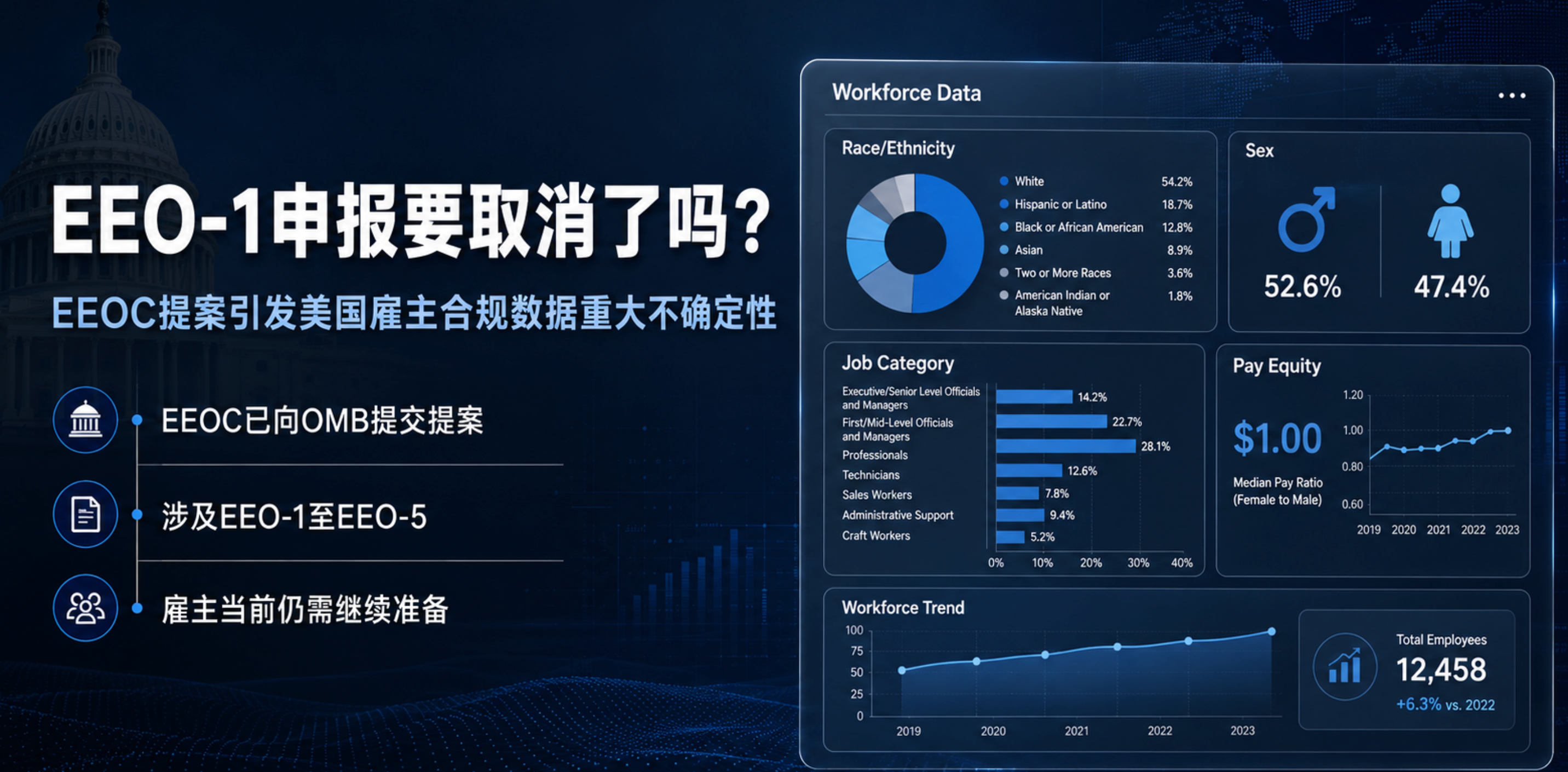 DEI
DEI
 DEI
DEI
 DEI
DEI
 DEI
DEI
 DEI
DEI
 DEI
DEI
 DEI
DEI
 DEI
DEI
 DEI
DEI
 DEI
DEI



 扫一扫
添加客服
扫一扫
添加客服


