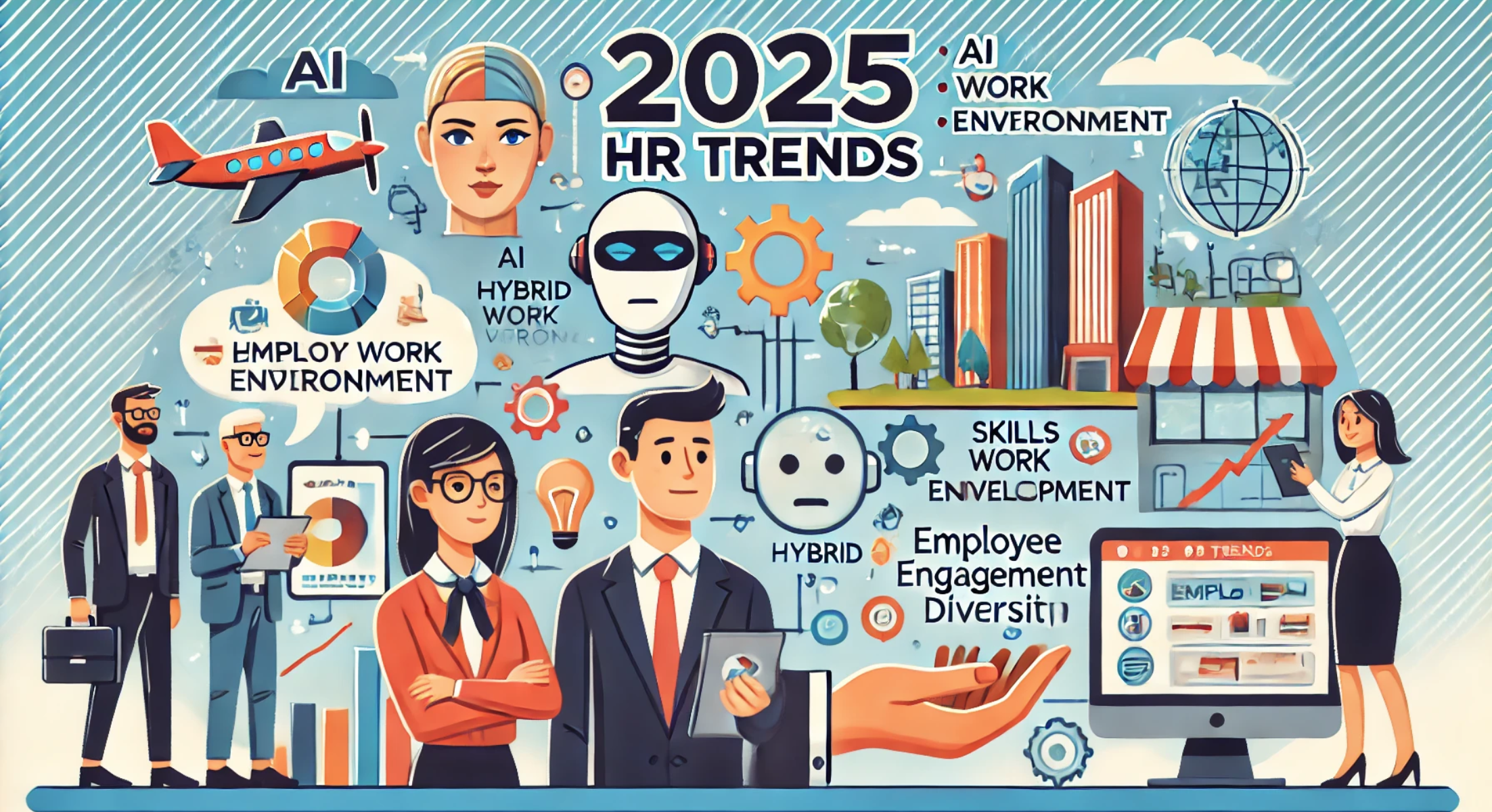
The top 5 HR trends today – and HR's guide to what's nextSAP SuccessFactors 每年都会深入研究全球 HR 趋势,以帮助企业制定更有效的人才战略。2025 年,他们分析了来自 40 家全球权威媒体的 254 项预测,归纳出 5 大核心“元趋势”,展现 HR 在企业中的双重角色:既是变革的“指挥者”,也是政策落地的“引航者”。
1️⃣ 重新连接员工: 由于经济压力、决策争议和信任危机,员工体验恶化,57% 的员工认为如果公司不采取措施,他们的倦怠问题不会改善。HR 需关注心理契约,增强员工信任。
2️⃣ AI 从炒作走向实际价值: AI 进入大规模落地阶段,企业需明确 ROI 并平衡员工和领导者对 AI 价值的不同预期。46% 的员工认为 AI 省下的时间属于自己,而非公司。
3️⃣ 技能转型的平衡策略: 由于 AI 发展迅猛,企业技能鸿沟加剧。除了关注技能,薪酬激励成为推动学习的重要因素,54% 的员工表示,如果公司实施基于技能的薪酬体系,他们会更愿意学习新技能。
4️⃣ DEI&B 的分歧: 企业对多元化、公平性和包容性(DEI&B)态度不一,26% 的员工认为公司对 DEI&B 关注过多,而 33% 认为关注太少。HR 需明确 DEI&B 战略,以促进长期文化变革。
5️⃣ 混合办公的未来: 组织已基本确定办公模式,2025 年将验证其成效。54% 的员工愿意牺牲部分薪酬,以换取更大的工作灵活性。
这些趋势展现了 HR 在塑造未来工作模式中的关键作用,企业需借助创新技术和数据驱动的洞察来优化人力资源管理。
Each year, the HR Research Scientists at SAP SuccessFactors conduct research to understand the top HR and workforce trends facing organizations and share our perspective on what HR teams should consider as they look to help their companies address these trends. This year we aggregated and synthesized data from 40 global and regional reputable business press sources that put forward 254 individual trends and predictions grounded in their own research and data. We then conducted a content analysis of the trends sample to derive the five key themes, or “meta-trends.” While our annual report always includes some pointed commentary and critique about each trend based on our expertise in psychology, new this year is calling upon our own body of original applied research to incorporate datapoints and insights, resulting in a more evidence-based point of view.
This year’s trends are in different stages of maturity and on different trajectories; therefore, the role that HR needs to play to help businesses tackle and capitalize on these trends is different. We’ve organized the trends into two sections aligned to the dual role HR will play in addressing them.
First, HR will need to act as a Conductor, leading the orchestration of a strategy and associated change management across the business to realize the opportunities these trends offer:
Trend #1: Reconnecting the disconnected employee: Contentious decisions, macroeconomic and sociopolitical stressors, and breached trust with leadership has led to employee stress and burnout – and consequently, a crisis of disconnect and counterproductivity. In the year ahead:
Leaders must ruthlessly prioritize fulfilling their end of the “psychological contract” by meeting employees’ basic needs.
People managers will be seen as a lifeline for employees drowning in disconnect.
STAT: 57% of employees feel unless their companies make some serious changes, their burnout will not get better.
Trend #2: Moving from AI hype to AI impact:Organizations are shifting from AI pilot projects to enterprise-wide rollouts, demanding proof of clear value and ROI. In the year ahead:
Organizations will home in on their key value drivers for AI, revealing their true priorities.
The body of research on the ROI of AI will be built this year.
Organizations will find friction between leaders’ and employees’ goals for using AI.
STAT: 46% of employees feel that the time that they save by using AI tools at work belongs to them, not their organization.
Trend #3: Striking a balance to steer skills forward: Organizations continue to face pervasive skills gaps, in part due to rapid AI advancements. A more balanced approach is needed to see tangible progress in skills-based transformations this year. In the year ahead:
“Skills-based” will no longer be the only goal.
Pay will prove itself the missing piece of the upskilling puzzle.
The human vs. technical skill debate will move from or to and.
STAT: 54% of employees would be more motivated to learn new skills if their company instituted skills-based pay.
Second, HR will need to act as a Navigator, leading the organization through precarious waters and circumventing obstacles to put policies into practice for the betterment of all stakeholders:
Trend #4: Divesting or doubling down on diversity, equity, inclusions, and belonging (DEI&B): Some organizations remain committed to DEI&B goals, continuing to ask “How are we going to do this?” Others plan to divest, instead now asking “Are we going to do this?” In the year ahead:
Some will shy away from DEI&B goals, but these approaches will vary.
Taking a stand on DEI&B will change company cultures in the long term, but it’s not clear exactly how.
STAT: 26% of employees say companies focus too much on DEI&B, 41% of employees say companies focus an appropriate amount on DEI&B, and 33% of employees say companies focus too little on DEI&B.
Trend #5: Plugging into or pulling the plug on hybrid work: Now that organizations have determined their position on where their employees will work, it’s time to see if they achieve the outcomes they intended. In the year ahead:
Those businesses choosing the return-to-office path will see whether their bets paid off this year.
Those choosing the hybrid or remote path will take it a step further, integrating autonomy as a core value in other aspects of work design.
STAT: 54% of employees would consider being paid less if they could have more flexibility in where and when they work.
Read the report to see what’s now and what’s next for each trend, along with some fast facts that uplevel the nerdiness of this year’s trends report. We also include a section on how SAP SuccessFactors solutions can help organizations address the 2025 HR trends.
SuccessFactors
2025年03月07日
SuccessFactors
Josh Bersin :SuccessFactors Leapfrogs HCM Capabilities: AI, Skills, Talent Intelligence, And More本周,SuccessFactors 宣布了一系列重大更新,巩固其在人力资本管理(HCM)市场的领先地位。这些新功能包括 AI 驱动的工作推荐、文本分析、绩效评估和全球工资单升级等。SuccessFactors 还推出了开放的技能系统,并与 Lightcast、Degreed 等技能供应商合作,提供更全面的职业发展工具。此外,通过整合 WalkMe,SuccessFactors 改善了用户体验,使其在实施和使用方面更具优势。Dan Beck 的领导下,SuccessFactors 持续推动 HR 技术的创新与发展。
有兴趣进一步了解下
This week SuccessFactors announced a vast array of new features, focused on taking the lead in the red hot HCM war against Workday, Oracle, and others. These capabilities fall into four areas, each of which bring SAP into a leading position in many areas of the global HCM market. (Product details here.)
As I learned about the release I noticed the fingerprints of Dan Beck, the company’s new president and chief product officer. Dan has been at SAP for 11 months and has accelerated the company’s technology roadmap and focus on total solutions.
Let me summarize what’s new.
1. More And More AI Capabilities Built-In
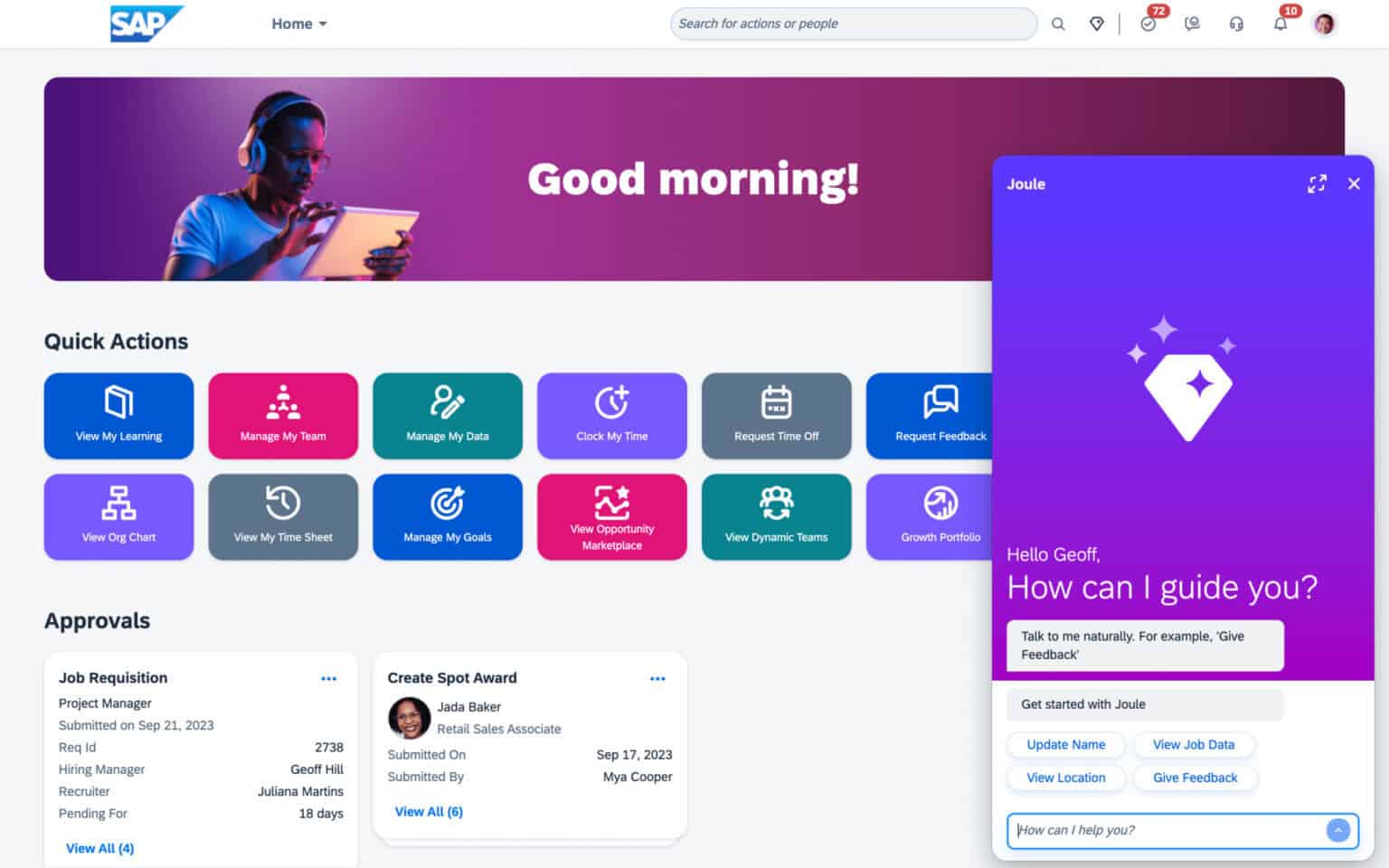
First, of course, is AI. Two years ago SAP announced its “Business AI” strategy, which describes how all SAP business applications are integrated and enhanced with AI. (Workday’s similar strategy Illuminate was launched a few months ago.) In the prior release SuccessFactors described 63 AI use-cases; this week they introduced 30 more. And all are integrated into Joule, SAP’s intelligent Agent.
Each “use-case” is essentially an AI application and many are quite complex: automatically developing job descriptions, analyzing performance reviews, setting and aligning goals, developing onboarding, creating growth plans, and evaluating pay inequities. In other words these AI “features” are really automation workflows that each eliminate hours of work for HR professionals. Since each is also integrated into Joule, you can use them through the conversational interface.
While many HR vendors are adding AI features, I find SAP’s particularly robust because they’re integrated into the entire lifecycle of an employee. SAP’s engineering focus really shows here.
Some of the new features include AI-based job recommendations to job seekers (and internal employees), text analysis and editing for performance reviews, and new mobile use-cases for Joule.
2. Upgrades to Global Payroll
The second set of announcements are a significant update to global payroll. SAP currently has the broadest global payroll solution in the market and now has a new UI, a Payroll Command Center, and a sophisticated AI offering called “Explain Pay Slip.” You will effectively be able to ask Joule “why has my pay changed from last month” and it will dig into all the details and explain the differences. This covers 70% or more of the questions employees ask HR service centers, so this feature has an enormous ROI.
Employee Central, the company’s core HR and payroll module, now has a more integrated view of all benefits and more integrations with Joule, making the 52-country payroll system the broadest in the market.
3. Open Skills System and Launch of Career and Talent Development
The third set of announcements will change the HR Tech market: SAP is formerly opening up its Talent Intelligence Hub to accommodate every skills and skillstech vendor. Providers like Lightcast, Korn Ferry, Techwolf (SAP invested in them), and Degreed can now feed the SuccessFactors skills system and SAP is going to build tools to normalize and harmonize skills.
This brings SAP to parity or beyond Workday Skills Cloud: the skills model is integrated into Opportunity Marketplace, Career and Talent Development (the new version of SuccessFactors learning), and SuccessFactors job architecture, team management, performance management, and recruiting.
The new Career and Talent Development offering also introduces AI-assisted career insights, leveraging skills and aspirations to find relevant jobs and career paths. The system lets managers create assignments, find and onboard internal candidates, and then use Work Zone (onboarding and enablement) to start their new internal position. This level of integration goes beyond tools from Gloat or Eightfold or others for internal talent marketplace.
Several years ago SuccessFactors introduced its comprehensive skills strategy and today it’s coming to fruition.
There are several major implications here. First, vendors like Eightfold, Gloat, Phenom, Beamery, and many others will have to decide how they partner or compete with SAP. Last month I met with both Delta Air Lines and Pepsi, both of which are using SuccessFactors Talent Intelligence hub as their new end-to-end platform. Each company told me that they no longer felt the need to use some of these other third party products.
Second, the SuccessFactors skills model is expansive. In addition to harmonizing and helping companies build technical and leadership models, the system itself has its “whole self” module which includes aspirations, styles, motivations, and preferences. Companies that use this can add subtle human needs to the model.
Other vendors have tried this (Cornerstone and Gloat both ask users to express career and personal work preferences) but SAP, with its enormous customer base, has the potential to leverage this across industries. Imagine an employee in IT who aspires to work in HR, for example – the system would find the HR Tech jobs within the company which leverage their architectural or technical skills.
SuccessFactors also includes a mature system for team-based work, which is missing in these other applications. This release adds AI-assisted 360 reviews, performance templates, and integration with Joule (employees and managers can share performance information through the agent.)
4. Integration of WalkMe into SuccessFactors.
The fourth major announcement is the bundling and integration of WalkMe. Given the vast and complex nature of SuccessFactors, there are many places to read documentation and learn how the system works. This forces customers to build large training programs for users. (All HCM platforms have this issue.)
WalkMe, which was acquired this year for $1.5 Billion, is the leading provider of “digital adoption platforms.” It is essentially an advanced AI system that watches a user’s interaction with a system to coach, train, and automate your work. Initially developed to help users learn how to use systems like SAP or Salesforce, WalkMe advanced into a highly intelligent real-time coach, similar to what we now expect out of an AI agent.
While I don’t know how this will be priced, this gives SuccessFactors an “ease of implementation” advantage. WalkMe is an open platform and does support many HCM applications, but now that it’s integrated and bundled into SAP customers will find SuccessFactors much easier to deploy and use.
(Just for your reference, the SuccessFactors and Workday “how to” manuals include nearly 1,000+ pages each.)
Bottom Line: SuccessFactors Leadership Emerges
SAP’s ambitious, long-term engineering approach to human capital management is clear. I’ve been watching SuccessFactors since it was a small independent company in California, now growing to a vast cloud business with 10,000+ customers and more than 150 million end users.
This release demonstrates how patience, engineering excellence, and relentless focus on customers pays off in enterprise software. Under the leadership of Dan Beck, SuccessFactors now offers industry-leading capabilities in most areas of HCM, giving customers an even deeper offering to consider as HR technology rapidly evolves.

 SuccessFactors
 SuccessFactors
 SuccessFactors




 扫一扫
添加客服
扫一扫
添加客服


